
“If I’m going to write about characters, I need to write about the whole package, including trauma, no matter how intense it becomes.”
– Jude Austin
Content Warning: This interview discusses themes of trauma, mental health, and emotional struggles. While handled with care, these topics may be triggering for some readers. If you or someone you know needs support, consider reaching out to a mental health professional or helpline in your area.
Jude, thank you for joining us! To start, could you introduce yourself in your own words? Tell us a bit about your background, what led you to writing, and what drives your creative passion.
It’s great to be here! I’ve been writing all my life, so there was nothing that really led me to it. I’ve moved around a lot, writing as I went, and now I’ve finally settled in Japan (for the moment, at least!). I’ve been publishing a mixture of fanfic and original fiction on the net since I was eleven, most of which is probably still up there somewhere. I always enjoyed creating new worlds and cultures since I was a very young girl, so it just seemed natural for me to take that one step further.
Your latest book, Nowhere to Hide, has been praised for its rich world-building and emotional depth. What inspired the story, and how did you approach creating such a compelling interplanetary universe?
That’s wonderful to hear! This is a hard question to answer, because there’s no real inspiration to any of my stories beyond, “I wonder what happens next.” Usually, what I think is going to happen when I start writing is a long way from what actually happens; I’m a definite pantster, and my characters make life harder by constantly changing and surprising me.
The same goes for the interstellar setting that is the Five Worlds. I never sit down and build a setting from scratch and then think of stories; I start writing stories and the worlds come and populate themselves, their cultures and government grow and shift organically as the books progress. Often, they surprise me! The closest I get to planning is drawing maps of the planets and putting them on my website.
The one difficulty I did have with Nowhere to Hide was making the alternating storylines work in terms of coherence. It was too distracting to do things in order, and I never write straight from start to finish anyway. I thought about organizing the two stories sequentially, so once Kata’s story was over, readers would read Diran’s, but pulling them back in time like that seemed too distracting. Then I thought about releasing them as two separate books, but that seemed like too much of a cheap cash grab, like one or two video games I’ve played that end their stories halfway through to try and force you into buying the next installment.
In the end, I sat down and worked out a timeline, calculating how long it takes Alan and Kata to reach the space station of Suliko, how long it would take Diran to return to Trandellia from Atthiras, things like that. Then I pushed Diran’s story to one side and focused entirely on Kata’s. Once his book was finished, I went onto Diran’s, and then sandwiched the two together, adding locations and dates to orient both me and the reader. I think it worked out well, but putting two novels into one was pretty intense, so I don’t think I’ll be doing it again.
Your characters, especially Diran and Kata, tackle intense psychological and emotional struggles. What draws you to exploring such complex, personal themes within the sci-fi genre?
People never change, and things like this will always happen. Those who go through what Kata went through in GenTech back in Project Tau are going to end up severely traumatized. If I’m going to write about characters, I need to write about the whole package, including trauma, no matter how intense it becomes. The Five Worlds series has always been 100% aimed at adult audiences, so I’m not afraid to go dark.
What’s interesting about Diran and Kata is that their methods of navigating those issues are both so different and yet so similar. Kata is still deeply traumatized by his upbringing and experiences in GenTech — he doesn’t trust people and keeps everything very close to his chest, preferring to bury his negative feelings and experiences as deep as possible. Most of the time, he refuses to accept that he has issues at all, much less that he needs help dealing with them.
On the other hand, Diran is mentally far more well-adjusted, very much in touch with his emotions on all levels. He’s fine with digging deep and doing intense self-analysis, and he places huge value on therapy and the importance of mental healthcare. Although he’s just as capable of freezing his emotions as Kata, the only time he does so is when he’s in a dangerous, potential life-or-death situation (as we see in Nowhere to Hide) when giving free rein to those emotions would seriously impair his judgment and/or get him killed. While Kata has been suppressing his trauma and emotions for most of his life and so does it without really thinking, it takes a sizable effort for Diran to lock his feelings down. As soon as he’s out of danger, the first thing he does is take steps to begin processing those same emotions in a safe, healthy way.
Diran and Kata never meet in the book – although Diran does become aware of Kata’s existence – but I think it would be an interesting encounter for future books, so watch this space!
You’ve won multiple awards for your work, including the BREW Seal of Excellence. Could you share what these recognitions mean to you as an author and how they’ve influenced your journey?
The awards that mean the most to me are the ones that are either recognizable within the industry, such as the Writer’s Digest Honorable Mention that I was awarded for Homecoming, or ones that resonate with me the most as a person.
One of these awards was the Book of the Earth award. According to the official website: “Eligible works are chosen not based on technical perfection, but for their ability to vividly bring to life themes of environmental awareness, societal change, and hopeful futures.” I read it and I was like, “YES!” It may not be as famous as a Hugo or Nebula, but conservation and humanity’s role in nature is a very important issue to me, so winning that award was one of my proudest moments.
Sci-fi often serves as a mirror to our reality, tackling issues of survival, identity, and societal structures. How do you balance realism with speculative storytelling, and what do you hope readers take away from your books?
The main thing I hope readers take away from my books is, “Wow, that was a great story; I loved it!” Although I do highlight issues such as emotional abuse and mental health, these are issues that developed naturally as I was writing and getting to know my characters and world, not anything I deliberately set out to write about.
Diversity and representation are increasingly important in modern fiction. How do you incorporate these elements into your work, and why do you think they are vital in science fiction?
Honestly, I never set out deliberately to do so. My characters’ ethnicities, gender, and sexual orientation have no relevance to the story or the setting, so they never come into play. My books are written to be escapism in deep, richly crafted, non-dystopian worlds, where characters of all kinds from all walks of life are just regular people coping with normal, everyday things.
The UN Sustainable Development Goals (SDGs) emphasize sustainability and innovation. Do your books touch on any of these global themes, such as resilience, equality, or technological advancements, and if so, in what ways?
Not deliberately, no. While the Five Worlds setting has certainly achieved some of them – affordable and clean energy, for example – many of them don’t apply to my work. That’s not because they’re irrelevant, but simply because those particular issues, such as gender equality, have never been issues for my characters in the first place.
Your writing process must be fascinating, considering the intricate details in your books. Could you take us behind the scenes—what does your typical writing day look like, and do you have any unique habits or rituals that fuel your creativity?

I’d love nothing more than to give you a riveting, witty answer here or wax poetic about some Great Writing Secret, but the truth is that my typical writing day is really nothing special. I get up, I go downstairs, I get jumped on by my cats, I set up binge-watches on Netflix or YouTube, open up my laptop and start writing while one or both cats snuggle up next to me. I have one of those reclining couches, which is wonderful as it means I can lean back and work without putting any strain on my back and shoulders. At some point, I eat.
That’s it, really. I wish there were unique habits and rituals that were guaranteed to fuel my creativity; they’d come in handy on those days when I suffer from writer’s block!
You balance writing with gaming and fan fiction. How do these interests influence your storytelling, and do they ever inspire elements of your books?
The very first novel I ever wrote actually began life as a fanfic! It was an original sci-fi story about an actor that I liked that I posted on his fan forum. I still have it, although I don’t plan to publish it. I plan to recycle the concept of that novel’s sequel at some point, but I’ve no idea when.
One of the things I like about gaming is that nobody pressures you to explain anything. There was a console RPG I played years ago where there were typical fantasy races such as elves and centaurs, but also characters that were members of other fantastical races. We never got the names of those races or learned anything about them, and you know what? That was absolutely fine. We didn’t need to know. Not everything in a book – especially SFF worlds – needs justifying or explaining, and that’s always been a mindset I’ve used for my books.
I’ve waxed poetic on other sites about why fanfic is one of the best tools for honing your writing skills, but there’s another aspect I want to touch on here, and that’s interaction with the readers. As an author, I get reviews. Unfortunately, it’s seen as hugely unprofessional to respond to those reviews, which means that if a reviewer takes the time to praise my work, I can’t even say thank you.
Fanfic is different. I can talk to my readers, I can get their thoughts and explain my thinking, and it’s the main reason I’m seriously considering the webnovel format. With every chapter I post on AO3, I get feedback. I get to know that people are reading and enjoying my work, along with key points that they love (or don’t love!) and that’s a wonderful feeling.
Finally, what’s next for you? Can you share any upcoming projects or future stories that readers can look forward to?
The next book in the Five Worlds series was going to be The Worlds We Knew, but that’s been pushed back a little, for two reasons. One: I couldn’t really tell readers what happens next without telling Neil’s story (a new character who was introduced in Nowhere to Hide) and so we’re veering off a little to tell his story, and The Worlds We Knew will tie both threads together.
More recently, I’m also launching a webnovel on Royal Road called Journal of a Reluctant Hero Trainer under my usual online handle, JudasFm. It’s a new form of writing for me, so I’m super-excited about it! And, of course, I’m still writing fanfic on AO3.
Bio
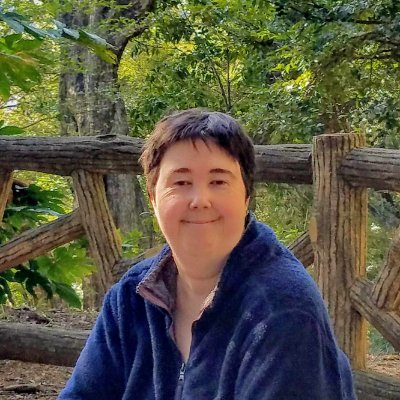
I’ve been writing since I was very young, mostly on ‘books’ I made from taking a wad of Post-It notes or random notebooks that I found lying around. I finished my first big writing project when I was 11; it was a novel-length fanfiction featuring most of the characters from Aliens, spanning seven notebooks. Since I wrote it when I was on the train home from a school trip to York, so naturally it became known as “The York story.” Amazingly, I still have it thirty years later! The first page is missing from notebooks 1 and 5, but considering how much and how far I’ve moved since I first started writing it, that’s still impressive. I sometimes go back and reread it when I want to have a good laugh at myself.
During my journey, I’ve lived in various countries around the world such as the UK, Greece and the Canary Islands. Right now, I live and work in Chiba, Japan (having moved from Yokohama and Tokyo) with my husband and two cats.
Outside of writing, I enjoy art, game design and film-making, and I’m a graduate of FC Tokyo, a prestigious film school in Japan, where I majored in screenwriting.
All the Five Worlds books have been honored with BREW awards. Nowhere to Hide won “Book of the Earth,” and Project Tau was longlisted for the MBA (Millennium Book Award) 2024. Homecoming also won the prestigious Writer’s Digest Self-Published Ebook Awards 2021, which is something I’m extremely proud of, and the Five Worlds series as a whole was a Finalist in the Book Excellence Awards 2020 (Books in a Series). I was also awarded a BRAG medallion for Homecoming.
⭐⭐⭐⭐⭐
“Not everything in a book — especially SFF worlds — needs justifying or explaining, and that’s always been a mindset I’ve used for my books.”
– Jude Austin
Links
Share Your Insights
What are your thoughts on Jude Austin’s insights into storytelling and character development? Join the conversation and share your perspective:
- Which aspect of the Five Worlds series resonates most with you?
- How do you feel sci-fi can best explore mental health and resilience?
- What kinds of characters or themes do you hope to see more of in science fiction?
Alignment with the UN SDGs
- Highlights emotional health and trauma (SDG 3: Good Health and Well-being)
- Promotes diversity and representation (SDG 10: Reduced Inequalities)
- Encourages creativity and innovation (SDG 9: Industry, Innovation, and Infrastructure)
Other Highlights

Looking for something?
Type in your keyword(s) below and click the “Search” button.
Helpful Shortcuts
More Stories







Print and Digital Magazine


Don’t just read about greatness. Own it!

About Us
The World’s Best Magazine is a print and online publication that highlights the extraordinary. It is your passport to a universe where brilliance knows no bounds. Celebrating outstanding achievements in various fields and industries, we curate and showcase the exceptional, groundbreaking, and culturally significant. Our premier laurels, The World’s Best Awards, commend excellence through a unique process involving subject matter experts and a worldwide audience vote. Explore with us the pinnacle of human achievement and its intersection with diversity, innovation, creativity, and sustainability.
We recognise and honour the Traditional Owners of the land upon which our main office is situated. We extend our deepest respects to Elders past, present, and emerging. We celebrate the stories, culture, and traditions of Aboriginal and Torres Strait Islander Elders from all communities who also reside and work on this land.
Disclaimer: The World’s Best does not provide any form of professional advice. All views and opinions expressed in each post are the contributor’s own. Whereas we implement editorial policies and aim for content accuracy, the details shared on our platforms are intended for informational purposes only. We recommend evaluating each third-party link or site independently, as we cannot be held responsible for any results from their use. In all cases and with no exceptions, you are expected to conduct your own research and seek professional assistance as necessary prior to making any financial, medical, personal, business, or life-changing decisions arising from any content published on this site. All brands and trademarks mentioned belong to their respective owners. Your continued use of our site means you agree with all of these and our other site policies, terms, and conditions. For more details, please refer to the links below.
About | Advertise | Awards | Blogs | Contact | Disclaimer | Submissions | Subscribe | Privacy | Publications | Terms | Winners
The World’s Best: A Magazine That’s All About What’s Great | theworldsbestmagazine.com | Copyright ⓒ 2022-2026
Let’s connect
Discover more from The World's Best
Subscribe to get the latest posts sent to your email.

 The World's Best
One thought on “Exploring the Universe Within and Beyond: An Interview with Jude Austin”