
“Climate action isn’t just about protecting the planet; it’s about creating a future where prosperity is sustainable for all.”
— Bill McClain
Content Warning: This article explores topics related to climate policy, environmental justice, and the challenges of addressing socio-economic disparities and historical inequalities. These issues may evoke strong reactions or personal reflections. This interview is intended to share informative insights and perspectives based on the interviewee’s professional experience and expertise. The views expressed are those of the interviewee and are shared to provide valuable knowledge on the subject. Readers are encouraged to engage with the content based on their own perspectives.
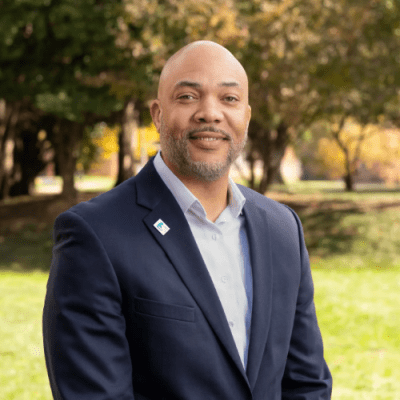
Bill, thank you for taking the time to speak with us. To start, could you introduce yourself in your own words? We’d love to hear about your background, your work with Clean & Prosperous Washington, and what drives your mission.

Like so many things in my career, my work at Clean & Prosperous Washington began with a phone call from David Giuliani, the late founder of our non-profit. I had previously worked with David at a couple of Seattle start-ups that grew to multinational success: Sonicare (acquired by Philips) and Clarisonic (acquired by L’Oreal). David was gearing up to advocate for passage of the Climate Commitment Act in the Washington State Legislature, and thought I might be interested in joining his team. As he explained the proposed “cap-and-invest” legislation and I furiously scribbled notes, I was drawn to the challenge of bringing business people and environmentalists together in support of the bill. After all, I am both. I’m also an optimist who believes that business can be a force for good. At the University of Washington I teach classes in global marketing, sustainable business, and stakeholder capitalism. The Climate Commitment Act is a great example of public policy that not only represents community interests (in clean air and climate action), but by holding polluters to account for the externalities imposed on society it provides businesses with an incentive to clean up their operations. By setting what Milton Friedman described as “the rules of the game”, the Act encourages businesses to be a force for good.
Clean & Prosperous Washington has played a crucial role in championing smart climate policies. Can you walk us through the organization’s mission and how your strategic, data-driven approach has contributed to meaningful climate action?
Burning fossil fuels is economically inefficient, ecologically damaging, and dangerous for our health. The faster we pivot to sustainable solutions the better. Because we believe that a future with a healthy climate and a future with a healthy economy are not mutually exclusive, our mission is to advance policy solutions that power a clean economy.
Innovating and implementing solutions are what businesses do every day. From the start it’s been our aim to bring a business acumen to solving public policy problems. And since entrepreneurialism is in our DNA, everything we do is directed toward objectives, driven by strategy, and grounded in data.
As I look back on what we‘ve accomplished over the past few years, I’m kind of stunned to be honest. We’re a small team taking on a massive challenge. But by plugging into – and adding value to – a larger ecosystem of clean economy proponents, we’re able to punch above our weight.
You’ve mentioned the Climate Commitment Act. What makes this policy effective, and how has Clean & Prosperous Washington been instrumental in its success?
Climate instability is a complex problem with a diverse array of stakeholders, so solutions are necessarily complex. Many argue for putting a simple price on emissions with a carbon tax. But how do you accurately determine an appropriate carbon price? In any case, with a carbon tax, you have certainty over revenue but not over emission reductions. With cap-and-trade, or cap-and-invest, you have uncertain revenue but certainty over emission reductions. Since reducing emissions is the objective, the certainty of a continuously declining cap is essential. And the revenues collected from the allowance auctions fund projects and programs that accelerate emission reductions even faster than would happen in the absence of those investments. Cap-and-invest takes a market-based approach to finding the most efficient price on emissions, and provides businesses with incentive to participate in achieving a cleaner economy. Beyond that, it recognizes historical disparities in climate and pollution impacts. Former Governor Jay Inslee is often quoted as saying that “Air pollution, severe weather and the economic upheaval brought on by climate change impacts Black and minority communities first and worst”. The Climate Commitment Act stipulates that 35% of investments must go to marginalized communities, and a minimum 10% must go to tribes.
By every measure, the Climate Commitment Act is a success. Over $2.5 billion have been raised from the auction of emission allowances, and 80% of that revenue is already committed to climate-related projects. I think it’s important to note that the state takes an entrepreneurial approach to investing the revenues, as many of the investments are “pump-priming” to attract or accelerate private-sector investments, or are market-scaling to bring down costs for Washington residents and businesses. Greenline Insights released a report last year (Climate Commitment Act: Jobs and Economic Benefits in Washington State) that showed up to $13 in economic growth for every dollar invested by the state.
Clean & Prosperous Washington’s role in making the cap-and-invest Climate Commitment Act a success has been through fact-based advocacy, stakeholder community-building, and education. In my opinion, that education piece has been key. We like to say that “leaders are learners”, so we’ve worked to seek out expertise and share the learnings broadly. We lead study missions, taking delegations of business, policy, and legislative leaders to places like California and Quebec (where they have a decade of cap-and-invest experience) and Eastern Washington state (where clean energy investments are powering the local economies). This year we’re traveling to Brussels to learn from Europe’s experience. We host webinars, publish papers, and maintain a mapped database of Climate Commitment Act investments. We also host an annual Future of Carbon Policy Forum that features speakers from the governor and legislators, to business leaders and tribes. I’d like to think our blog, emailed to a small but powerful subscriber community, also serves to educate and provoke thought.
Collaboration seems to be at the heart of your efforts—bringing together labor groups, tribes, environmental advocates, and businesses. What have been some of the biggest challenges and successes in fostering these partnerships?

Despite the urgency of addressing climate instability, and despite public opinion in Washington state generally favoring climate action, several earlier attempts at introducing a carbon tax or a cap-and-trade system failed in the legislature and at the ballot box. David’s frustration with the ideological territorialism that contributed to those earlier fumbles led us to take a deliberate “big tent” approach, and talk with, listen to, work alongside everybody who had a stake in the outcome – not just those who agreed with us from the jump. We also knew “our lane”. That is, we knew that the legislation itself would be crafted through the “sausage-making” political process (shout-out to former state senator Reuven Carlisle, the bill’s chief architect and champion) and would be shepherded through the gauntlet of committee hearings by legislators at the state capitol, not by us. Our role was to rally broad-based support with a business voice.
Following passage, our focus shifted to helping ensure policy implementation with excellence. We understood that passage of the bill was just the beginning, and that success ultimately depended upon the perceived effectiveness of the system.
Predictably in today’s polarized climate, there were those who perceived a different reality, and put an initiative on November’s ballot to repeal the Climate Commitment Act. So we invested much of this past year in defending the Act. As it happens, that may have been a blessing, as our efforts and those of so many others led to greatly increased awareness of and appreciation for the benefits of cap-and-invest. The system is now on stronger footing. Our communications strategy centered on loss aversion, the cognitive bias where loss is felt more intensely than an equivalent gain. The Clean & Prosperous Institute developed an interactive map and associated database called the “Risk of Repeal”. This project had been in development in anticipation of a repeal effort, whether via initiative or legislative action, but after the ballot initiative was filed it became a centerpiece in our communications campaign. The map made visible the thousands of programs and projects in every corner of every county in the state that were funded by Climate Commitment Act investments, and was frequently referenced by the press.
Did it work? Voters across the state and across party lines validated the Climate Commitment Act by a whopping 62% to 38%.
With Washington state demonstrating the promise of subnational climate action, other states appear ready to follow and we are eager to assist, to “export” our suite of clean energy policies.
Sustainability and economic growth are often seen as opposing forces. How does your work demonstrate that environmental responsibility can, in fact, drive prosperity and economic competitiveness?
Our founding principle is that a clean economy is a prosperous economy. Climate action is a win-win, not a trade-off. For proof, we can look at California, where between 2000 and 2022 emissions fell by 20% while gross domestic product increased by 78%. Or Europe, where pollution has dropped 32.5% from 1990 to 2022, even as the economy grew by 67%. Or we can look in the mirror, at our own state of Washington, where our state’s economy has grown almost 24% in the last ten years, yet over the same period greenhouse gas emissions per person declined 15%. The state has reduced its carbon intensity as measured both in terms of emissions per capita and per economic output. Relative to 2005, the amount of greenhouse gas emissions per million dollars of GDP declined 51%.
The old idea that climate action comes at a cost to the economy may seem self-evident to some. But to me, it’s upside-down. Not only does climate inaction bring increased risk of extreme weather and increased costs of mitigation, damage, and insurance, but climate action brings increased opportunities for businesses to improve outcomes for all stakeholders.
Within the four walls of a business, sustainability drives operational efficiency, employee retention, and risk reduction. Outside the four walls, it attracts customers, enhances brand value, and builds competitive advantage.
A myopic focus on profit as the only bottom line necessarily leads to imposing costly externalities (emissions, waste, poverty wages) on the community. In the short term, passing off costs to the community can plump up profit, but in the long term, those costs come back to bite. As society pressures companies to fairly account for all their costs, healthy businesses will track their triple bottom line: profit, people, planet. Healthy numbers on all three bottom lines indicate that a company is adding value by contributing to improved quality of life for all stakeholders.
I’m reminded of something I read during the pandemic, from the venture capital firm Sequoia Capital. They advised, “In some ways, business mirrors biology. As Darwin surmised, those who survive “are not the strongest or the most intelligent, but the most adaptable to change.” Or as Will Rogers put it, “Even if you’re on the right track, you’ll get run over if you just sit there.”
Fossil-fueled businesses should check their rear-view mirrors, as they are about to be run over by competitors that are electrifying. Electricity is far more efficient than gas, and renewables are now the cheapest way to generate electricity. Electricity powered by solar, wind and hydro is cleaner, cheaper, and more efficient.

Your blog, Clean & Prosperous Washington, was named the BREW International Blog Award 2024 Community’s Pick of the Year! Congratulations! What does this recognition mean to you and the team, and how do you see the blog’s impact growing in the future?
It’s gratifying to win the BREW International Blog Community’s Pick of the Year Award and have it recognized as bringing value to readers. The recognition will enhance visibility and, I hope, bring even more readers into our community. The larger our community, the larger our impact.
We aim to expand our influence beyond the state’s borders this year, “exporting” Washington’s successful climate policies to other states. Washington state’s Climate Commitment Act was described by the Environmental Defense Fund as the “new gold standard for climate policy”. Our award-winning blog can help this gold standard policy take hold in other states across the country.
The blog has been praised for its engaging and insightful content. What’s your approach to making complex climate policies accessible and compelling to business, community, and government leaders?
My own background is scant on science or policy, and if I’m being honest, I get bored pretty quickly by both. But I try to use this weakness as a strength when writing the blog. Since the topic of climate action is inherently heavy on both science and policy, I lean on our team for content. Every person on the team has deep expertise that shows up in the research reports, webinar recordings, modeling tools, and data tables on the Clean & Prosperous websites.
I also let my curiosity lead me to topics. I read dozens of newsletters and other sources, looking for threads and themes that connect to our work, and pull them together in a way that I think will be engaging – trying always to respect the intelligence of our audience yet delivering information at a level that even I could understand.
Looking ahead, what are the key climate initiatives and policy advancements you’re most excited about? Are there upcoming projects that our readers should keep an eye on?
Trucks are a big opportunity for advancing climate progress. In Washington state, transportation is the largest contributor to greenhouse gas emissions. While diesel trucks, buses and delivery vans are only about 10% of vehicles on the road, they account for 30% of climate pollution from transportation, and 50% of particulate matter pollution (especially heavy in overburdened communities). Because the decisions made by a single fleet operator can remove the emissions of multiple trucks, we are working to advance non-profit programs and state incentives that make the decisions of fleet operators to electrify easier.
As an example, the Breaking Barriers Collaborative (of which Clean & Prosperous Institute is a co-founder), runs a program that helps fleet operators as large as Boeing and as small as Bellevue College to decarbonize.
We’re also looking forward to the linkage of Washington state’s carbon market with those of California and Quebec.
For businesses and individuals who want to be part of the clean economy transition, what practical steps can they take to contribute to meaningful climate action?
Collaborate. There is so much power in partnership. Think about your own network of friends, colleagues and organizations. Look for opportunities to contribute your (or your organization’s) abilities to the cause. Individuals can join or convene groups to lobby for local action. Nonprofits can bring together disparate groups to learn from each other. Private-sector businesses can partner with public-sector programs to scale up clean energy projects.
The 17th UN Sustainable Development Goal is “Partnerships for the Goals”, described as “recognizing multi-stakeholder partnerships as important vehicles for mobilizing and sharing knowledge, expertise, technologies and financial resources to support the achievement of the sustainable development goals”. Partnerships are a “force-multiplier”.
Timi Marie Russin of the Cowlitz Indian Tribe, a speaker at last year’s Future of Carbon Policy Forum said, “we move faster in the carpool lane”.
Finally, what message do you hope to leave with our readers about the future of climate policy and the role each of us can play in shaping a cleaner, more prosperous world?

One of the next blog editions I’ll write will be about Climate Optimism. Pessimism is easy. Optimism is risky. It requires a belief in the unproven, the unknown, perhaps even the unimaginable. Pessimism keeps us tethered to the status quo, hibernating in the safety of the familiar.
I’ve been reading Dr. Martin Luther King’s book, “Where Do We Go From Here: Chaos or Community?” It was written in 1967 but is as relevant today as ever. In it he writes, “One of the great liabilities of history is that all too many people fail to remain awake through great periods of social change. Every society has its protectors of the status quo and its fraternities of the indifferent who are notorious for sleeping through revolutions. But today our very survival depends on our ability to stay awake, to adjust to new ideas, to remain vigilant and to face the challenge of change.”
So I invite your readers to stay awake and stay optimistic. Look around the world for ideas and inspiration. Embrace the challenge of change that leads to a better future.
⭐⭐⭐⭐⭐
“True progress will come when we see climate policies not as a burden, but as an opportunity to create a better, more equitable world for generations to come.”
— Bill McClain
Links
- Clean & Prosperous Washington
- Know more about the BREW Book, Blog, and Poetry Awards here
Share Your Insights
We’d love to hear your thoughts on this important conversation. Share your comments below:
- What do you think is the most pressing issue in climate policy today?
- How do you see the role of economic growth in achieving environmental goals?
- What steps can individuals take to support smart climate policies?
Alignment with the UN SDGs
- Promotes affordable and clean energy (SDG 7)
- Advocates for climate action (SDG 13)
- Supports sustainable cities and communities (SDG 11)
- Encourages responsible consumption (SDG 12)
Other Highlights

Looking for something?
Type in your keyword(s) below and click the “Search” button.
Helpful Shortcuts
More Stories




























Print and Digital Magazine








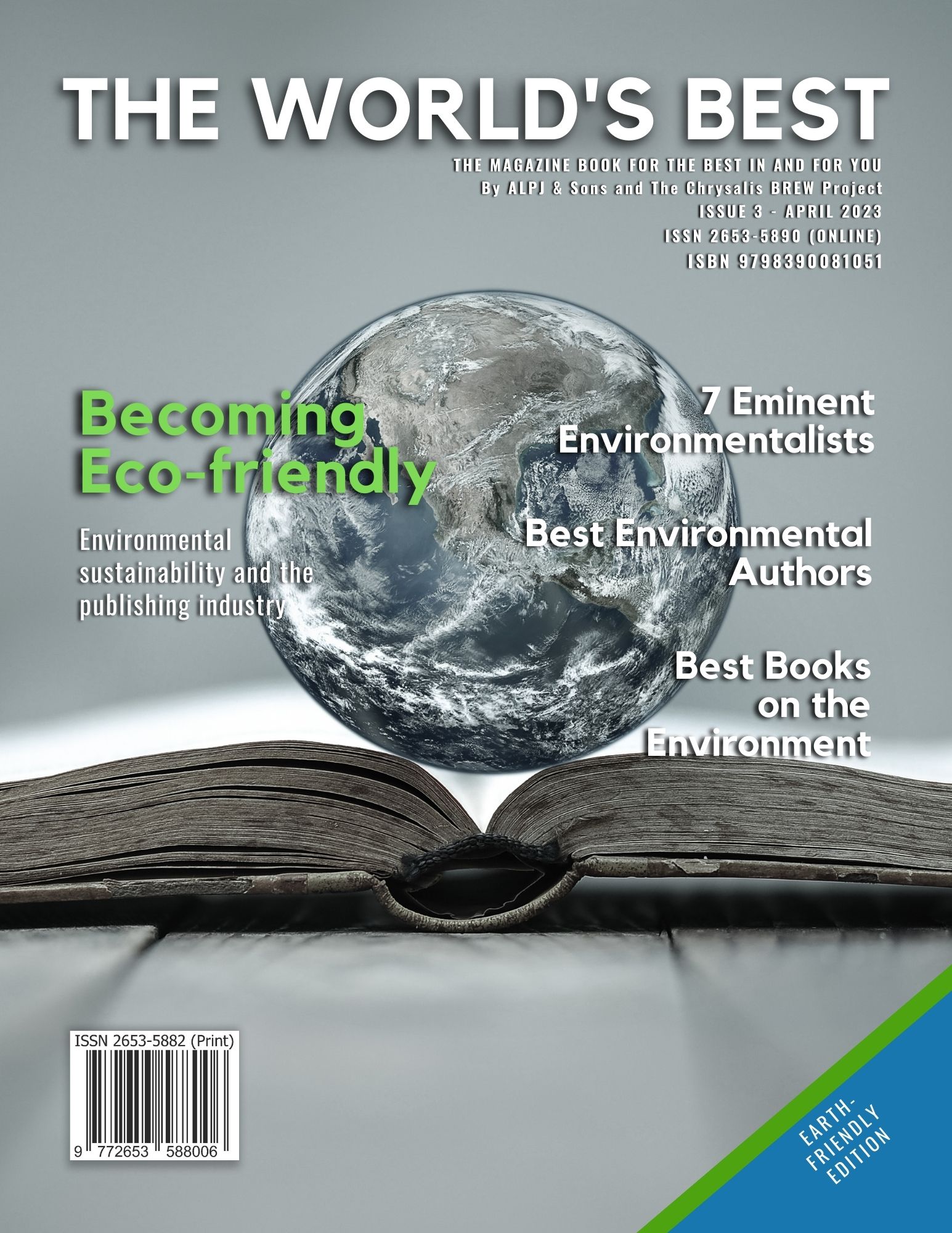


Don’t just read about greatness. Own it!

About Us
The World’s Best Magazine is a print and online publication that highlights the extraordinary. It is your passport to a universe where brilliance knows no bounds. Celebrating outstanding achievements in various fields and industries, we curate and showcase the exceptional, groundbreaking, and culturally significant. Our premier laurels, The World’s Best Awards, commend excellence through a unique process involving subject matter experts and a worldwide audience vote. Explore with us the pinnacle of human achievement and its intersection with diversity, innovation, creativity, and sustainability.
We recognise and honour the Traditional Owners of the land upon which our main office is situated. We extend our deepest respects to Elders past, present, and emerging. We celebrate the stories, culture, and traditions of Aboriginal and Torres Strait Islander Elders from all communities who also reside and work on this land.
Disclaimer: The World’s Best does not provide any form of professional advice. All views and opinions expressed in each post are the contributor’s own. Whereas we implement editorial policies and aim for content accuracy, the details shared on our platforms are intended for informational purposes only. We recommend evaluating each third-party link or site independently, as we cannot be held responsible for any results from their use. In all cases and with no exceptions, you are expected to conduct your own research and seek professional assistance as necessary prior to making any financial, medical, personal, business, or life-changing decisions arising from any content published on this site. All brands and trademarks mentioned belong to their respective owners. Your continued use of our site means you agree with all of these and our other site policies, terms, and conditions. For more details, please refer to the links below.
About | Advertise | Awards | Blogs | Contact | Disclaimer | Submissions | Subscribe | Privacy | Publications | Terms | Winners
The World’s Best: A Magazine That’s All About What’s Great | theworldsbestmagazine.com | Copyright ⓒ 2022-2026
Let’s connect
Discover more from The World's Best
Subscribe to get the latest posts sent to your email.

 The World's Best
One thought on “Bill McClain on Advancing a Clean and Prosperous Future: The Power of Smart Climate Policies”