
“Magical things happen to everyone. We just explain them to ourselves in different ways.”
– Jason Ollander-Krane
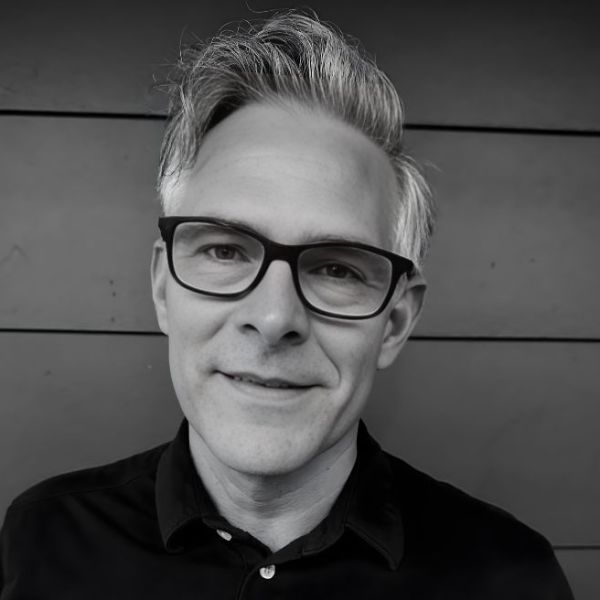
In this exclusive interview, award-winning author Jason Ollander-Krane shares the story behind Circus Home, the novel that has fascinated readers and garnered prestigious accolades. Recognised as the BREW Fiction Book Excellence Award 2023 Magical Realism of the Year, BREW Seal of Excellence 2024, and a BREW Readers’ Choice Award 2024-2025 Finalist, the book is also celebrated with the Difference Maker Award from Store with a Heart. Discover Jason’s creative inspirations, his multifaceted career, and how his love for storytelling bridges the worlds of theatre, corporate leadership, and magical realism.
Jason, congratulations on the incredible recognition Circus Home has received! Could you start by introducing yourself and sharing the highlights of your journey that led to this moment?
I am Jason Ollander-Krane, author of Circus Home—A Novel of Life, Love and New Jersey, which is in bookstores now. I wrote the book hoping to connect with readers. I had no idea it would also earn so many accolades, prizes, and nominations.
Awards and Recognition:
CIRCUS HOME—A Novel of Life, Love and New Jersey has won six international book awards:
- WINNER 2024 Difference Maker Award
- WINNER 2024 Speak Up Talk Radio Firebird International Book Award for Humor
- WINNER 2023 e-Lit GOLD MEDAL for Literary Fiction
- WINNER 2023 BookFest Book Award for Historical Fiction
- WINNER Book of the Year in Magical Realism from the BREW Fiction Book Excellence Awards (Australia)
- WINNER Genre Award – Literary Fiction – 2023 Indies Today Awards
It is also a finalist for:
- SEMI-FINALIST for The Mark Twain Award for Humor and Satire
- LONG-LISTED for CIBA’s Goethe Award for Historical Fiction
- FINALIST for the American Writing Awards Book of the Year
And it has been nominated for:
- Pacific Book Awards in Historical Fiction
- 2023 International Book Award for Literary Fiction
- 2023 North Street Book Prize for Genre Fiction
- 2024 Wishing Shelf Award for Adult Fiction (United Kingdom)
Reader Ratings:
- Amazon: 4.4/5 stars
- Goodreads: 4.29/5 stars
- Barnes & Noble: 5.0/5 stars
It has been very satisfying to have my book gain clear recognition as a quality creative work. I attended Rutgers College and studied English Literature there. I rarely used my studies as I pursued a professional career in human resources management, business strategy and leadership development in tech companies in Silicon Valley. Frankly, I often felt as if my university years were under-used for the large part of my life until I sat down to write Circus Home. As I undertook writing and editing the novel, I felt thoroughly prepared by my academic studies, even though they had been for 40 years. I had parallel study outside of school that prepared me well for writing Circus Home, though. I was fortunate to grow up in a theatrical family that attended plays and musicals and made theater and brought famous performers into my home. Seeing and hearing lots of stories being told by professional storytellers in creative ways and learning what makes great storytelling was central to my childhood. The rhythm of a strong story, the method of winding out a plot in a dramatic way came to me from early exposure to wonderful books, plays, movies and songs and great authors, actors, directors and songwriters. By acting on the stage I developed an interest in intriguing characters along with an understanding of the small touches that take a character from words on a page to three dimensions on the stage. This exposure to the arts is very helpful to my writing. Seeing so many successful approaches to telling a story gave me a fuller understanding of the options I had for telling the stories in Circus Home.
Your novel has earned accolades like the BREW Seal of Excellence and the Difference Maker Award. What do these awards mean to you, and how have they impacted your journey as an author?
I am thrilled to be recognized as a talented writer. I am very pleased that the storytelling in Circus Home is recognized as excellent. As a writer, I spent many hours alone with the words of Circus Home. I often wondered if I was making the choices that would help the novel connect with readers. I hoped it would have a unique voice. So it is highly satisfying to have it recognized as standing out. I am especially touched by the Difference Maker award which, although it comes through Circus Home, is actually about me. How wonderful to be recognized for some of the choices I made in Circus Home actually making a difference in people’s lives.
The concept of Circus Home is so unique, blending the nostalgic world of retired circus performers with magical realism. What inspired this story, and how did you go about weaving such a vivid blend of characters and settings?
The inspiration for the book came from real life. In 1978 I used to drive from New Brunswick, New Jersey to Baltimore, Maryland every few weeks to visit friends. Since I was a starving student, I routinely drove the backroads to save on road tolls. Each time I made the trip through South Jersey back country, I passed a billboard standing in a deserted lot that read “Future Site of The New Jersey Home for Retired Circus and Carnival Performers.” I didn’t know if it was real, if there were actually plans to build such a home or if it was a piece of avant-garde performance art. For forty years I thought about writing a novel about that sign. When I retired from my career as a tech VP I thought it would be the perfect first project of my retirement. After percolating in the background for years, I finally wrote Circus Home– A Novel of Life, Love and New Jersey. It is an apt setting for the story, too. Who could imagine a setting so entirely opposite from a circus, a carnival or a magic show than a retirement home? Its seriousness is the perfect balance for the flimsy, glittery theatrical world. That makes it the perfect setting for a novel that explores fact versus fantasy and juxtaposes liberating magic with limiting reality. I specifically sought to write characters that reminded me of the classic novels of the 19th century, like Charles Dickens wrote. I wanted to write people who feel real, yet do unreal things. I wanted even the characters that make the briefest appearances to be fully textured and dimensional. I wanted the world of the book to feel both real and magical and some of that comes from a level of detail that brings the world alive. It also comes from including historical facts and real people who are presented in a fictional context. Last, I include first-hand documents that appear as evidence in the book but are, in reality, made up by me. I wanted to set the novel in bigger-than-life settings swept by history. I intentionally blurred the factual world with the made-up world, like the circus or carnival does. Some readers have told me that they kept Google nearby when they were reading Circus Home to check facts and see what was real and what was made up. That is so satisfying to me, since one of the themes of the novel explores just that— what is real in our life stories and what is made up?
Your journey has spanned the performing arts, corporate leadership, and now fiction writing. How have these varied experiences shaped your perspective as a storyteller?
I have been lucky to have a rich life, filled with once-in-a-lifetime experiences. I had the opportunity to meet many famous performers and to be taught by them the basics of their trade. As a tech professional, business travel allowed me to experience the world first hand and meet fascinating people from diverse cultures. I had lots of exposure to— and practice retelling— their stories. I speak some of seven languages which allows me to hear stories in people’s own language. The fact that I could speak with them in their own language opened them to share more openly and deeply. I believe travel (and getting to know people from other countries and cultures) makes me a better observer of behavior and that, in turn, makes me a more detailed (and therefore better) storyteller and writer.
Awards like the BREW Fiction Book Excellence Award focus on innovation and creativity. How do you approach creativity in your writing, and how do you ensure your stories remain fresh and engaging?
The world in which Circus Home unfolds is deeply creative in itself. So it lends itself to dazzling descriptions and large-sized emotions. When you imagine a traveling show coming into the towns and workaday lives that the majority of Americans lived in the beginning and middle of the last century– you can imagine why the circus fascinates so many of us. The trucks would rumble into town and, in a few hours, transform a hardscrabble empty lot into a place filled with rarified talent, music, limelight and theatrical magic. Circus people brought a glamorous, romantic, scintillating, magical world right to where you lived and invited you into that world to hear and see things you had never experienced before. The glamour and romance of the theatrical world encouraged my creativity. I wanted to write a novel that had depth and sweep; to create a world that felt large and complicated. Yet, I also wanted it to be accessible and fun to read. In other words, complicated enough to draw readers in, yet not so complicated that it felt academic. I wanted to write characters that were idiosyncratic and unexpected. I actually started the project with a list of characters and wrote from that list, so the book would be-driven by the characters. Once I had the sketch for each of the characters, I just needed to let go, imagine the world they lived in and capture my whimsy. To keep Brendon’s narrative voice consistent throughout, I wrote every day for several hours, starting by rewriting my work from the day before. I kept his unreliability in mind throughout the process, intentionally writing things that seem exaggerated or hyperbolic or even flat out wrong. I also gave him a sort of obsessive interest in lists, which seems to me to be a perfect way to reflect the thought process of a carnival barker.
Your novel’s themes touch on community, identity, and finding meaning in unexpected places. What message or feeling do you hope readers carry with them after reading Circus Home?
The novel asks readers to consider the role of make-believe, illusion, and deception in their lives. If each of us fabricates who we are— who are we? When we play a character, where do we end and where does the character begin? If you tell a lie to change your life for the better— is that wrong? I hope that readers feel these characters are good people. To survive they base their lives in illusion, holding secrets close to their chest until forced into action. Each action presents a turn— often a sharp one— in their life story. Their lies, fictions, half-truths, and flights of fancy have consequences— large and small— yet their lives enrich the people around them.
Diversity and inclusivity are central to your narrative and your life’s work. How do these values influence your storytelling, and why do you think they resonate so strongly with readers today?
What makes characters in fiction seem real are their unique attributes— the things that make them diverse and individual. One chapter in Circus Home deals with the question of race and how it defines us (or doesn’t). I struggled a good deal with whether or not to include that chapter, since the chapter confronts the issue of race in a overt way I had not seen before and I wondered if it might offend some people. Then I realized that in every chapter there is a force driving the story that has to do with identity— how we define ourselves— it just happens in one chapter to be race. The book is, in some ways, about the choices we make to define who we are or how what we choose to present to others defines who we are. As a member of several minority groups I am often confronted with which part of me I choose to present to the majority and how that impacts what people think of me. This is at the core of my identity and the book is largely about identity. Since the question about how we present ourselves is central to who we are, I think it resonates strongly with readers.
The Difference Maker Award highlights your contributions beyond storytelling. How do you strive to make a difference through your creative projects and personal endeavours?
My husband and I support what we believe in through our creative work, volunteering and financial support for organizations that make a difference— especially in the arts and arts education.
Magical realism often allows authors to explore reality in a more symbolic and imaginative way. What drew you to this genre, and how do you balance the fantastical with relatable human experiences?
Magical things happen to everyone. We just explain them to ourselves in different ways. Some of us refuse to believe in magic and seek to figure out what is happening and others of us embrace the unknown. I was drawn to magical realism not because it is a genre I enjoy (although I do) but because it feels like the way things happen in real life. Perhaps I mean in real real life.

Finally, what’s next for you? Are there new stories, genres, or projects on the horizon that your readers can look forward to?
I am working to complete a new novel, which will hopefully be in bookstores within two years. It will be magical realism.
⭐⭐⭐⭐⭐
“If each of us fabricates who we are—who are we?”
– Jason Ollander-Krane
Links
Join the Conversation!
Jason Ollander-Krane’s Circus Home challenges our perceptions of reality, identity, and storytelling. What do you think? Share your thoughts in the comments!
- What makes a novel truly unforgettable to you?
- Have you ever encountered a real-life moment that felt like magical realism?
- How do you think storytelling shapes the way we see ourselves and the world?
Alignment with the UN SDGs
- Quality Education (SDG 4): Promotes storytelling, literature, and arts education.
- Reduced Inequalities (SDG 10): Explores identity, diversity, and inclusion.
- Peace, Justice & Strong Institutions (SDG 16): Encourages reflection on truth, deception, and societal narratives.
Other Highlights

Looking for something?
Type in your keyword(s) below and click the “Search” button.
Helpful Shortcuts
More Stories








Print and Digital Magazine

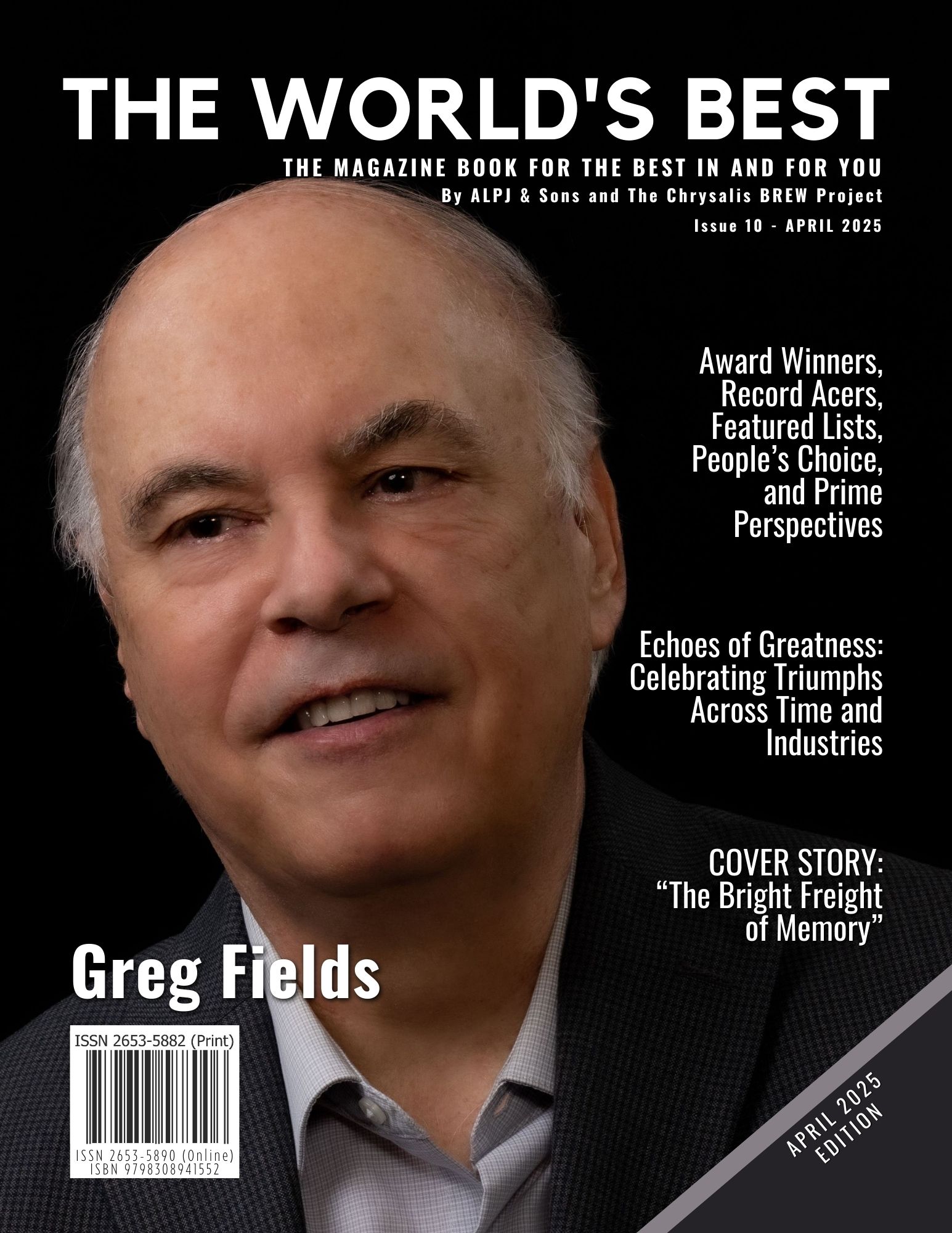
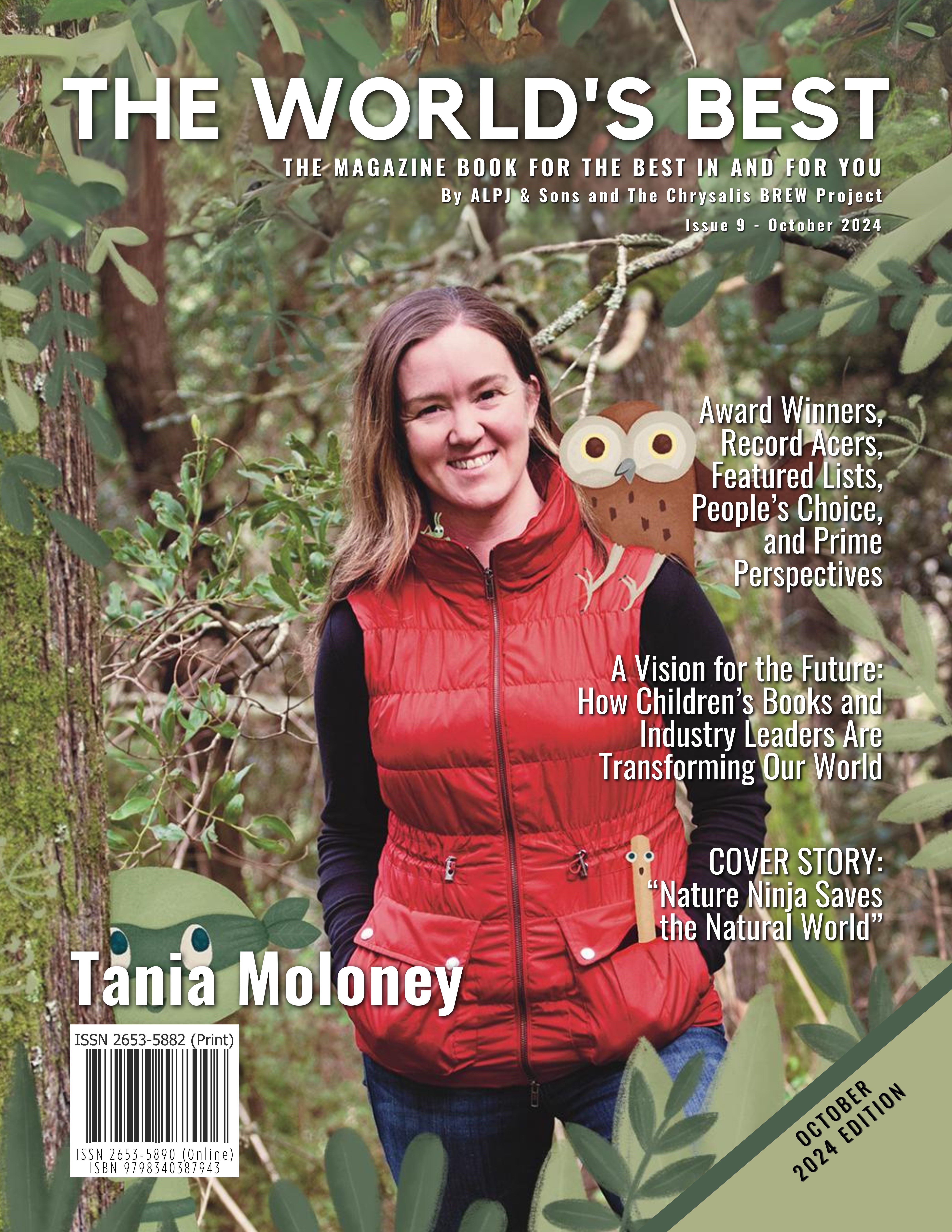

Don’t just read about greatness. Own it!

About Us
The World’s Best Magazine is a print and online publication that highlights the extraordinary. It is your passport to a universe where brilliance knows no bounds. Celebrating outstanding achievements in various fields and industries, we curate and showcase the exceptional, groundbreaking, and culturally significant. Our premier laurels, The World’s Best Awards, commend excellence through a unique process involving subject matter experts and a worldwide audience vote. Explore with us the pinnacle of human achievement and its intersection with diversity, innovation, creativity, and sustainability.
We recognise and honour the Traditional Owners of the land upon which our main office is situated. We extend our deepest respects to Elders past, present, and emerging. We celebrate the stories, culture, and traditions of Aboriginal and Torres Strait Islander Elders from all communities who also reside and work on this land.
Disclaimer: The World’s Best does not provide any form of professional advice. All views and opinions expressed in each post are the contributor’s own. Whereas we implement editorial policies and aim for content accuracy, the details shared on our platforms are intended for informational purposes only. We recommend evaluating each third-party link or site independently, as we cannot be held responsible for any results from their use. In all cases and with no exceptions, you are expected to conduct your own research and seek professional assistance as necessary prior to making any financial, medical, personal, business, or life-changing decisions arising from any content published on this site. All brands and trademarks mentioned belong to their respective owners. Your continued use of our site means you agree with all of these and our other site policies, terms, and conditions. For more details, please refer to the links below.
About | Advertise | Awards | Blogs | Contact | Disclaimer | Submissions | Subscribe | Privacy | Publications | Terms | Winners
The World’s Best: A Magazine That’s All About What’s Great | theworldsbestmagazine.com | Copyright ⓒ 2022-2026
Let’s connect
Discover more from The World's Best
Subscribe to get the latest posts sent to your email.

 The World's Best
One thought on “Jason Ollander-Krane: A Journey Through Theatre, Magic, and Leadership”