
“I take the joys, the pains, and the surprises and write them down so that I can include them in my stories.”
– Cortney Raymond
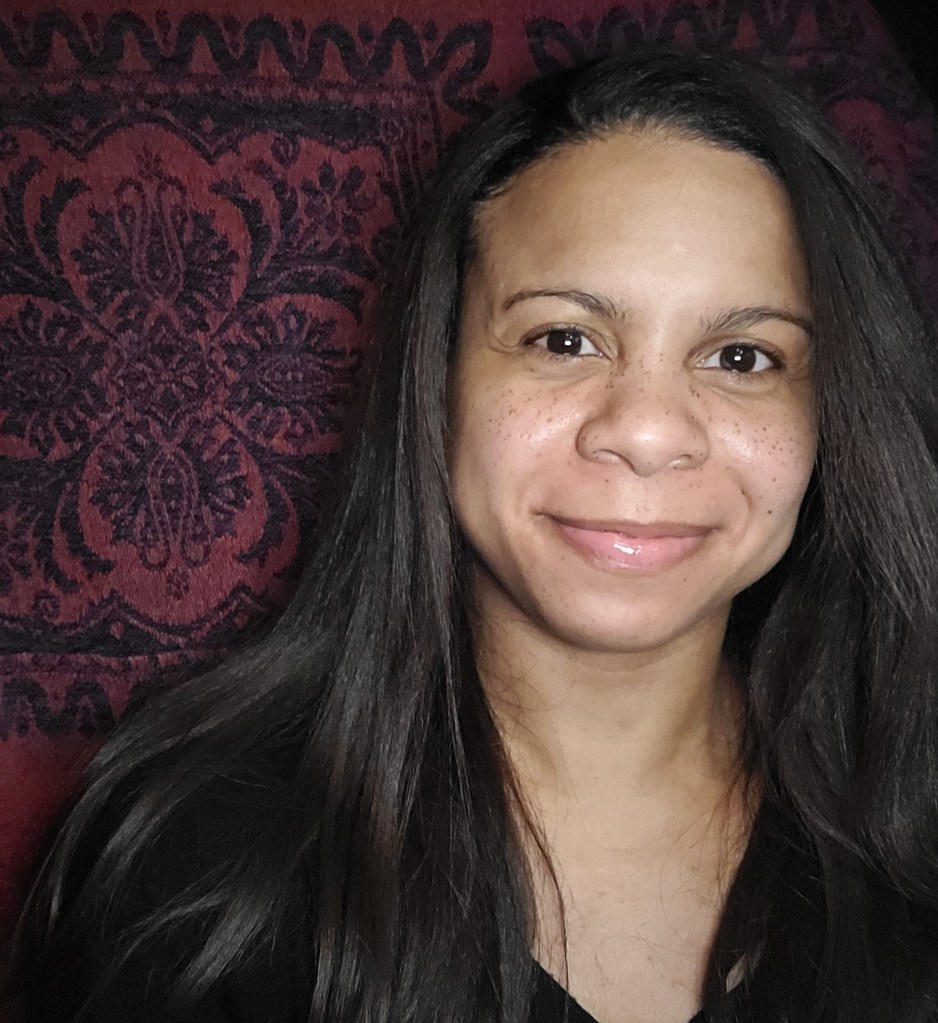
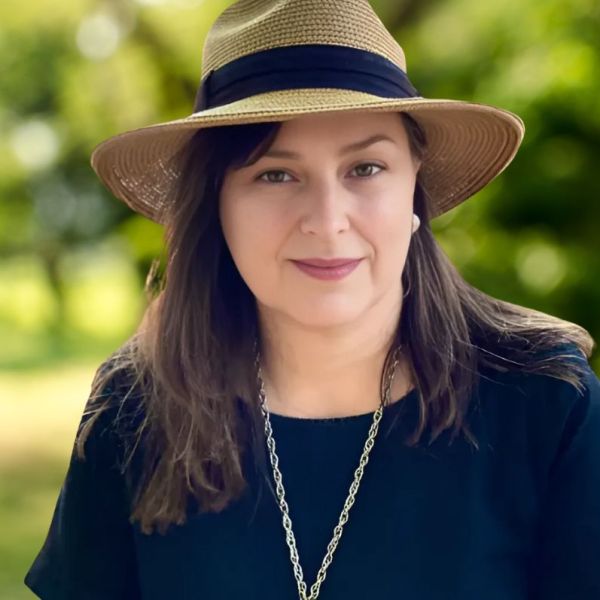
Cortney Raymond examines life’s moments—both expected and unexpected—and weaves them into her writing. As the author of the acclaimed The Meaning of Okay she shares her journey, influences, and approach to storytelling in this interview.
Cortney, thank you for joining us today! Could you begin by introducing yourself and sharing a bit about your background, your journey as a writer, and what inspires you to create stories like The Meaning of Okay?
Thank you for having me. As mentioned, I’m Cortney Raymond, author of The Meaning of Okay. Before I talk a little about my book, let me share a bit about myself. I live in Texas. I’ve got no pets and no kids – just a whole lot of book babies. My goal is Beauty and the Beast library. My family is my social life. I prefer blue ink over black ink, handwriting over typing, and I have an embarrassing amount of notebooks as a result. I have a BA in English/Professional Writing and an MS in Psychology. I’ve written my entire life, winning my first award for writing in elementary school, but I never got serious about publishing anything until The Meaning of Okay. I enjoy observing life unfold and guessing where it’s leading. I take the joys, the pains, and the surprises and write them down so that I can include them in my stories. The goal is that no one is overlooked in their struggle and triumph. Ideally, readers can see themselves in my work and picture their own happy endings.
Congratulations on being a finalist for the 2024-2025 BREW Readers’ Choice Award and winning the Spotlyts Story Award! How does it feel to have your work recognised in this way, and what does this accolade mean to you personally and professionally?
Thank you. It still blows my mind that people are actually reading my book. Of course that’s the goal, but it’s still a great feeling. This recognition reminds me that the tears, frustrations, late nights, and early mornings were worth it. It reminds me that I accomplished something special and inspires me to do it again. Right now, I have a full-time job as a technical writer, and I write around my work schedule. This accolade gives me hope that one day writing will be my full-time occupation.
Your novel, The Meaning of Okay, looks into deeply emotional themes like trauma and redemption. What inspired you to write this story, and how did you approach portraying such sensitive topics with care and authenticity?
My own sexual assault experience inspired me to write The Meaning of Okay. I read an inordinate amount of romance novels, even ones with sexual assault in them, but none that draw attention to the resulting PTSD beyond intimacy issues. Even more, I haven’t read any in which the female main character gets her happily ever after but without having all her problems fixed. When it comes to sensitivity and authenticity, it took several revisions to reach the right level of unadulterated honesty without excessive emotion. I wanted the readers’ feelings to come naturally from their interpretation of the novel. Also, I looked around at all the women in my life who experienced the same thing, and I remembered their stories, their behavior when they told me, and their individual aftermaths. I wanted to represent that level of distance when discussing the assaults and that level of closeness when living through the aftermath of the assaults.
You have an academic background in English and Psychology. How have these fields influenced your writing style and the way you shape your characters and narratives?
My English background helps my writing altogether. I’m grateful to have all my textbooks and resources to reference to help me improve my craft. Psychology helped me shape the characters’ actions and reactions, particularly for Rhys and Dillon. Their patience, gentleness, and understanding came in part from my studies.
The bond between Kennedy and her support network is central to the story. Can you share how you developed these relationships and why you think they resonate so strongly with readers?
I love the bond between Kennedy and her support system, especially her bond with Dillon. In my real life, I had what I call “advocates” to help me through the rough times, so I wanted to replicate that role in the book. I think it resonates with others because that’s what we’d all like. Many people tend to retreat into themselves and avoid others when they’re going through hard times, but who wouldn’t want someone they can’t hide from? I think we’d all like someone fun and loving who has our best interests in mind and helps us out of the downward spiral.
Healing and resilience are pivotal themes in your book. How do you personally define resilience, and what message about recovery do you hope readers take away from your novel?
I define resilience as the ability to keep trying. Failure happens, falling on your face happens, heartbreak happens. Resilience pushes us to get back up and keep striving for the life we want. Recovery is closely related to resilience because putting in the work to heal is a sign of resilience. I want readers to know that there is no time limit on recovery. There may be people expecting you to be “over it” by now, but ignore their opinions on the status of your heart and mind. Take what steps you can when you can and know there are people out there ready to support you as you continue your recovery journey.
As someone with 15 years of experience as a technical writer, how has your professional background influenced your approach to fiction writing, particularly in creating vivid and relatable characters like Kennedy and Rhys?
I’ve always felt like my professional career hindered my ability to write fiction. I’ve felt like writing so much business content with its templates and style guides shriveled my imagination. Writing fiction has actually improved my professional writing. It has given me more options on how to present ideas. If anything, the process of technical writing (drafting, spending some time away from the document, then coming back to revise) helped me untie plot knots and catch plot gaps.
The story conveys strong messages about diversity, empathy, and the power of human connection. How do you ensure that your writing reflects these values, and what impact do you hope it has on readers?
I tried to keep these themes, in some degree, in every interaction between the characters. To me, diversity adds to our understanding of the world and opens our eyes to new and wonderful things. Empathy and human connection are vital to living happy, emotionally healthy lives. Readers may not have had empathetic people in their lives when they needed it. I know I didn’t have as many as I would have liked. However, I hope readers can look beyond their experiences and provide the empathy and genuine connection they needed themselves.
Writing about trauma can be emotionally taxing. What strategies or practices help you stay grounded while working on intense themes?
I have no strategies. It would have been great to have some techniques to separate myself from the narrative. Instead, I was all over the place when I wrote The Meaning of Okay. There was so much crying and anger – multiple breakdowns. While I would welcome practices to fall back on, I’m grateful I didn’t have any strategies to better deal with the heaviness. The breakdowns revealed some truths about my own journey that I’m not sure I would have realized otherwise.
Looking ahead, what projects or themes do you hope to explore next? Do you have any advice for aspiring writers who aim to tackle complex emotional topics in their own work?
The next theme I want to explore is how we truly learn about life once we’re on our own as adults. I want to show how we start off with dreams and certainties in our early 20s, but end up with (potentially) completely different realities in our 40s. It sounds depressing, but it maintains the themes of support systems and human connection that help us through life’s surprises. I have two pieces of advice for authors wanting to tackle emotional topics. First, revise a lot. It’s inevitable that you’ll write out your emotions in the first few drafts because you want readers to feel a certain way. Keep revising until the scene’s actions evoke the emotions without you having to mention them at all. I’m not excluding myself from this advice; I still need to do it myself. Second, be sure to show the proper respect for the topic. Don’t use it as a means to an end but truly explore it. Remember that real people experienced the very thing you’re writing about and know that they would not appreciate their trauma trivialized.
⭐⭐⭐⭐⭐
“There is no time limit on recovery—take what steps you can, when you can, and know there are people ready to support you.”
– Cortney Raymond
Links
Share Your Insights
Share your thoughts in the comments!
- How do personal experiences shape the stories you connect with most?
- What themes in books resonate with you on a deeper level?
- How do you define resilience in your own life?
Help is Available
If you or someone you know is struggling with the topics discussed in this interview, please reach out for help. There are resources available, including hotlines and local support services. Remember, you are not alone, and there are people who care and are willing to support you.
Help is available for you.
When in Australia, here’s the information from health.gov.au:
In case of emergency, dial 000.
For immediate assistance, support is accessible 24/7 across Australia. Reach out to:
- Lifeline: 13 11 14
- Kids Helpline: 1800 55 1800
- Mental Health Crisis Assessment and Treatment Team in your state/territory
- Beyond Blue: 1300 224 636
For urgent care, visit the emergency department at your local hospital.
Alignment with the UN SDGs
- Good Health and Well-Being (SDG 3): Raises awareness of PTSD, trauma, and recovery.
- Gender Equality (SDG 5): Highlights women’s experiences and resilience.
- Reduced Inequalities (SDG 10): Emphasizes diverse perspectives and support systems.
Other Highlights

Looking for something?
Type in your keyword(s) below and click the “Search” button.
Helpful Shortcuts
More Stories
















Print and Digital Magazine

Don’t just read about greatness. Own it!

About Us
The World’s Best Magazine is a print and online publication that highlights the extraordinary. It is your passport to a universe where brilliance knows no bounds. Celebrating outstanding achievements in various fields and industries, we curate and showcase the exceptional, groundbreaking, and culturally significant. Our premier laurels, The World’s Best Awards, commend excellence through a unique process involving subject matter experts and a worldwide audience vote. Explore with us the pinnacle of human achievement and its intersection with diversity, innovation, creativity, and sustainability.
We recognise and honour the Traditional Owners of the land upon which our main office is situated. We extend our deepest respects to Elders past, present, and emerging. We celebrate the stories, culture, and traditions of Aboriginal and Torres Strait Islander Elders from all communities who also reside and work on this land.
Disclaimer: The World’s Best does not provide any form of professional advice. All views and opinions expressed in each post are the contributor’s own. Whereas we implement editorial policies and aim for content accuracy, the details shared on our platforms are intended for informational purposes only. We recommend evaluating each third-party link or site independently, as we cannot be held responsible for any results from their use. In all cases and with no exceptions, you are expected to conduct your own research and seek professional assistance as necessary prior to making any financial, medical, personal, business, or life-changing decisions arising from any content published on this site. All brands and trademarks mentioned belong to their respective owners. Your continued use of our site means you agree with all of these and our other site policies, terms, and conditions. For more details, please refer to the links below.
About | Advertise | Awards | Blogs | Contact | Disclaimer | Submissions | Subscribe | Privacy | Publications | Terms | Winners
The World’s Best: A Magazine That’s All About What’s Great | theworldsbestmagazine.com | Copyright ⓒ 2022-2026
Let’s connect
Discover more from The World's Best
Subscribe to get the latest posts sent to your email.

 The World's Best
One thought on “Discovering Resilience and Redemption: An Interview with Cortney Raymond”