
“I could do anything I set my mind to.”
– Teri M. Brown
Content Warning: This interview discusses emotional abuse, grief, racism, historical injustices, and traditional healing practices. Personal views are shared; readers should approach with awareness and seek diverse sources for broader context.
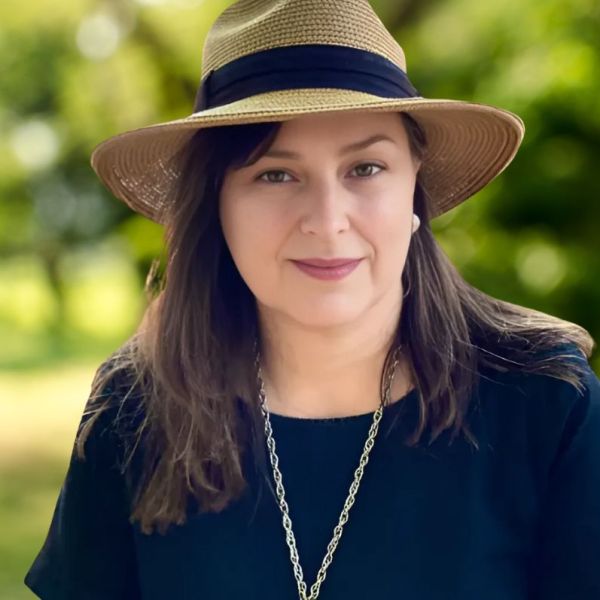
Teri, thank you for joining us! Let’s start with an introduction—please share a bit about yourself, your background, and what led you to become a writer.
As a child, I said I wanted to be an author, but I also said I wanted to be an Olympic ice skater and a brain surgeon. Given that I’m clumsy and hate the sight of blood, I don’t think I really knew what I wanted. But I knew I loved books and have been an avid reader since I decoded my first word. However, life took over, and becoming a writer soon became nothing more than a memory. In 2000, I started writing for small businesses who needed help with their website content. Before long, I was also writing articles, eBooks, and even email campaigns. This ignited the desire to write novels, but I was in an emotionally abusive marriage, which meant I had no safe space. I couldn’t put myself out into the world with my fictional characters because I couldn’t face more rejection. Finally, I left the relationship in 2017, and the words started flowing out of me. Despite getting out of the bad relationship, I was still emotionally damaged and was too afraid to show my work. It wasn’t until I met Bruce, who became my husband in 2019, that I began to heal. Then, during the summer of 2020, we took a tandem bicycle adventure from the coast of Oregon to Washington, DC. This 3102-mile journey changed my life. As we approached our destination, the Marine Corps Memorial, I had an epiphany. I could do anything I set my mind to. It wasn’t a matter of “if I could do something.” Instead, it was a matter of “what did I want to do?” I wanted to be an author. Just over a year later, my first book, Sunflowers Beneath the Snow, a historical fiction set in Ukraine, launched (January 2022). Since then, I’ve published An Enemy Like Me (Jan 2023), which takes place during WWII, Daughters of Green Mountain Gap (Jan 2024), a generational story about Appalachian healers, a short story, The Youngest Lighthouse Keeper, in the anthology Feisty Deeds: Historical Fictions of Daring Women (June 2024), and 10 Little Rules for a Double-Butted Adventure (Feb 2025), an inspirational look at the life lessons I learned riding across the United States.

Your novel An Enemy Like Me won the BREW Fiction Book Excellence Award 2023 for Military Fiction of the Year, and Daughters of Green Mountain Gap has also received accolades. Can you share what these recognitions mean to you as an author?
I write because I have characters inside begging me to tell their stories. Without a doubt, these characters do not care about accolades and recognitions. So, that side of me is just happy to be expressing all that is inside. However, writing can be lonely. As an author, I often wonder if what I am doing matters to anyone but me. Receiving awards and reading reviews gives me a big boost, letting me know that my words are touching people. It’s a great feeling.
Much of your writing explores themes of history, identity, and family. What drew you to these themes, and how do they influence your storytelling?
I use this hashtag: #researchjunkie. I love researching about anything and everything. When I put my love of writing together with my love of researching, historical fiction seemed to be the most appropriate place to land. As I’ve done my research, I’ve found that people haven’t changed that much. In fact, the faster the world changes, the more we stay the same. Let’s take racism, for example. Racism has been around since the beginning. Who we aim the hatred at changes, but the reasons we hate are almost the same. By shining a light on social issue topics in the past, I hope to help people see the social issue topics of today. The same holds true about identity and family. I’ve struggled in my life to figure out who I am and what I have to offer the world. This struggle has occurred within family groups, sometimes with good outcomes and sometimes not. As I’ve traveled around presenting my books and participating in book clubs, I’ve found that my readers have had the same kinds of experiences. One piece of advice all authors hear is to write what they know. Some take that to mean writing about an area in which they have lived or a job they have performed. I don’t see it that way. I’ve never been to Ukraine or ground up mountain herbs or dealt with a husband fighting in a war. But I have dealt with finding myself, loss, family problems, and social issues – and that is what I put into every book.
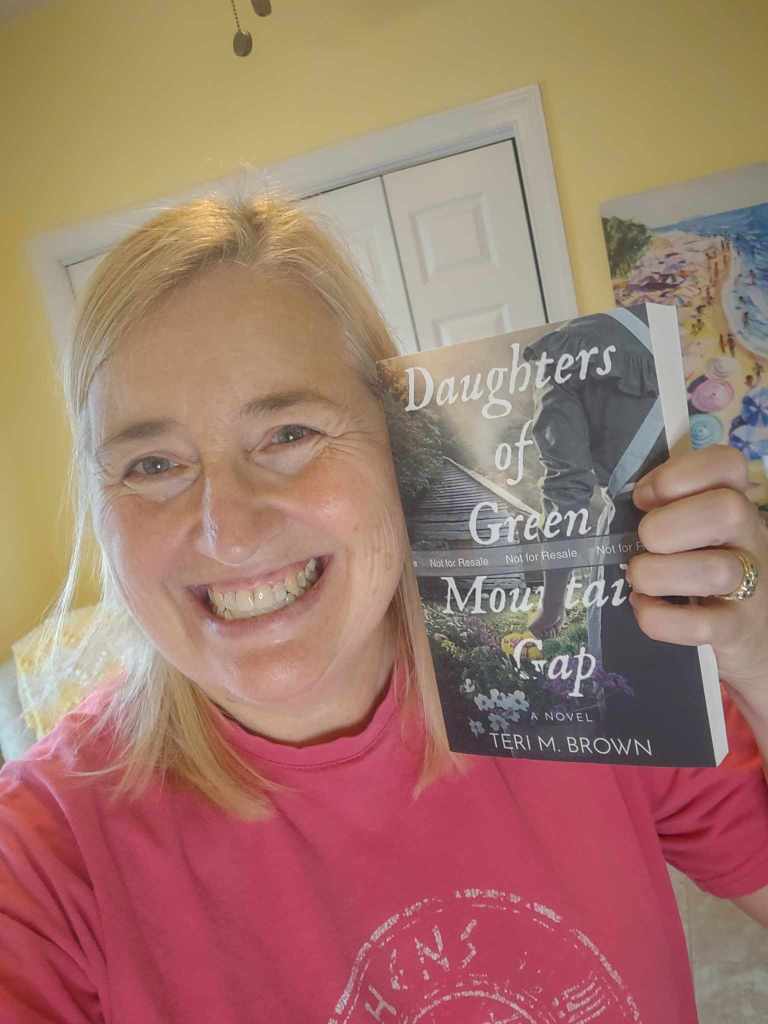
In Daughters of Green Mountain Gap, you look into the contrast between traditional healing practices and modern medicine. What inspired you to tell this story, and did you uncover any surprising historical insights while researching?
Believe it or not, the whole book started because I had a wart on my thumb! I had a well-appointment with my Primary Care Physician, and while there, I asked her if she could remove the wart. She said, “No! It is on your hand. I’ll have to send you to a hand specialist.” Instead, I headed over to the local pharmacy and got the wart remover. A few days later, I was talking to my brother on the phone, and we found ourselves bemoaning the state of healthcare. I told him about my wart and the absurd idea that I needed a specialist. He said, “Why didn’t you get someone to talk it off?” I had no idea what he was talking about. In fact, I was sure he was just telling me a story. I’m the naïve one in my family, so I often fall for these stories and have to hear about it every time we gather as a family. I just mumbled something and moved the conversation on.
However, remember my #researchjunkie moniker? Once we were off the phone, I looked it up. And guess what? There are people who can talk off a wart! The more I researched, the more I found. Some people can blow in someone’s mouth to remove thrush. Others can whisper to a breech baby to get it to turn. Before long, I was in the Appalachian Mountains with healers called Granny women, and Maggie, the healer in Daughters of Green Mountain Gap, was born and telling me her story. I learned so much about herbs and healing. For instance, leaves, stems, and roots from the same plant offer different medicinal properties. Also, some plants are only good for healing when picked at a certain time of the year. Still others have parts that are dangerous to use while other parts are not. I also learned quite a bit about Cherokee healing practices. One of my favorite concepts was that of balance.
Your books highlight deeply personal and emotional journeys, from the struggles of German-Americans in An Enemy Like Me to generational conflicts in Daughters of Green Mountain Gap. How do you balance historical accuracy with emotional storytelling?
My belief is that, as a historical fiction author, I need to do what I can to make the history portion of the book be as accurate as possible. However, my characters can do what they want within the bounds of that history. Woman giving birth are women giving birth whether they live in 1890 or today. The emotional part of the experience is very similar. As long as I use medical equipment, terms, and practices for the right time period, I’m free to explore the emotions.
Your books often highlight resilience and adaptability. How do you see these themes reflecting not just in your characters, but in your own journey as a writer?
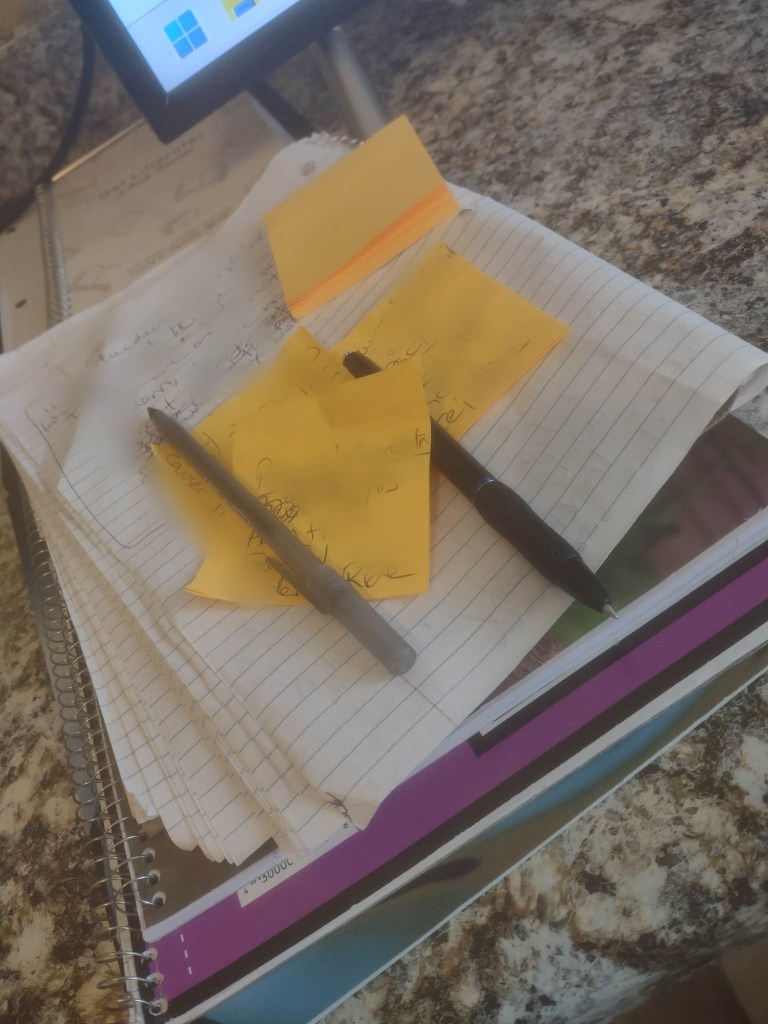
One of the more recent New Year resolution traditions is to pick a word for the year. The word is supposed to reflect your focus. As a writer, picking words like resilience and adaptability could always be chosen! When my first novel launched, I sat with Amazon open and waited for the sales to roll in. I didn’t know anything about marketing and had done nothing to showcase my launch. I didn’t even have an author website. Shortly after the launch, I began taking classes and listening to podcasts about book marketing and now can wear a marketing hat. I’ve had to learn how to use new programs, adapt to the AI landscape, figure out the various ways to publish a book, and more. Adaptation is key. And so is resilience. Right now, I am having to figure out how to write after the death of my husband in January. He was diagnosed with glioblastoma about eighteen months after we finished our adventure. After a long battle, he is now at peace, but I’m left trying to figure out what the new normal looks like. I’m also struggling to find the channel to my character’s thoughts – something that has always come so easily to me.
Diversity, creativity, and innovation are key drivers of literature’s evolution. In what ways do you strive to bring fresh perspectives and underrepresented narratives into your work?
Readers do not want to read the same tired story over and over again. It is definitely up to the author to find new perspectives. When thinking about a potential idea, I always ask the question “What if?” What if that happened to someone who – fill in the blank. What if that happened during – fill in a time period? What if someone who wasn’t supposed to be seen or heard was seen and heard? By asking these kinds of “what if” questions, I find fresh and underrepresented narratives.
If you could sit down with any historical figure—whether from your novels or real life—for a conversation, who would it be, and what would you ask them?
I would want to talk to author Alice Bradley Sheldon. She wrote under the pen name James Tiptree Jr because she wrote in the science fiction genre which was considered to be a male genre. I would love to chat with her about being a woman born in 1915 and someone who didn’t let being a woman stop her from achieving her goals. My question would be this: Why, as a woman who worked in the Air Force during WWII and could have worked in the CIA, did you decide to hide your womanhood as an author? And, if given the chance to do it again, would you write under your own name?

What’s next for you? Can you share any upcoming projects or themes you’re eager to explore in your future books?
I just released 10 Little Rules for a Double-Butted Adventure which looks at lessons I learned about myself, life, and others while riding across the United States on a bike. I also have a children’s book, Little Lola and Her Big Dream coming out sometime in the spring of 2025. I am working on a contemporary women’s fiction that is a humorous look at one woman’s journey through menopause and would like to see this come out in late 2025. Finally, I have another historical fiction idea with a mystery/suspense leaning that I look forward to starting. I also started a podcast called Online for Authors. I read indie author’s books and then have a discussion with them during the 30-minute show. This is a great place for listeners to find the next book on their TBR pile.
⭐⭐⭐⭐⭐
“By asking these kinds of ‘what if’ questions, I find fresh and underrepresented narratives.”
– Teri M. Brown
Links
- Know more about the BREW Book, Blog, and Poetry Awards here
Share Your Insights
What resonates with you most from this interview? Share your thoughts in the comments!
- Have you ever had a moment that changed your perspective on what you could achieve?
- What historical or social issues do you think more stories should explore?
- How do you balance personal experiences with creative storytelling?
Alignment with the UN SDGs
- Quality Education (SDG 4): Promotes historical awareness and lifelong learning.
- Gender Equality (SDG 5): Highlights women’s struggles in literature and history.
- Good Health & Well-being (SDG 3): Explores traditional healing practices.
- Reduced Inequalities (SDG 10): Addresses racism and social issues through storytelling.
Other Highlights

Looking for something?
Type in your keyword(s) below and click the “Search” button.
Helpful Shortcuts
More Stories

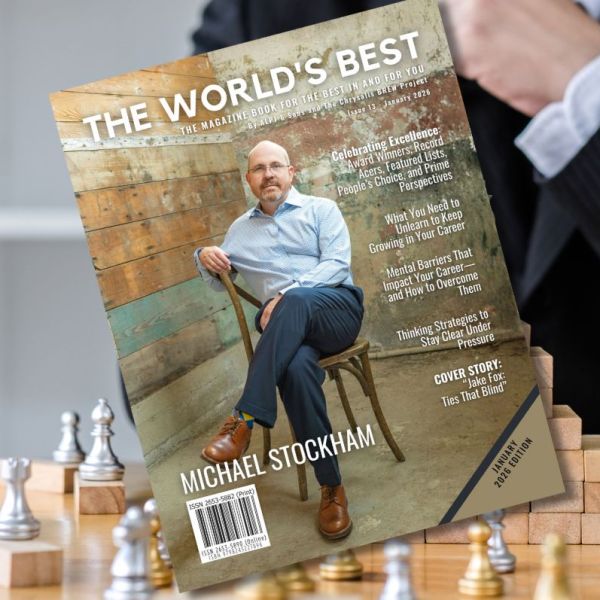


Print and Digital Magazine

Don’t just read about greatness. Own it!

About Us
The World’s Best Magazine is a print and online publication that highlights the extraordinary. It is your passport to a universe where brilliance knows no bounds. Celebrating outstanding achievements in various fields and industries, we curate and showcase the exceptional, groundbreaking, and culturally significant. Our premier laurels, The World’s Best Awards, commend excellence through a unique process involving subject matter experts and a worldwide audience vote. Explore with us the pinnacle of human achievement and its intersection with diversity, innovation, creativity, and sustainability.
We recognise and honour the Traditional Owners of the land upon which our main office is situated. We extend our deepest respects to Elders past, present, and emerging. We celebrate the stories, culture, and traditions of Aboriginal and Torres Strait Islander Elders from all communities who also reside and work on this land.
Disclaimer: The World’s Best does not provide any form of professional advice. All views and opinions expressed in each post are the contributor’s own. Whereas we implement editorial policies and aim for content accuracy, the details shared on our platforms are intended for informational purposes only. We recommend evaluating each third-party link or site independently, as we cannot be held responsible for any results from their use. In all cases and with no exceptions, you are expected to conduct your own research and seek professional assistance as necessary prior to making any financial, medical, personal, business, or life-changing decisions arising from any content published on this site. All brands and trademarks mentioned belong to their respective owners. Your continued use of our site means you agree with all of these and our other site policies, terms, and conditions. For more details, please refer to the links below.
About | Advertise | Awards | Blogs | Contact | Disclaimer | Submissions | Subscribe | Privacy | Publications | Terms | Winners
The World’s Best: A Magazine That’s All About What’s Great | theworldsbestmagazine.com | Copyright ⓒ 2022-2026
Let’s connect
Discover more from The World's Best
Subscribe to get the latest posts sent to your email.

 The World's Best
One thought on “Stories That Shape Us: Teri M. Brown on Heritage, Healing, and the Power of Fiction”