A Multi-Genre Journey: Exploring Screenwriting and Literary Success with Harker Jones
“Storytelling is how we connect as humans—it’s the bridge that allows us to share our experiences and emotions across all barriers.”
– Harker Jones
Storytelling has long been a way for people to connect and communicate, bridging gaps between diverse experiences and emotions. Harker Jones has built his career on this principle, crafting narratives that resonate deeply across different audiences. From his award-winning novel Until September to his celebrated young-adult thriller Never Have I Ever and his short films that have earned accolades worldwide, Jones has demonstrated a commitment to meaningful storytelling. In this interview, he discusses his journey, his inspirations, and the impact he hopes to have through his work.
Harker, who is Harker Jones, and what has shaped your journey as a writer and creator?
I’m the author of the award-winning love story Until September, which earned the LGBT+ Fiction Award from the American Legacy Book Awards, the LGBTQIA Fiction Award from the Independent Author Awards, and the Reader Views Literary Awards Gold Award. My recently published young-adult thriller, Never Have I Ever, was named a Top 5 finalist in the American Writing Awards and a runner-up in the Halloween Book Festival.
Two of my short thrillers, Cole & Colette and One-Hit Wonder, have been accepted into more than 60 film festivals combined, winning several honors, including Best Sci-Fi Short at L.A. Indies, Toronto Indie Shorts, and the New York Science Fiction Film Festival. I spent seven years as managing editor of Out magazine and currently review theater for Broadway World. I’m also a published poet and a proud member of both the Los Angeles Drama Critics Circle and Mensa.
Congratulations on “Until September” winning the 2024 American Legacy Book Award for LGBTQ+ Fiction! What does this award mean for you, and what significance do you think the story holds for readers?
Thanks! It was a thrilling moment when I found out I had won. You just don’t know how your projects will be received by the world at large so I’m deeply grateful that the response to “Until September” has been so positive. Because while it is a love story, it is not a romance. It’s based in reality with real stakes. Someone once told me it read like a thriller because there’s such a sense of foreboding from the beginning that you’re left in suspense anticipating just what is going to happen. And I think that’s why it resonates so well with readers. Because they are intensely connected to the characters and their story, specifically because they know they might not get a happy ending. (No spoilers: I’m not implying “Everybody dies!”) And that makes the characters land harder than a surface story with a meet-cute and a guaranteed ride into the sunset. There is nothing wrong with those stories, of course. Sometimes that’s precisely what I’m looking for. “Until September” just isn’t that. So for the American Legacy Book Awards to embrace it so wholly was very meaningful, because they (and so many others) accept it for what it is, not necessarily what they want it to be.
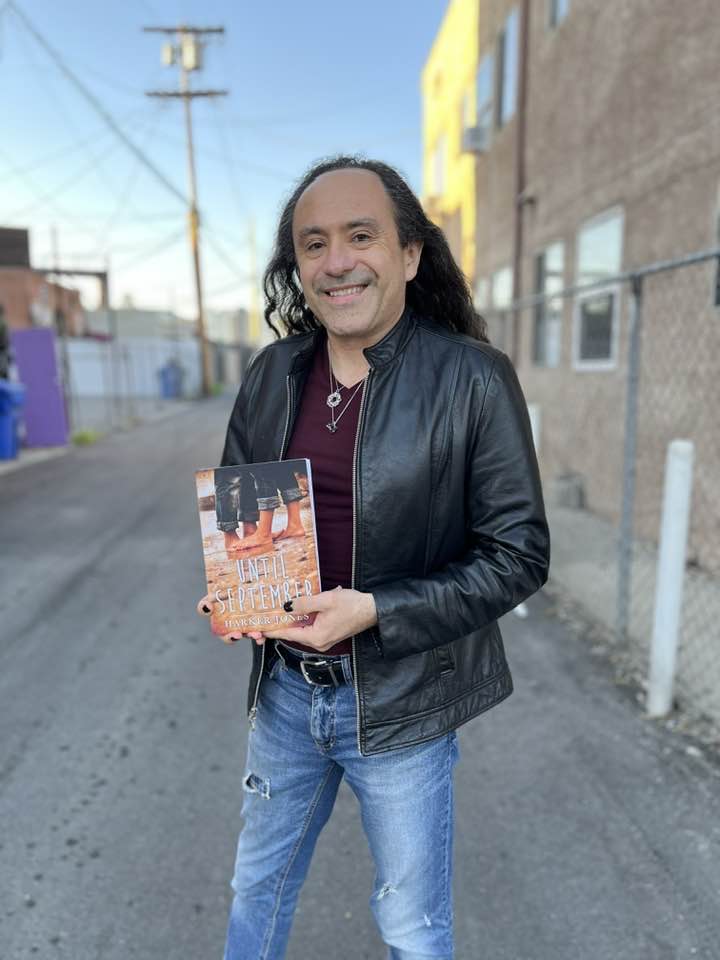
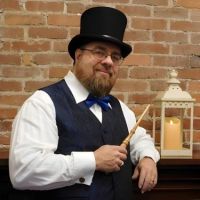
A promo shot of me with “Until September” (Image and caption credit: Harker Jones)
“Until September” reached the finals in the American Writing Awards, the Page Turner Awards, and the Tucson Festival of Books Literary Awards. It has also been shortlisted for the BREW Readers’ Choice Award. How has the positive reception shaped your perspective as a writer?
I am so overwhelmed by the response that I kind of just take it in stride. Not because I feel like, “Oh, of course they love it,” but because it’s so bizarre that I don’t even know how to react. It’s thrilling, of course, but then I just go back to work, because I don’t know what else to do. And the work never ends! There’s so much I want to do, it’s like, “Yay, I’m all dressed up for the event!” and then the next day I’m back in the thick of it in my jeans with my sleeves rolled up. The glitz is great (SO great), but you only get there through the hard work of being in the trenches. So I don’t know that my perspective has changed much, but response like that from those institutions certainly does bolster my confidence that I am not just on the right road but headed in the right direction.
Your work spans comedy, thrillers, and romance. How do you manage to shift your creative approach across these genres while keeping your style consistent?
It’s funny: Horror is my favorite genre, yet my first horror script was the hardest for me to write. And it’s still not in great shape! (The subsequent horror projects came more easily and are much better, however.) I don’t know why comedy comes so easily to me. Though they both, comedy and horror, work the same muscles, they work them differently. With comedy, there’s a set-up then a laugh; with horror, there’s a set-up then a scream. If you nail it, at least! I do find that my style, my voice are quite different from genre to genre, but when inspiration strikes, the style and voice come easily no matter what type of material it is. I like to think the quality remains consistent even if my angle into the story — and the story itself — is different!
Your background includes roles in both screenwriting and editorial work. How has each discipline contributed to your storytelling techniques?
The editorial work I’ve done really helped sharpen my writing skills, and while a writer relies on an editor to clean up their work, I also think they should understand the basics of grammar and spelling and punctuation in addition to storytelling. I’m shocked by some of the writing samples I’ve read where the applicant doesn’t understand the difference between a hyphen and an em dash, or an em dash and an ellipsis. You shouldn’t be utilizing tools you don’t understand how to use. At least know the basics! Anyway, I have found that an editing background, especially compounded by screenwriting, has helped me better learn to cut and shape my words until they are at the most descriptive and yet leanest they can be, saying the most in the fewest words.
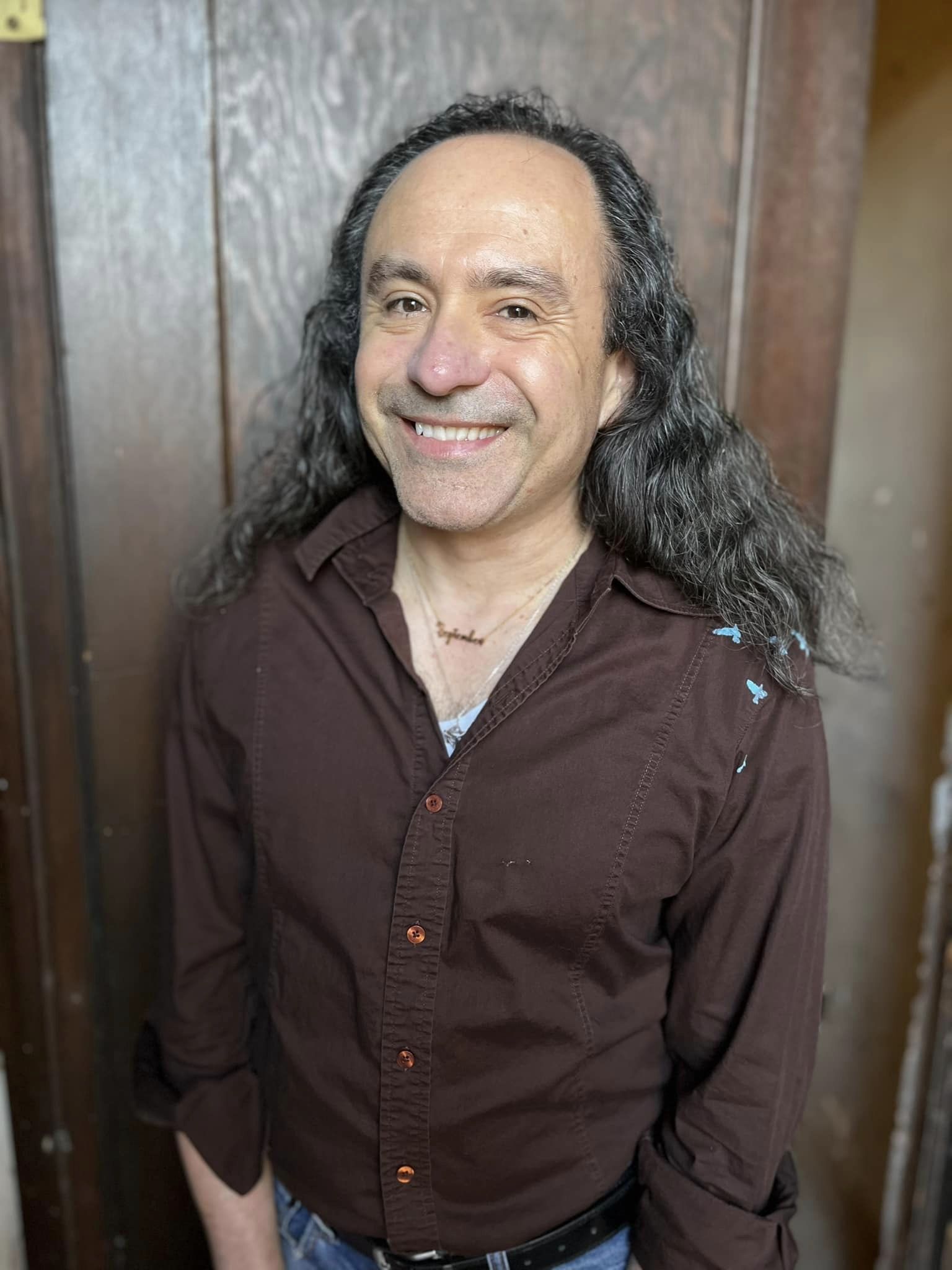
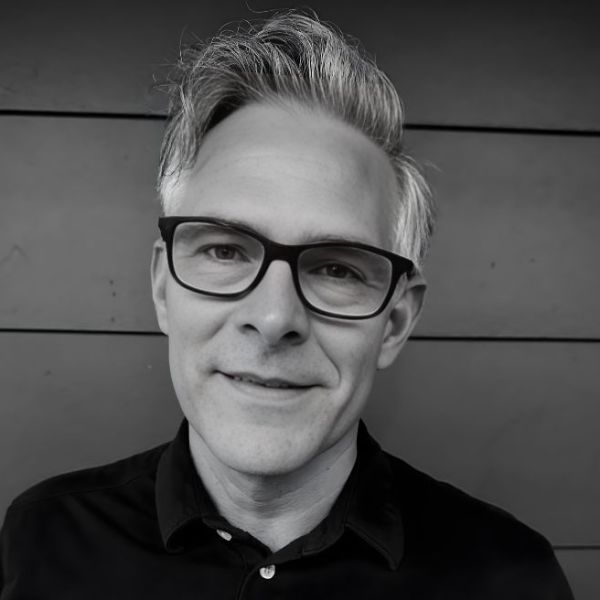
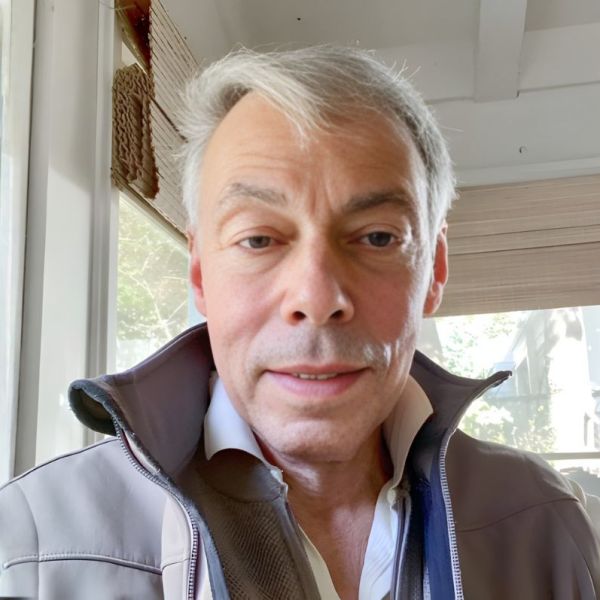
A promo shot of me (Image and caption credit: Harker Jones)
As an advocate for inclusive stories, how do you aim to bring authentic representation into your work, and what elements are most crucial in doing so?
I find it best to not have an agenda. It draws attention to itself when you’re trying too hard. So I just go where inspiration takes me. Being gay, sure, I have gay characters in most of my projects, but I have two that are entirely queer free. No reason. That’s just how the characters came to me. I didn’t even think about it until after the projects were complete. That said, most of my projects do have queer characters, either lead or supporting, but no matter what roles they play, it’s never political. It’s just people striving to be better, whether that’s getting the guy, suing a pop star for lip synching or becoming a vigilante killer to take out the trash in the world. And that’s what makes them and their stories authentic: the fact that nothing is being forced, it’s all organic. They come to me as they come to me (black, white, gay, straight, male, female, rich, poor, etc., etc.) and I tell their stories.
How would you describe the differences between writing a novel and a screenplay in terms of pacing and character development?
The differences are enormous. A screenplay is essentially just the bones of a story. You give simple direction of who the character is and where their actions take the story, and the director and actor and editor and clothing designer and hairstylist come in and give life and complexity and depth to the character and how they develop within their world. With a novel, you have to design all that yourself, which sounds like a lot but is really more freeing. There are fewer rules, fewer restrictions, less structure. In the end, you’re telling the same story, the characters grow (or don’t) and their choices propel them forward. It’s just in how you dress it up.
Innovation often comes with creative risks. Can you share a memorable instance when you took a risk in your writing, and what you learned from it?
I knew I was taking a risk with “Until September” because, like I said earlier, I didn’t go the easy romance route. And while I knew that was the right choice, I also knew it was going to be a harder sell. People want simple, they want safe. So it’s been really gratifying that it has been embraced the way it has been. What I learned from that was that you should always go with what you know is right. Because you, and only you, know. Don’t cater to the lowest common denominator just because there are more of them. When you do what you know in your heart is right, your project will be the best it can be and will reach the people it is intended to reach. That is success.
With sustainability becoming a growing focus in publishing, do you feel writers have a role in promoting these values, and how do you personally view this in your work?
I know some (mostly older) people really adhere to the beauty of the printed page (probably those who still insist on two spaces at the end of sentences!), and I get it. I grew up with physical books, too, and I love the feel of the paper and the smell of the ink (though I have not used two spaces at the end of sentences for decades!), but I sometimes think there is something responsible about reading in digital form. Think of the trees we’re saving! And, of course, there’s the immediate access when you find a book that intrigues you. You simply download it and start reading. At the same time, however, our electronics are not good for the environment either, so is it better to kill the trees or create more plastic waste?
Reflecting on your success in both screen- and novel writing, what advice would you offer to writers looking to diversify their creative skills?
Many people want a writer to be one thing. “She writes comedy.” “He writes thrillers.” “They write country songs.” Which is fine. Some people excel at and are only interested in excelling at one thing. Some of us, however, are interested in more than that. And to me, being well-rounded, is a plus. In the end, though, it’s important to go where inspiration takes you. Chasing trends will not result in your best work. When a comedy idea pops for me, I go with it. I don’t file it away and try to write a found-footage thriller because I think that’s what people want. Same goes for fiction and songwriting and poetry. Go with your creativity. If that means you stay in one lane the whole time, that’s fantastic! That is where you will excel. I kept being told that producers were looking for one-location projects — for budgetary reasons —but I didn’t have any, so I went with the ideas that WERE popping for me. Then finally, FINALLY, inspiration struck, and I wrote a mind-bending, one-location psychological thriller called “The Alexandrite Ring,” and it’s getting some of the strongest response I’ve gotten yet! And I think that’s because it happened organically. I didn’t push it. I let it happen.
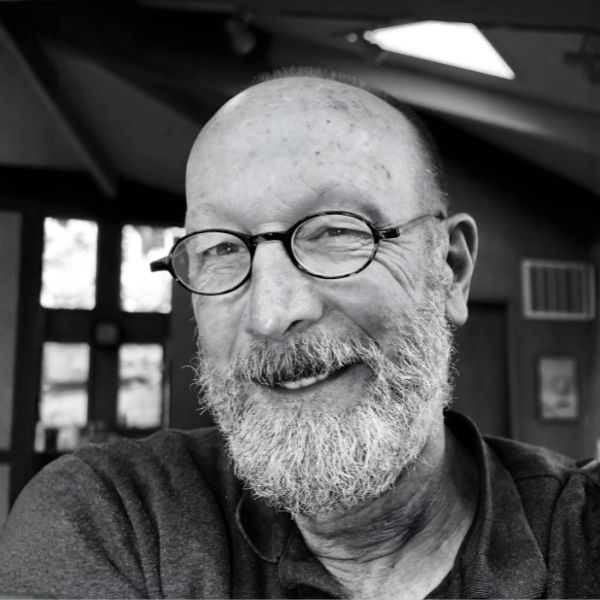
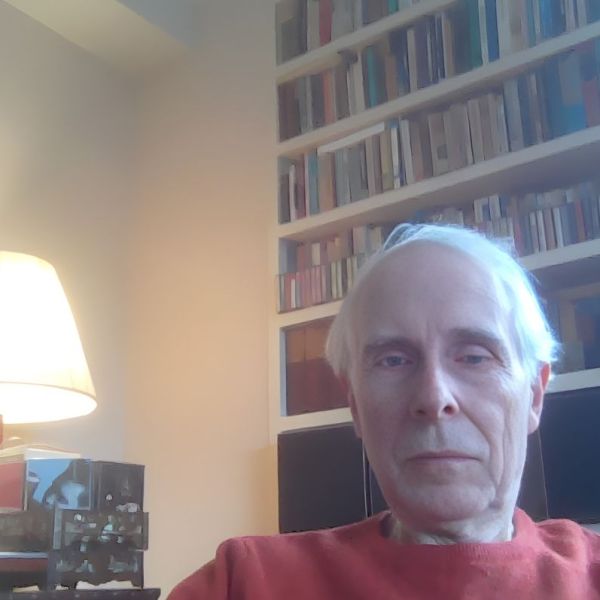
Another promo shot of me (Image and caption credit: Harker Jones)
Finally, as an experienced screenwriter and author, what would you consider a defining moment in your career, and how has it influenced the projects you pursue?
When I first moved to L.A., I had no idea what I was intending to do. I had always been a writer and editor, but was that the future? A couple of months after moving here, I got a job at a features magazine called “Genre.” I started as a copy editor and was promoted like a month later to the managing editor’s position. I moved from there to Liberation Publications, publisher of “Out” and “The Advocate,” where I was also hired on as a copy editor. Within six months I had been promoted to managing editor of “Out,” the biggest gay magazine in the world, a position I stayed in for seven years. Those were two moments where the universe was telling me I was on the right path. And that led to my confidence in tackling screenplays and children’s books and even songwriting!
⭐⭐⭐⭐⭐
“At the end of the day, I hope my work sparks a little more compassion and understanding in the world.”
We’d love to hear your thoughts on this interview! Share your perspective in the comments section below:
Which part of Harker Jones’ journey or insights resonated most with you?
How do you think creative works like his can contribute to building a more inclusive society?
What role do you believe storytelling plays in addressing global challenges?
Alignment with the UN SDGs
The following are some ways that the Harker Jones interview relates to the Sustainable Development Goals (SDGs) of the UN:
Goal 5: Gender Equality – His works promote gender inclusion in media by representing a range of identities.
Goal 10: Reduced Inequalities – He promotes inclusivity and fights against societal disparities by emphasizing LGBTQIA+ themes in his writings and movies.
Goal 16: Peace, Justice, and Strong Institutions – His stories foster compassion and understanding, which in turn fosters inclusive communities and social cohesiveness.
Other Highlights
Looking for something?
Type in your keyword(s) below and click the “Search” button.
The World’s Best Magazine is a print and online publication that highlights the extraordinary. It is your passport to a universe where brilliance knows no bounds. Celebrating outstanding achievements in various fields and industries, we curate and showcase the exceptional, groundbreaking, and culturally significant. Our premier laurels, The World’s Best Awards, commend excellence through a unique process involving subject matter experts and a worldwide audience vote. Explore with us the pinnacle of human achievement and its intersection with diversity, innovation, creativity, and sustainability.
We recognise and honour the Traditional Owners of the land upon which our main office is situated. We extend our deepest respects to Elders past, present, and emerging. We celebrate the stories, culture, and traditions of Aboriginal and Torres Strait Islander Elders from all communities who also reside and work on this land.
Disclaimer: The World’s Best does not provide any form of professional advice. All views and opinions expressed in each post are the contributor’s own. Whereas we implement editorial policies and aim for content accuracy, the details shared on our platforms are intended for informational purposes only. We recommend evaluating each third-party link or site independently, as we cannot be held responsible for any results from their use. In all cases and with no exceptions, you are expected to conduct your own research and seek professional assistance as necessary prior to making any financial, medical, personal, business, or life-changing decisions arising from any content published on this site. All brands and trademarks mentioned belong to their respective owners. Your continued use of our site means you agree with all of these and our other site policies, terms, and conditions. For more details, please refer to the links below.


















 The World's Best
2 thoughts on “A Multi-Genre Journey: Exploring Screenwriting and Literary Success with Harker Jones”