
Transformative change is fuelled by innovation, and businesses that thrive in this field not only push the limits of technology but also tackle urgent environmental and societal issues. In this expert roundup, leaders highlight the companies that show how innovation can address pressing problems and produce long-term benefit. These businesses represent what it means to be a leader in the contemporary business environment, from sustainable fashion and groundbreaking technology to renewable energy and ethical business practices. Each makes a distinct contribution to redefining sectors, strengthening communities, and establishing new standards for achievement in a world that is changing quickly.
Now, in 2025, who are the world’s leading innovators? Thought leaders share their insights—and you, too, can cast your vote! Read on for all the exciting details.
Amazon Leads in Innovation and Sustainability
In my view, Amazon stands out for innovation, creating value, and addressing societal challenges. Their core services, from e-commerce to cloud computing, are remarkable for not only reshaping industries but also easing our daily lives. They’ve created thousands of jobs worldwide while investing in renewable energy projects to offset their environmental impact. Amazon’s proactive approach towards sustainability, combined with unstoppable innovation, makes it a true front-runner in the corporate world.

Abid Salahi, Co-founder & CEO, FinlyWealth
Allbirds Excels in Sustainable Fashion
One company that is top-notch at innovation, sustainability, and solving social problems as a B-Corp certified company is Allbirds. Allbirds has pioneered sustainability in fashion, and their footwear is eco-friendly as well. They aren’t just investing in natural materials; they have a holistic approach to lowering their carbon footprint at all levels of their supply chain and product lifecycle.
Allbirds is proof that B-Corp certification is not a status symbol but a way of verifying that a company’s primary business processes are consistent with rigorous social and environmental requirements. They make use of fibers such as merino wool, eucalyptus, and sugarcane foam, minimizing environmental impact while adding function and comfort to products.
This commitment to sustainability is accompanied by transparency, with Allbirds telling you in specific detail about each product’s carbon footprint, incentivizing consumers to be aware and responsible. Allbirds is an inspiration for enterprises thinking about adopting AI but scared to get started.

Michael E. Farah, Founder, Realtor and Real Estate Attorney, The Farah Law Firm, P.C.
Ginkgo Bioworks Pioneers Synthetic Biology
Ginkgo Bioworks is one of the best. They work in the domain of synthetic biology, itself a frontier of modern science. What sets Ginkgo apart is their interest in programming cells just as we do with computers. This capability holds huge implications for everything from pharmaceuticals to agriculture. They create custom microbes that make everything from perfume to fertilizer to medication, drastically eschewing the need for traditional (and often environmentally destructive) manufacturing.
Ginkgo’s model offers a radical model of creativity. The way they use foundries to design these organisms is a demonstration of the power of automation and biology to transform benchtop experiments into products. For a start-up like mine, this vision of a foundry is appealing. Think about bringing the same principle to software engineering—creating a very automated, template-driven space where we could quickly prototype and scale up applications. This could slash development times by half, increase our innovation capability, and bring robust, sustainable solutions to market much faster. It would change the tempo and scale of small tech startups and make it a revolutionary solution to today’s tech problems.

Craig Focht, Cofounder & CEO, All Pro Door Repair
L’Oréal Innovates in Personal Care
L’Oréal might not be as flashy as Tesla or Apple, but they’re making a huge impact in meaningful ways. As a global leader in personal care and beauty, they reach millions of people every day and make a difference in how people feel about themselves. L’Oréal has come a long way, innovating products for diverse skin types, ages, genders, and regions, ensuring that their offerings are accessible and inclusive to people worldwide. They go beyond beauty, empowering women through initiatives like the “Women of Worth” award, which celebrates women making a positive difference in their communities.
Vivian Chen, Founder & CEO, Rise
Shopify Transforms Small Businesses
I’ve seen firsthand how Shopify consistently drives innovation in e-commerce while maintaining a strong focus on merchant success and sustainability. They’ve transformed countless small businesses through their platform, and their recent investments in carbon-neutral shipping and shop-local initiatives show they’re thinking beyond just profits.

Cyrus Partow, CEO, ShipTheDeal
Siemens Advances Smart Infrastructure
In my years running a digital business, I’ve watched Siemens transform from a traditional industrial company into a sustainability powerhouse through their digital-twin technology and smart infrastructure solutions. Their MindSphere platform is helping cities reduce energy consumption and emissions while improving quality of life, which perfectly demonstrates how innovation can create both business and societal value.

Joe Davies, CEO, FATJOE
DeepMind Uses AI for Real-World Solutions
From my experience building AI solutions, I’ve been particularly impressed with DeepMind’s approach to using artificial intelligence for solving real-world problems. Their AlphaFold project has revolutionized how we understand protein structures, which has massive implications for disease research and drug development—something I’ve seen firsthand while working with healthcare clients. While they’re not as visible as some tech giants, their focus on using cutting-edge technology to tackle fundamental scientific challenges, while maintaining ethical AI principles, sets them apart in my view.

Joshua Odmark, CIO and Founder, Local Data Exchange
Patagonia Sets Ethical Business Standards
One standout company that drives innovation, sustainable value creation, and societal impact is Patagonia. They are known for their outdoor apparel and have redefined how a business can prioritize environmental and social responsibilities.
The company leads in sustainable production, notably through its pioneering use of eco-friendly materials and advocacy for a circular economy. Their “Worn Wear” program encourages customers to repair and reuse products, drastically reducing waste in an industry often criticized for its environmental footprint. By setting a new standard for textile sourcing and product lifecycle, Patagonia has inspired other brands to adopt similar practices.
Furthermore, the company’s approach to creating sustainable value is evident in its corporate structure and financial choices. For instance, in 2018, the company made the groundbreaking decision to transfer 100% of its voting stock to the Patagonia Purpose Trust. This shift ensures that their profits are dedicated to environmental initiatives, proving that a business can align financial success with the greater good rather than focusing solely on shareholder value.
Additionally, the company is a vocal advocate for broader societal issues, including climate action, fair labor practices, and corporate transparency. Its marketing campaigns regularly address urgent environmental crises, such as the need for public land protection, aiming to raise awareness and support policy change.
In a nutshell, Patagonia has proven that social and environmental responsibility can coexist with profitability, making it a pioneer in ethical business practices.

Peter Bryla, Senior Community Manager, Resume-Now
Apple Combines Innovation and Social Impact
I want to share my view on Apple. My relationship with the company goes back to 2012 when I started using their tech to transform our jewelry business operations. The seamless integration of iPads into our showroom changed how we display our luxury watches to clients—from standard catalog browsing to an interactive digital experience with 3D watch models and customization options.
Apple stands out through their dedication to both innovation and sustainability. Their recent commitment to carbon neutrality across their supply chain by 2030 sets a high bar for other companies. Numbers speak for themselves: Apple invested $22.61 billion in R&D in 2023, according to Statista. The company also partners with suppliers who use 100% renewable energy, a factor that matters to our environmentally-conscious clients.
What I value most is Apple’s focus on social impact alongside business growth. Through initiatives like the Apple Developer Academy, which opened doors for 150,000+ aspiring developers and entrepreneurs, they create real opportunities for people. My team took inspiration from their approach—we started a mentorship program for young jewelers in New York, sharing knowledge about sustainable practices in luxury retail.
For more insights on Apple’s initiatives, I recommend checking out http://www.apple.com/environment and following Lisa Jackson, Apple’s VP of Environment, Policy, and Social Initiatives, who shares great updates on their progress.

Russ Vall, Co-Founder, MioJewelry
Samsung Prioritizes Sustainable Innovation
I’ve closely followed Samsung Electronics throughout my marketing career, and their sustainable innovation strategy really stands out in how they’re tackling both business and societal challenges. Their recent development of eco-conscious packaging and energy-efficient devices, paired with their commitment to using renewable energy in all U.S., European, and Chinese facilities by 2025, shows they’re walking the talk.

Yarden Morgan, Director of Growth, Lusha
SpaceX Revolutionizes Space Travel
From my perspective, SpaceX stands out as the quintessential company for driving innovation, creating sustainable value, and addressing societal challenges. Their pioneering work with reusable-rocket technology, exemplified by the Falcon 9 and Falcon Heavy, has fundamentally altered the economics of space travel by reducing costs dramatically. This innovation not only showcases their technical prowess but also contributes to sustainable value by minimizing the environmental impact of launching into space. Their Starship project further illustrates their commitment to long-term sustainability by aiming to make interplanetary travel feasible, thus opening up new frontiers for human expansion.
SpaceX’s Starlink project is another testament to their innovative approach to societal challenges. By deploying a constellation of satellites to provide global internet coverage, they are directly tackling the issue of digital disparity. This initiative could revolutionize access to education, healthcare, and economic opportunities in regions where connectivity was previously a luxury. Moreover, their efforts to manage space debris by designing satellites that can deorbit at the end of their life cycle reflect a responsible approach to the sustainability of space activities, ensuring future generations can also explore and utilize space.
Beyond these technical and economic advancements, SpaceX’s vision to colonize Mars represents an ambitious societal challenge: ensuring the long-term survival of humanity beyond Earth. This vision not only inspires but also encourages the scientific community and the public at large to think about humanity’s future in cosmological terms. However, this ambition comes with the responsibility to mitigate the environmental impact of rocket launches on Earth, balancing innovation with ecological stewardship. In essence, SpaceX’s blend of technological breakthroughs, economic disruption, and visionary goals positions them as a leader in not just advancing space technology but also in contributing positively to societal progress and environmental considerations.

Henry Timmes, CEO, Campaign Cleaner
Unity Democratizes Development Tools
I’ve worked closely with Unity Technologies and have witnessed their remarkable impact on both innovation and social challenges, especially in education and accessibility. Through their game-engine technology, I’ve seen them democratize development tools and create immersive learning experiences that address real-world problems, while their commitment to sustainability includes reducing gaming’s carbon footprint and promoting inclusive design practices.

John Cheng, CEO, PlayAbly.AI
Unilever Champions Sustainability and Equity
I believe that Unilever is an outstanding company that excels in driving innovation and creating sustainable value while addressing societal challenges. Unilever’s commitment to sustainability is evident through its Sustainable Living Plan, which aims to reduce environmental impact and improve the livelihoods of people worldwide. The company actively innovates its product lines to include more sustainable ingredients and packaging, positioning itself as a leader in the consumer goods industry.
Unilever’s approach promotes responsible consumption and social equity through initiatives that support smallholder farmers and empower women. This focus on sustainability not only fosters brand loyalty but also creates a positive impact on communities. By integrating social and environmental considerations into its business model, Unilever sets a powerful example for others, demonstrating that companies can thrive while making meaningful contributions to society.

Jason Horner, President, TabShop
NVIDIA Pushes AI and Deep Learning
NVIDIA is the epitome of an organization that specializes in driving innovation, creating long-term value, and solving social problems. While NVIDIA was originally known for its GPUs that lent their expertise to gaming, it has now expanded its reach and influence into fields such as AI, deep learning, and self-driving cars. Their technology is key to pushing these areas forward, providing faster and more effective processing power necessary for a smart AI that can solve deep societal problems, including healthcare diagnostics, climate simulations, and smart city systems.
NVIDIA’s investment in AI and its use in solving real-world challenges is proof of how a technology company can play both innovation and social leadership roles. They have made themselves the AI pioneers not only by providing the hardware needed for AI research and development, but also by building a more inclusive ecosystem with their developer platforms such as CUDA and wide-ranging training programs for researchers and developers around the world.
For organizations that wish to implement similar disruptive technologies, it is important to invest in technologies that will help shape future innovations. Even better, building alliances and partnerships that bring these technologies to the social good—linking technological innovation with sustainable and ethical uses—can boost their effect and make them socially useful.

Jay Soni, Marketing Specialist, Founder and CEO, Yorkshire Fabric Shop
Microsoft Balances Technology and Human Needs
Microsoft stands out as an innovation powerhouse under Satya Nadella’s leadership. Their transformation from a rigid software company to a cloud-first, AI-driven enterprise mirrors the evolution I’ve witnessed in web development. Their GitHub acquisition and commitment to open-source development changed how developers collaborate globally.
The results speak volumes. Their Azure platform powers countless small businesses’ digital transformation, similar to how we helped local companies embrace cloud solutions. Their inclusive design principles influenced our approach to website accessibility, improving user experience for everyone.
My advice? Study Microsoft’s cultural shift. Innovation thrives when companies balance technical excellence with human needs. Think of it like modern web development – success comes from combining cutting-edge technology with user-centric design.

Harmanjit Singh, Founder and CEO, Origin Web Studios
Tesla Revolutionizes Renewable Energy
From my perspective as a solar-business owner, Tesla stands out as one of the world’s best companies for driving innovation, creating sustainable value, and addressing societal challenges. Tesla has revolutionized multiple industries, notably automotive and energy, with its commitment to renewable energy and sustainability. Their approach to electric vehicles (EVs) has not only spurred significant advancements in automotive technology but also dramatically shifted global perceptions and market demand towards electric cars.
Tesla’s development and scaling of battery technology have broad implications beyond transportation, including enhancements for storing solar energy. This makes renewable sources more reliable and accessible, catalyzing further shifts towards sustainable energy solutions. Their products, like the Solar Roof and Powerwall, integrate energy generation and storage solutions into everyday life, aiming to reduce individual and societal carbon footprints and democratize access to clean energy.
Tesla’s influence extends beyond environmental impact; it also drives economic growth by creating jobs in new tech sectors and leading the charge towards more sustainable-industry practices. Their work serves as a model for how companies can address environmental challenges while also creating substantial economic value and promoting technological innovation. This holistic approach underscores Tesla’s pivotal role in shaping a sustainable future, making them a leader in both innovation and societal contribution.

Phill Stevens, Founder & CEO, Avail Solar
Ocean Cleanup Leads in Impact
Through my work in sustainable business, I see two companies standing out as true leaders in innovation and impact. The Ocean Cleanup tackles plastic pollution by treating it as a fixable engineering problem, using autonomous systems to clear ocean waste while gathering valuable data. What’s inspiring is their sustainable business model: They turn collected ocean plastic into products that help fund future cleanups, creating a regenerative cycle that shows environmental solutions can be self-sustaining.

Lilija Bairamova, Founder, CEO, Orbasics
Connect Earth Greens Digital Banking
Connect Earth was founded in 2021 by CEO Alexander Lempka. It is a London-based carbon-intelligence infrastructure provider with a global reach. Its mission is to green the digital banking ecosystem, one transaction at a time.
By deploying carbon-measurement API technology, Connect Earth supports businesses and consumers on their Net Zero journey, embedding accurate, reliable carbon management within the financial products they use every day. In so doing, Connect Earth aims to bridge the gap between intent, knowledge, and action to help people make more sustainable choices. This technology could empower everyone with a bank account to measure and reduce carbon emissions, a crucial factor in the fight against climate change.

Madeleine Leslie, Content Marketing and Community Manager, Connect Earth
Have Your Say
Alignment with the UN SDGs:
- SDG 1: No Poverty
- Companies like Unilever and Shopify empower small businesses and communities, fostering inclusive economic growth and poverty reduction.
- SDG 3: Good Health and Well-being
- Ginkgo Bioworks and DeepMind contribute to health innovations, such as advanced pharmaceuticals and disease research through synthetic biology and AI.
- SDG 4: Quality Education
- Unity Technologies and Microsoft democratize tools and provide training to enhance accessibility in education and skills development.
- SDG 5: Gender Equality
- L’Oréal promotes gender equity through initiatives like “Women of Worth,” empowering women in their communities.
- SDG 7: Affordable and Clean Energy
- Tesla and Siemens lead renewable energy and smart infrastructure projects, advancing clean energy solutions.
- SDG 8: Decent Work and Economic Growth
- Amazon, Samsung, and SpaceX create jobs and foster innovation that boosts global economic development.
- SDG 9: Industry, Innovation, and Infrastructure
- Companies like NVIDIA, Apple, and SpaceX pioneer technological breakthroughs, strengthening industrial infrastructure.
- SDG 10: Reduced Inequalities
- Shopify’s localized initiatives and Patagonia’s equitable corporate structure reduce economic and social disparities.
- SDG 12: Responsible Consumption and Production
- Allbirds, Patagonia, and Unilever adopt sustainable materials and circular economies, minimizing waste.
- SDG 13: Climate Action
- Connect Earth, Amazon, and Tesla take actionable steps toward carbon neutrality and reducing environmental footprints.
- SDG 14: Life Below Water
- The Ocean Cleanup directly addresses marine pollution, preserving aquatic ecosystems.
- SDG 17: Partnerships for the Goals
- Collaborations like those fostered by DeepMind and NVIDIA’s developer platforms exemplify partnerships advancing global challenges.
This article highlights how innovation across sectors can synergize with SDG targets, exemplifying the transformative potential of purposeful leadership.
⭐⭐⭐⭐⭐
Related

Imagining Humanity and Technology with Donald Firesmith
Can engineering precision and handcrafted magic wands coexist in one imagination? Discover how a futurist blends hard science fiction, AI insight, and human emotion—read the full interview to explore his journey.
Continue reading Imagining Humanity and Technology with Donald Firesmith

Charting Tomorrow’s Medicine: A Conversation with Dr Pietro Emanuele Garbelli
What happens when a doctor decides medicine needs a blueprint as much as a stethoscope? This interview explores that question—revealed through experience, ethics, and the future of care.
Continue reading Charting Tomorrow’s Medicine: A Conversation with Dr Pietro Emanuele Garbelli

Richard Scott Sacks on Travel, Language, and Writing Fiction from Global Encounters
Have you ever wondered how encountering global upheaval can shape a novel? This interview explores one writer’s real journeys and the questions that inspired his fiction—read on to discover how it unfolded.
Continue reading Richard Scott Sacks on Travel, Language, and Writing Fiction from Global Encounters

John Maynard on Time, Place, and the Poetry of Everyday Encounters
What do daily dog walks, quiet conversations, and the passing of time leave behind? This interview traces how ordinary encounters become poetry—discover how by reading the full piece.
Continue reading John Maynard on Time, Place, and the Poetry of Everyday Encounters
Something went wrong. Please refresh the page and/or try again.
Other Highlights

Looking for something?
Type in your keyword(s) below and click the “Search” button.
Helpful Shortcuts
More Stories




























Print and Digital Magazine
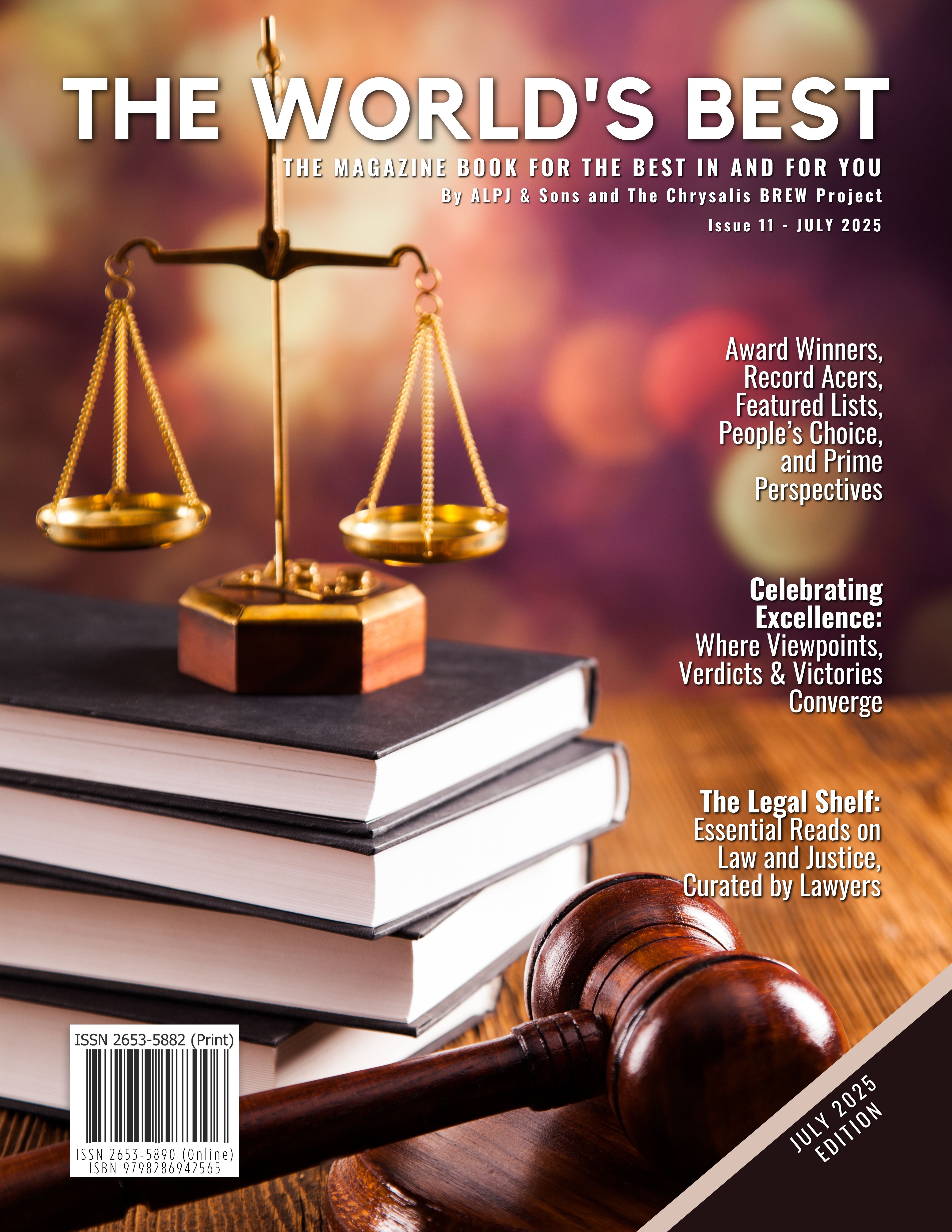
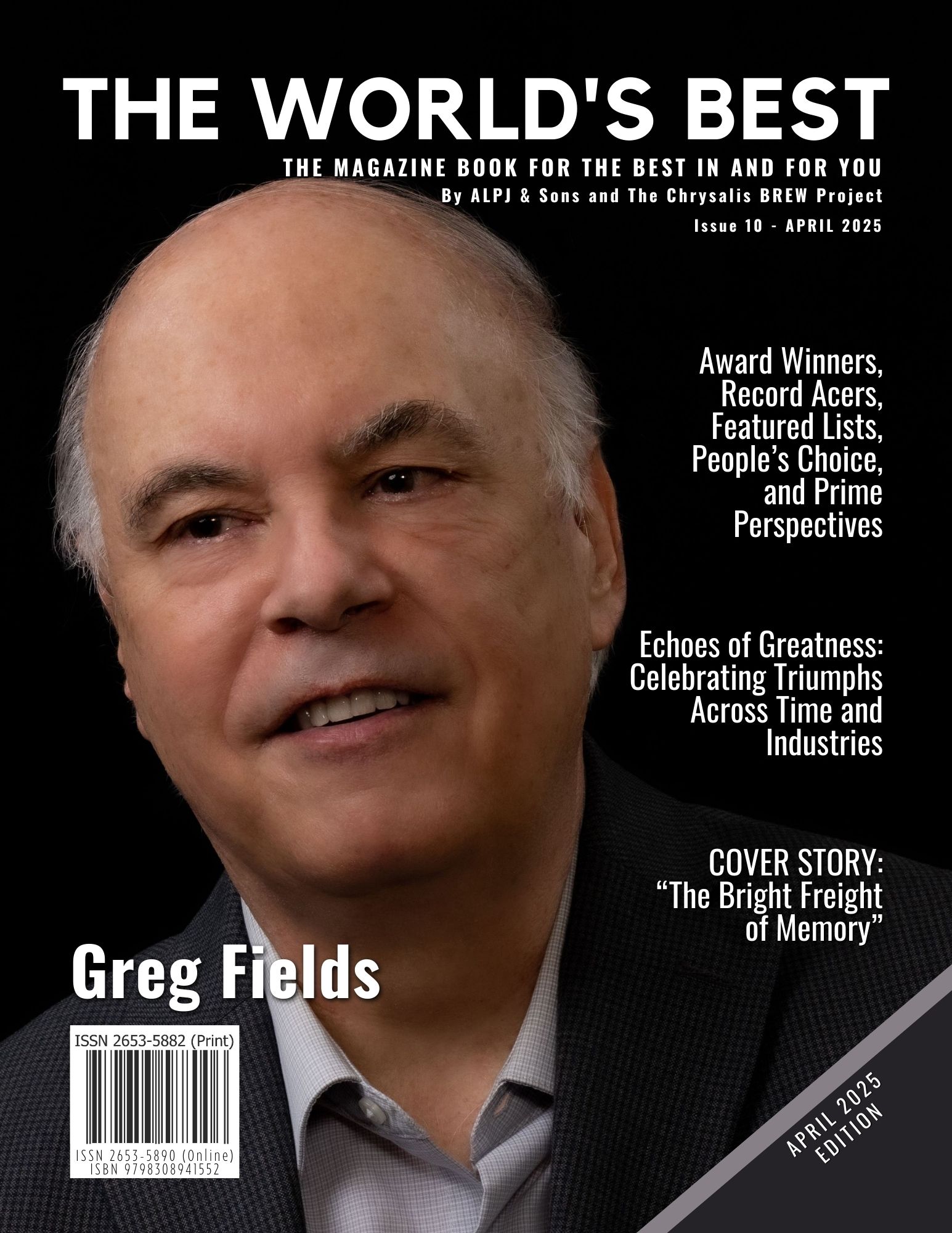


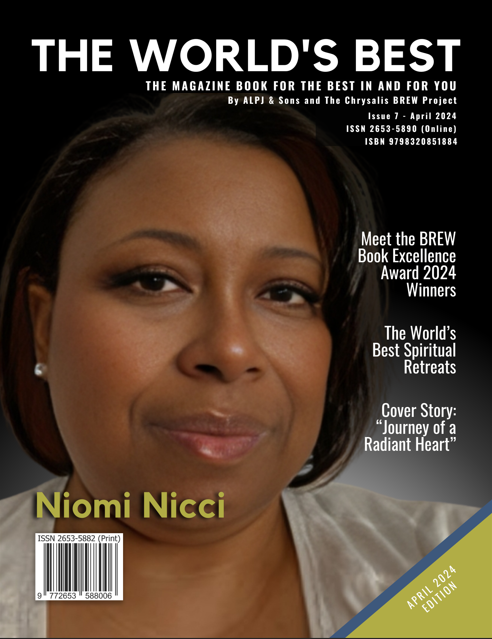


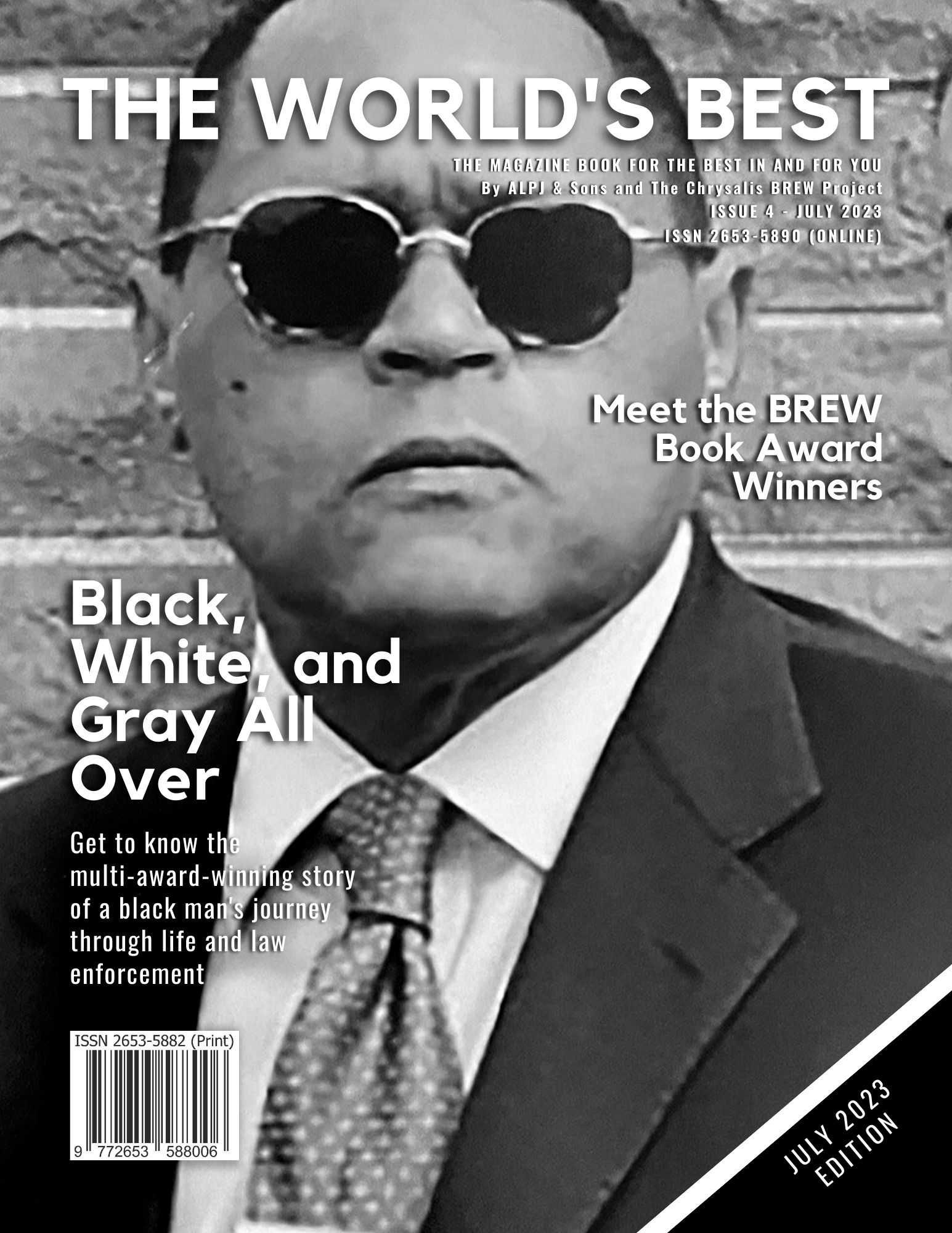
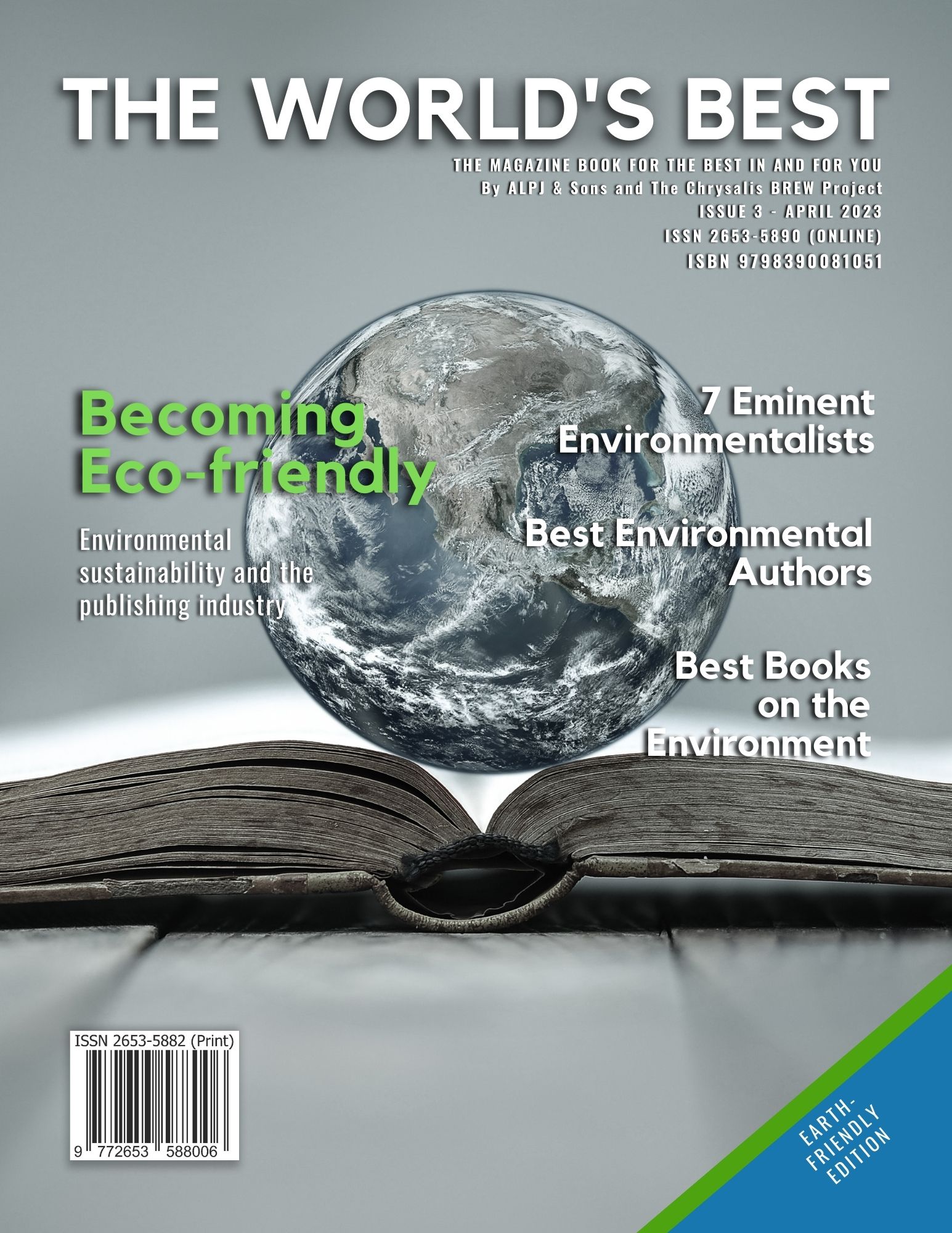


Don’t just read about greatness. Own it!

About Us
The World’s Best Magazine is a print and online publication that highlights the extraordinary. It is your passport to a universe where brilliance knows no bounds. Celebrating outstanding achievements in various fields and industries, we curate and showcase the exceptional, groundbreaking, and culturally significant. Our premier laurels, The World’s Best Awards, commend excellence through a unique process involving subject matter experts and a worldwide audience vote. Explore with us the pinnacle of human achievement and its intersection with diversity, innovation, creativity, and sustainability.
We recognise and honour the Traditional Owners of the land upon which our main office is situated. We extend our deepest respects to Elders past, present, and emerging. We celebrate the stories, culture, and traditions of Aboriginal and Torres Strait Islander Elders from all communities who also reside and work on this land.
Disclaimer: The World’s Best does not provide any form of professional advice. All views and opinions expressed in each post are the contributor’s own. Whereas we implement editorial policies and aim for content accuracy, the details shared on our platforms are intended for informational purposes only. We recommend evaluating each third-party link or site independently, as we cannot be held responsible for any results from their use. In all cases and with no exceptions, you are expected to conduct your own research and seek professional assistance as necessary prior to making any financial, medical, personal, business, or life-changing decisions arising from any content published on this site. All brands and trademarks mentioned belong to their respective owners. Your continued use of our site means you agree with all of these and our other site policies, terms, and conditions. For more details, please refer to the links below.
About | Advertise | Awards | Blogs | Contact | Disclaimer | Submissions | Subscribe | Privacy | Publications | Terms | Winners
The World’s Best: A Magazine That’s All About What’s Great | theworldsbestmagazine.com | Copyright ⓒ 2022-2026
Let’s connect
Discover more from The World's Best
Subscribe to get the latest posts sent to your email.

 The World's Best
8 thoughts on “The World’s Best Innovators of 2025”