
“I hope that readers will come to believe as I do that the color of one’s skin or individual beliefs and cultural practices should not come between people who are good hearted and live with honor and respect for other individuals.”
– J. Stanion
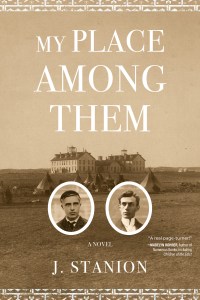
After 31 years of teaching, J. Stanion took on an unexpected literary journey towards fulfilling a promise she made to her father before he passed away. What began as a personal commitment blossomed into a novel that has resonated deeply with readers and earned accolades like the BREW Seal of Excellence and the 2023 BREW Fiction Book Excellence Award for Political Fiction of the Year.
J. Stanion’s passion for storytelling has roots in her early life, where writing served as an outlet for her emotions and a means to organize her thoughts and dreams. Now living on a farm with her husband, surrounded by Angus cattle and a collection of animals, she draws inspiration from her environment and her deep connection to cultural heritage. Whether through her love for Pine Ridge Pottery, Lakota Ledger art, or handmade turquoise jewelry, J. Stanion’s work is infused with the rich history and traditions that she cherishes.
In this interview, J. Stanion reflects on the creation of My Place Among Them, a novel born from her family’s history and her dedication to preserving cultural identities. As she continues to work on her second novel, J. Stanion’s insights offer a glimpse into the mind of an author committed to bridging cultures and telling stories that challenge and inspire.
TWB: “My Place Among Them” has received numerous accolades, including the 2023 BREW Fiction Book Excellence Award for Political Fiction of the Year and BREW Seal of Excellence. What do these accolades mean to you, especially considering the political themes explored in your book?
JS: For me, the accolades indicate that others see the value of sharing details about government policies and the impact they have on individuals. The story of the US government’s Indian Education program, designed singly to assimilate the continent’s indigenous people into white society had tragic and long-lasting effects on individuals and entire cultures. For the most part, this time period and the policies utilized have been largely ignored in American historical records. The accolades also reinforce my dedication to telling this story with the best writing I could possibly produce.
TWB: Your novel takes place in a turbulent time for Indigenous people in America. What inspired you to write about this period, and how did you ensure historical accuracy while weaving a compelling narrative?
JS: I wrote this novel in this setting because the story is based on a manuscript written by my great-grandfather who lived and worked in the turbulent world of change that was forced upon America’s Indigenous people. When wording or descriptions conflicted with modern depictions of events or cultural practices, I reached out to tribal elders and other Lakota references for confirmation that my grandfather’s details were accurate. Many details regarding this time in American’s history are just now coming to light, and I hoped this book would inspire the public to learn more.
TWB: The relationship between John Iron Horse and Carter Heath is central to your story. What message did you hope to convey through their bond, and how does it reflect the broader cultural and political conflicts of the time?
JS: I hope that readers will come to believe as I do that the color of one’s skin or individual beliefs and cultural practices should not come between people who are good hearted and live with honor and respect for other individuals. John’s respect for Carter as his teacher and as a good person goes against what might have happened had John simply chosen to hate Carter because of what other white men had done. Carter respected John as an individual who wanted to learn, to escape the conditions that were being forced on his people, and to be fair and honorable to others. Carter’s belief and encouragement of John is rooted in his belief in the freedom to make one’s own destiny, to utilize all of one’s talents to achieve goals rather than a feeling that John’s native culture is inferior and therefore should be abandoned. The issues of how individuals may be different in how they worship, different in culture, color, or ethnic background still have a major impact around the world. John and Carter understood that those things are not what define a person.
TWB: You’ve won several awards for cultural heritage fiction. How important is it for you to preserve and highlight cultural histories in your work, and what challenges have you faced in doing so?
JS: It is very important for me to preserve and highlight cultural histories because I believe that cultural identity has intrinsic value, that cultural differences have helped individual societies survive and succeed in their own place over time and that in those differences we may find the keys to help all people survive as the world changes around us. Perhaps the most important challenge in this process has been accepting when others called my book “woke” or made fun of this story. I learned to hear the deeply rooted prejudices that I didn’t want to believe existed and to accept that there are people who continue to hold themselves superior to others simply because of these cultural differences.
TWB: The theme of education, especially in a government-controlled environment, plays a significant role in “My Place Among Them.” How do you see the role of education in shaping or distorting cultural identities, both historically and today?
JS: As a former teacher, this work helped me understand how easily a teacher can influence students with his/her own beliefs in the process of teaching something as simple as “reading, writing and arithmetic”. Teachers may do this intentionally or unintentionally out of ignorance of the power of their words to influence children. The younger the child, the more influence the teacher’s words may have. If a family, community or culture isn’t allowed (or simply fails) to pass its own values to the next generation, those young people are likely to absorb whatever is the most appealing value system they are exposed to. If the education system (whether it be religious, government or private) is “teaching” concepts that are in opposition to the cultural beliefs of a family, students may choose to abandon their own cultural history and identity, especially if the “new” beliefs are reinforced through social media and television. It has been refreshing to me to see such practices as the Lakota Sun Dance being publicly allowed once again as part of the celebration of traditional Indigenous beliefs. Many of the elders who knew the details of the practice have passed on. All people search for meaning to their lives. Cultural traditions can help us find that meaning.
TWB: With “My Place Among Them” touching on sensitive and complex historical issues, what has been the most rewarding and the most challenging feedback you’ve received from readers?
JS: Probably the most rewarding feedback I’ve received was the response of a reader who said the book helped him reflect on his own past choices in life. Others have said that the story was thought-provoking, that it gave them a new perspective of Indigenous people and that it taught them details of our history that they previously hadn’t known. The most challenging feedback was a comment calling my book “woke”, a totally derogatory term in America today, by a man who admitted he hadn’t even read the back cover of the book. I knew his opinion meant nothing in the larger world view, but I also knew there are people who won’t read my book or have the opportunity to learn about another culture simply because of his choice of that one word.
TWB: Your book was influenced by your great-grandfather’s tales. Can you share how your family history and personal experiences shaped the narrative and characters in the novel?
JS: I’m sure that my great-grandfather was human and suffered from the same quirks and weaknesses all humans suffer at times in their life. I’m sure he was tempted at times to simply “climb the ladder” of the bureaucracy to make his own life easier or richer. However, he was a hero to my father and thus became a hero to me because of his reputation for fighting for what was right at the time. I could have allowed the character, Carter, to delve into the darker personalities that I’m sure he probably faced in his weakest moments, but I chose not to. I’m also sure John had moments of despair, but I also chose not to focus on those because I wanted this to be a story of perseverance over evil.
TWB: As a National Board Certified teacher of science with a passion for writing, how do you balance these two distinct fields, and in what ways do they influence each other?
JS: At first, I thought this would be a really difficult question to answer, but, in reality, not so much. I believe and always taught my students that “science” is not a collection of unchanging facts that should be accepted blindly. Rather, I believe that science is a way of thinking, questioning what appears to be the truth while always looking at alternative ideas. When a scientist realizes a problem isn’t solved, or the answer they’ve reached is imperfect, they must use their creativity to look at alternative answers. It’s also important that the writing of a scientist be accurate and honest because the work of individual scientists is often based on the writings of other scientists. It’s also important that scientists understand the clear distinction between fact and fiction and the power of words to influence others.
TWB: You’ve mentioned working on a second novel. Can you give us a sneak peek into what readers can expect next from J. Stanion? Will it continue exploring themes of cultural heritage and history?
JS: I’d love to write the story of Hannah, John and Stella’s daughter, as she grows up on the farm in Becket and goes through all the questioning that youngsters go through on their way to maturity. The turn of the century brought many changes to the area and to America. I’m sure a young girl of mixed ethnicity would need to explore both cultures of the world she’s growing up in… that of her home, of industry and speakeasies and women’s liberation versus that of her father, of the freedom of the prairie and the culture, beliefs and talents of the Indigenous people of her past.
TWB: What advice would you give to other writers looking to tackle politically and culturally charged topics in their work? How can they balance storytelling with the sensitivity these subjects require?
JS: I think the only answer here is to be as honest as possible, to be sure you understand both sides of each character’s possible points of view, and then, to be sure you are telling a story that will open people’s minds instead of closing them.
⭐⭐⭐⭐⭐
“It is very important for me to preserve and highlight cultural histories because I believe that cultural identity has intrinsic value, that cultural differences have helped individual societies survive and succeed in their own place over time, and that in those differences we may find the keys to help all people survive as the world changes around us.”
– J. Stanion
Useful Links
- Know more about the BREW Book, Blog, and Poetry Awards here.
- Read the BREW review for My Place Among Them here.
- Know more about My Place Among Them here.
- Get a copy of My Place Among Them via the following channels: Amazon | Barnes and Noble | Audible
- Visit our author’s website here.
- Connect with J. Stanion on socials: Instagram | Facebook | LinkedIn | X (Twitter)
Share Your Insights
After reading J. Stanion’s inspiring journey and her insights on My Place Among Them, we’d love to hear your thoughts!
- What part of J. Stanion’s story resonated most with you?
- How do you think historical fiction can impact our understanding of cultural heritage?
- Have you ever read a book that changed your perspective on a particular issue?
Share your thoughts in the comments below!
Alignment with the UN SDGs
J. Stanion’s My Place Among Them aligns strongly with the United Nations Sustainable Development Goals (SDGs), especially those centered on quality education, reduced inequalities, and peace, justice, and strong institutions. Here’s how:
1. Quality Education (SDG 4):
Through Stanion’s depiction of the U.S. government’s Indian Education program, the novel highlights the critical impact of education on cultural identity. The narrative addresses the complexities of assimilative policies historically aimed at Indigenous people, sparking reflection on the importance of culturally sensitive education. This emphasis supports SDG 4’s goal of inclusive, equitable education that respects cultural diversity.
2. Reduced Inequalities (SDG 10):
Stanion’s work speaks to the systemic inequities faced by Indigenous communities, shedding light on the historical mistreatment and marginalization they endured. By promoting empathy and understanding, the novel encourages readers to examine prejudice and systemic inequality, resonating with the SDG target of reducing inequality within and among nations.
3. Peace, Justice, and Strong Institutions (SDG 16):
The novel’s exploration of political themes, including the impact of governmental policies on Indigenous lives, underscores the importance of just and transparent institutions. My Place Among Them illuminates the struggles for identity and fairness faced by marginalized communities, advocating for systems that respect human rights and cultural dignity. This ties directly to SDG 16, promoting peaceful and inclusive societies.
By bridging cultures and telling a story that uplifts shared humanity beyond racial or cultural divides, J. Stanion’s My Place Among Them advances these SDGs and serves as a reminder of the power literature holds to foster empathy, challenge prejudice, and inspire social awareness.
Other Highlights

Looking for something?
Type in your keyword(s) below and click the “Search” button.
Helpful Shortcuts
More Stories















Print and Digital Magazine


Don’t just read about greatness. Own it!

About Us
The World’s Best Magazine is a print and online publication that highlights the extraordinary. It is your passport to a universe where brilliance knows no bounds. Celebrating outstanding achievements in various fields and industries, we curate and showcase the exceptional, groundbreaking, and culturally significant. Our premier laurels, The World’s Best Awards, commend excellence through a unique process involving subject matter experts and a worldwide audience vote. Explore with us the pinnacle of human achievement and its intersection with diversity, innovation, creativity, and sustainability.
We recognise and honour the Traditional Owners of the land upon which our main office is situated. We extend our deepest respects to Elders past, present, and emerging. We celebrate the stories, culture, and traditions of Aboriginal and Torres Strait Islander Elders from all communities who also reside and work on this land.
Disclaimer: The World’s Best does not provide any form of professional advice. All views and opinions expressed in each post are the contributor’s own. Whereas we implement editorial policies and aim for content accuracy, the details shared on our platforms are intended for informational purposes only. We recommend evaluating each third-party link or site independently, as we cannot be held responsible for any results from their use. In all cases and with no exceptions, you are expected to conduct your own research and seek professional assistance as necessary prior to making any financial, medical, personal, business, or life-changing decisions arising from any content published on this site. All brands and trademarks mentioned belong to their respective owners. Your continued use of our site means you agree with all of these and our other site policies, terms, and conditions. For more details, please refer to the links below.
About | Advertise | Awards | Blogs | Contact | Disclaimer | Submissions | Subscribe | Privacy | Publications | Terms | Winners
The World’s Best: A Magazine That’s All About What’s Great | theworldsbestmagazine.com | Copyright ⓒ 2022-2026
Let’s connect
Discover more from The World's Best
Subscribe to get the latest posts sent to your email.

 The World's Best
982 thoughts on “Bridging Cultures and History: J. Stanion’s Literary Journey Through ‘My Place Among Them’”