
“Wait, really? German submarines off New Jersey?”
– K.A. Nelson
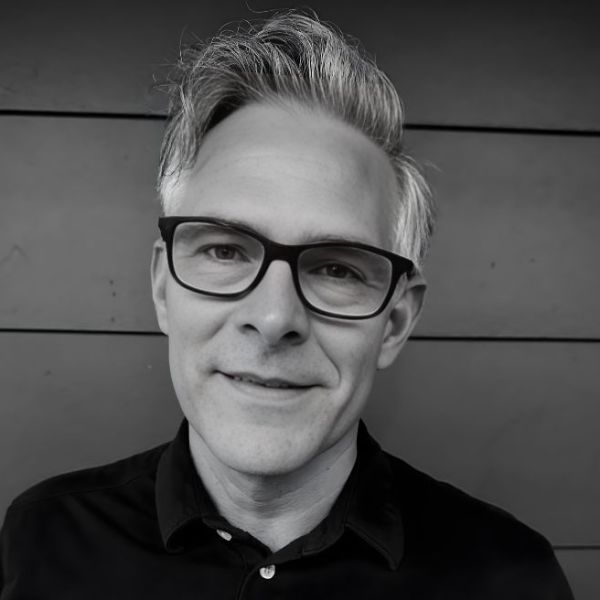
With these simple words, K. A. Nelson’s fascination with the unexplored depths of maritime history was ignited. Beginning with his inaugural wreck dive in 2006, Nelson set sail on a course that would blend his passion for diving with a deep-seated curiosity about World War II naval encounters along the American coast.
A six-year tenure in the United States Marine Corps further shaped Nelson’s discipline and skill set and culminated in his achievement of the prestigious PADI® Divemaster certification in 2017. Now based in Philadelphia, Pennsylvania, Nelson continues to explore the oceans, uncover untold stories and connect with the past through his dives.
His book, “Killing Shore,” has garnered acclaim and won several awards including the BREW Nonfiction Book Excellence Award 2024 New Book of the Year, History Book of the Year, and Submarine Book of the Year. These accolades underscore Nelson’s dedication to bringing to light the forgotten histories of World War II’s naval battles off the American coast.
Join us as we uncover the remarkable journey of a Marine turned maritime historian, literally and figuratively diving into history one wreck at a time.

Source: LA Times” (Caption and photo provided by K.A. Nelson)
TWB: Can you tell us about your initial inspiration for writing “Killing Shore: The True Story of Hitler’s U-boats Off the New Jersey Coast”?
KAN: It started with a series of casual conversations with friends and coworkers about our respective weekends. A mention of spending my Saturday or Sunday diving a wartime shipwreck along the Jersey Shore would invariably elicit a response along the lines of: “Wait, really? German submarines off New Jersey?” That’s when I began to realize how much latent interest existed in this topic. I also came to learn that very little about these individual ships and the men who crewed them had ever been written. I’ve always had an interest in bringing true stories to life, and my “ah-ha” moment arrived as I realized I’d stumbled onto a chapter of history that’s never really been told.

TWB: Your book has won the BREW Nonfiction Book Excellence Award 2024 for New Book of the Year, History Book of the Year, and Submarine Book of the Year. How did you feel upon receiving these accolades?
KAN: It’s a tremendous honor, and I’m truly grateful to The Chrysalis BREW Project team for providing such an opportunity. It’s especially gratifying for a first-time author.
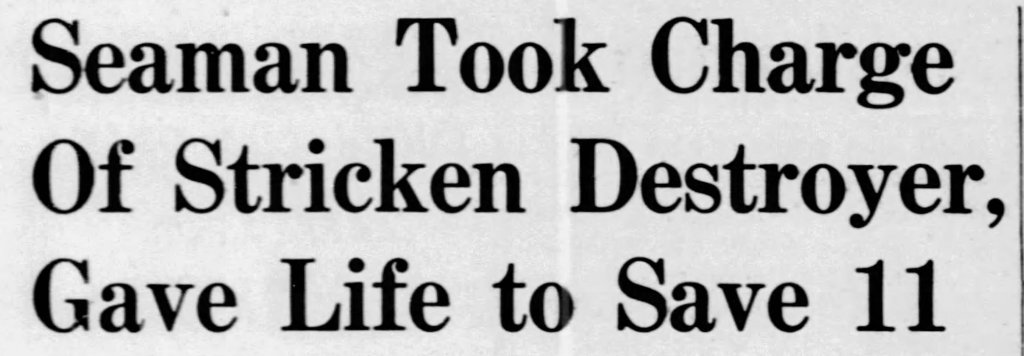
/ Source: Philadelphia Inquirer” (Caption and image provided by K.A. Nelson)
TWB: What was the most surprising or shocking discovery you made during your research for “Killing Shore”?
KAN: I was struck by the staggering degree of violence and danger the men in this story faced. Despite being well-versed in war history, I still didn’t fully appreciate the brutality of World War II at sea until I was deep into the source material. High explosives ripping hulls open, boilers exploding when seawater hits them, compartments flooding as a ship sinks… even a man who survived all that might still be crushed by a capsizing ship, trapped in a burning oil slick, or freeze to death in a half-flooded lifeboat. As I mentioned in the book jacket overview, men on both sides really faced “a thousand ways to die.”
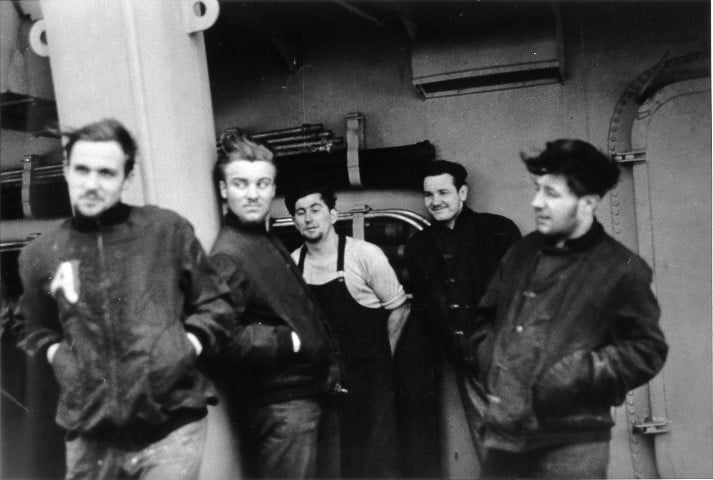
TWB: Could you share some of the personal stories of the seafarers whose experiences you chronicled in your book?
KAN: Certainly. One character—all of whom are real people, of course—is Wilbur “Dusty” Rhodes, a 25-year-old US Navy sailor from western Pennsylvania who was aboard a destroyer that was torpedoed off Cape May, New Jersey. More than half the crew was killed in seconds, leaving no officers or chiefs to lead the evacuation, so Rhodes took charge of the survivors and organized an abandon-ship effort. This ultimately saved several of his shipmates, albeit at the cost of his own life. Like so many other heroes from World War II, Rhodes is all but forgotten today.
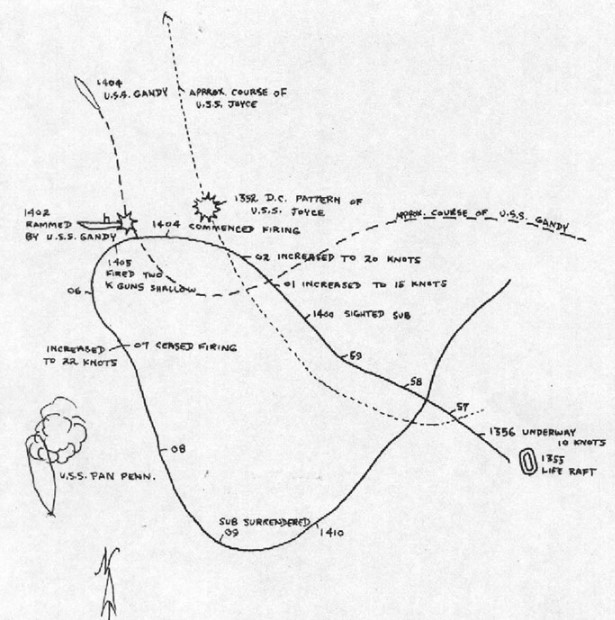
Another character is a U-boat crewman named Hans Rauh. Rauh was a brewer’s son from Munich who was drafted into the German navy and turned 19 while aboard a U-boat bound for the US East Coast. Swept up in a war he barely understood, Rauh narrowly survived the events of Killing Shore and later emigrated to the United States. His son, John, told me how his father “loved being an American,” and the memories he shared helped me to bring Hans to life in the narrative. As with so many other descendants who assisted me, our interaction was a two-way street: John told me about his father’s personality and life, and I was able to tell John more about his father’s wartime experiences. For example, I deduced where his father was inside the U-boat, and what he was doing, during the chaotic Pan Pennsylvania incident.
TWB: Your background includes six years of service in the United States Marine Corps and the Divemaster certification. How have these experiences influenced your approach to writing and research?
KAN: I suspect that many veteran readers will recognize some military influence in how certain characters are portrayed, and in how tactics and strategy are presented. Regarding the latter, the Marine Corps conceptualizes these as an art and a science governed by specific principles and practices (uncertainty, maneuver, concentration of mass, etc), and the institution conditions leaders to think in that framework. Readers who are familiar with doctrinal fundamentals will probably notice their influence on the narrative, particularly when military concepts are explained for the reader.
In terms of diving, I never imagined that concepts I studied for the Divemaster exam would directly inform how I crafted the story. The curriculum includes topics like the physics of mechanical energy in water, thermoclines, and how convection accelerates loss of body heat. Each of these plays a key role in Killing Shore’s main narrative, and I benefited from understanding them far better than I otherwise would have.

TWB: What were some of the biggest challenges you faced while researching and writing about the naval assaults off the New Jersey coast?
KAN: Accurately reconstructing incidents at sea was challenging because it requires piecing together sequences of events from multiple fragmentary or contradictory eyewitness perspectives. The detective work was harder in some instances than others. In addition to recounting what happened in an incident, I also wanted to portray it from the perspective of someone who was there. Doing this accurately meant hunting down information that wasn’t always easy to find: Where was a merchant ship’s radio room relative to the bridge? What sequence of actions were carried out by a U-boat crew during a torpedo attack? How were lifeboats launched? Getting as granular as possible definitely paid off in the end. I’m a believer in Admiral Hyman Rickover’s paradigm: “The devil’s in the details, but so is the salvation.”

TWB: Diving and exploring shipwrecks seem integral to your work. Can you describe a memorable dive that significantly impacted your research or writing?
KAN: The first East Coast war wrecks I ever dived were the Gulftrade and the Toltén (subjects of Chapters 9 and 10, respectively), and it was those wrecks that first piqued my curiosity about the untold history behind this subject. I wanted to discover what actually happened in those final minutes and what was experienced by those who survived—or didn’t, as was so often the case.
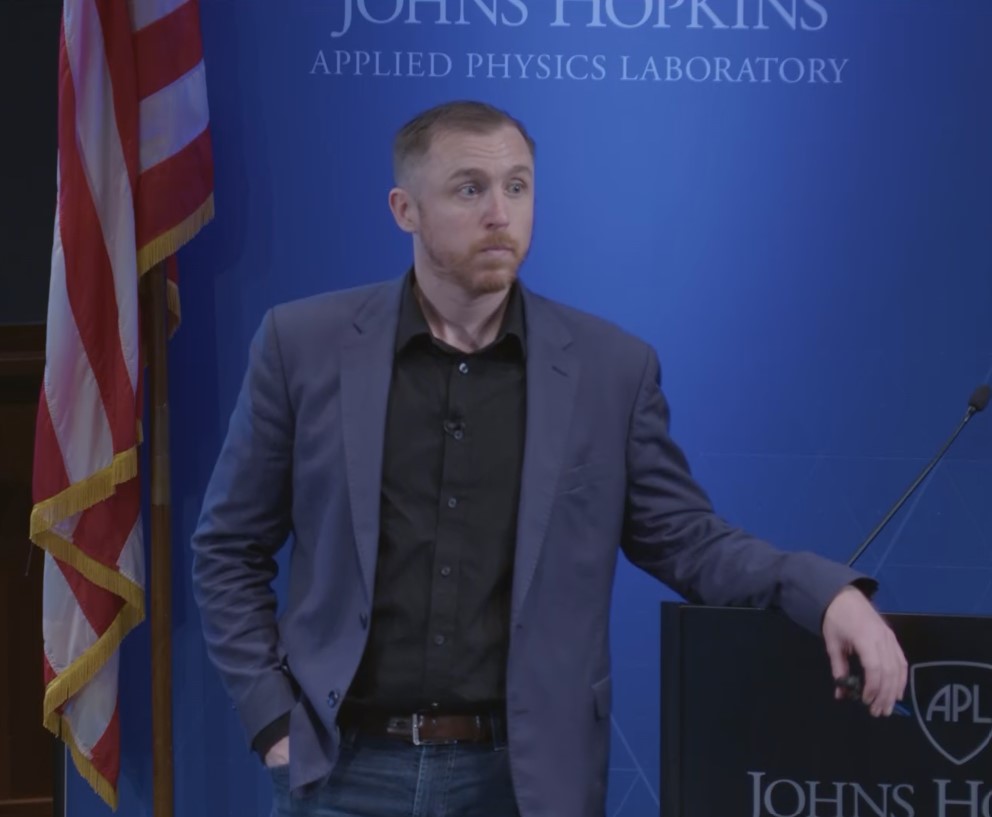
TWB: In what ways do you hope “Killing Shore” contributes to our understanding of World War II and the often-overlooked naval battles off the American coast?
KAN: Among other takeaways, I hope it leaves the reader with a better appreciation of the human dimension of war: fear, love, hate, suffering, bravery, loss… war is too often understood in the abstract rather than as a human phenomenon. I hope the story also serves as a reminder of how abruptly far-off happenings can come home. The impersonal forces that change borders and spill across continents don’t make exemptions for anyone. There’s no opting out of history.

TWB: Your book paints a vivid picture of the perils faced by American civilian mariners during World War II. What message do you hope readers take away from their stories?
KAN: As I see it, part of what makes the mariners’ wartime service so remarkable is that the men themselves so often seem unremarkable. We have innate expectations of the infantryman or destroyer crewman and the dangers he faced in that era, but these don’t necessarily carry over to the 45-year-old union guy supporting his family. But it’s in the mariners’ apparent ordinariness that we can better appreciate their sacrificed, and maybe some readers can see a clearer reflection of themselves.

TWB: What future projects or topics are you considering exploring next, either in writing or through your diving adventures?
KAN: I keep a list of book ideas, but I haven’t started any new projects yet. Most are in the popular history genre, including a couple of “spin-offs” of anecdotes from Killing Shore, plus a few contemporary subjects. I’m not sure when I’ll start the next one but, in the interim, there will likely be some articles on more immediate topics. Current events, after all, are just history in the present tense.
⭐⭐⭐⭐⭐
“Current events, after all, are just history in the present tense.”
– K.A. Nelson
Useful Links
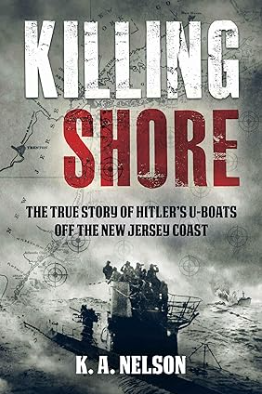
- Read the book’s BREW review here.
- Get a copy of the book here.
- View the book on Goodreads here.
- X (Twitter): @KANelson_Actual
- Instagram: @KANelson_Actual
- Know more about the BREW Book, Blog, and Poetry Awards here.
Share Your Insights
We invite you to dive deeper into K. A. Nelson’s compelling journey from Marine Corps veteran to maritime historian. After reading the interview, we’d love to hear from you:
- What aspect of World War II naval history surprised you the most?
- Which personal story from “Killing Shore” resonated with you and why?
- How do you think understanding maritime history can inform our perspectives on modern-day global conflicts?
Share your thoughts in the comments below and join the discussion on uncovering the depths of history with us!
Other Highlights

Looking for something?
Type in your keyword(s) below and click the “Search” button.
Helpful Shortcuts
More Stories




















Print and Digital Magazine
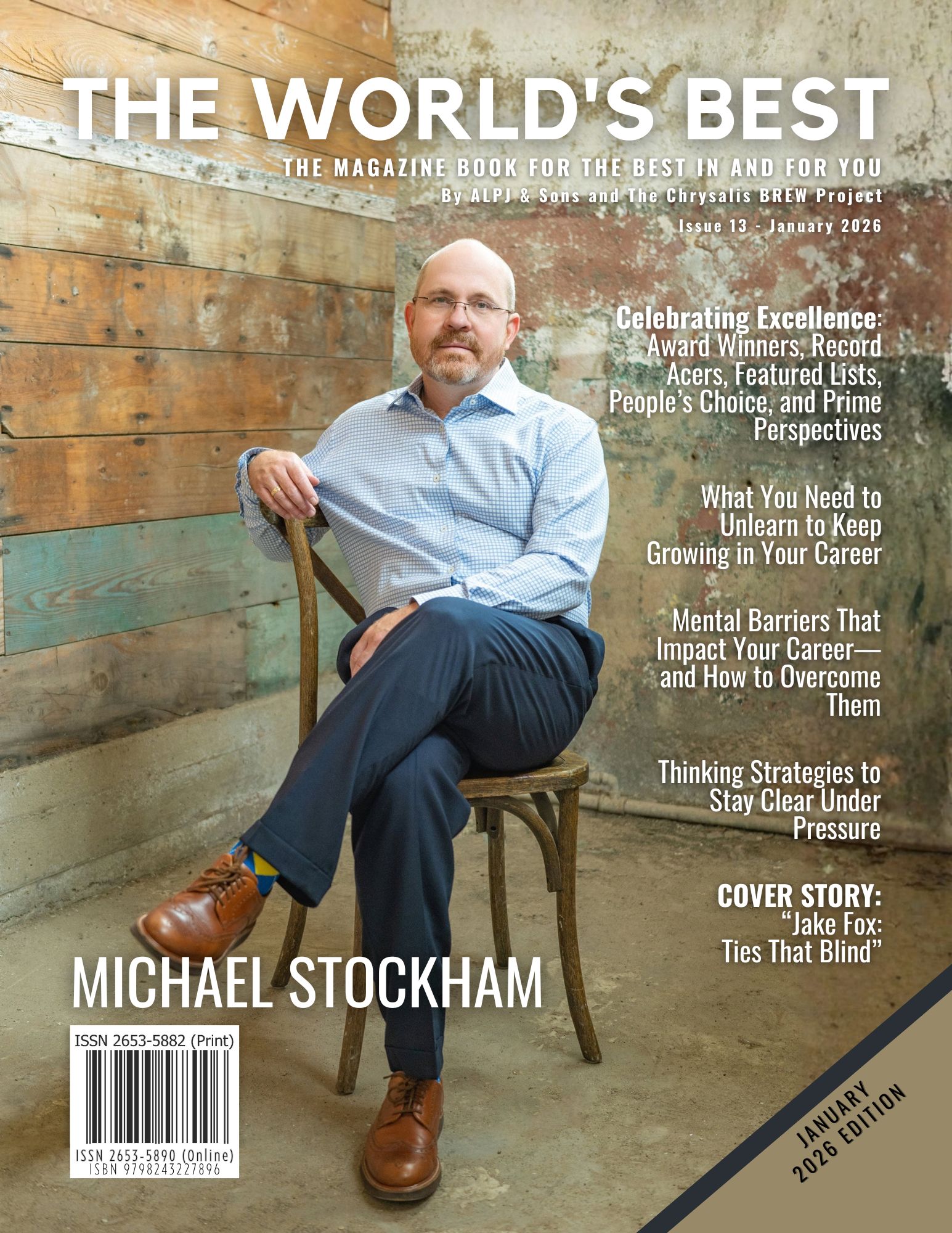







Don’t just read about greatness. Own it!

About Us
The World’s Best Magazine is a print and online publication that highlights the extraordinary. It is your passport to a universe where brilliance knows no bounds. Celebrating outstanding achievements in various fields and industries, we curate and showcase the exceptional, groundbreaking, and culturally significant. Our premier laurels, The World’s Best Awards, commend excellence through a unique process involving subject matter experts and a worldwide audience vote. Explore with us the pinnacle of human achievement and its intersection with diversity, innovation, creativity, and sustainability.
We recognise and honour the Traditional Owners of the land upon which our main office is situated. We extend our deepest respects to Elders past, present, and emerging. We celebrate the stories, culture, and traditions of Aboriginal and Torres Strait Islander Elders from all communities who also reside and work on this land.
Disclaimer: The World’s Best does not provide any form of professional advice. All views and opinions expressed in each post are the contributor’s own. Whereas we implement editorial policies and aim for content accuracy, the details shared on our platforms are intended for informational purposes only. We recommend evaluating each third-party link or site independently, as we cannot be held responsible for any results from their use. In all cases and with no exceptions, you are expected to conduct your own research and seek professional assistance as necessary prior to making any financial, medical, personal, business, or life-changing decisions arising from any content published on this site. All brands and trademarks mentioned belong to their respective owners. Your continued use of our site means you agree with all of these and our other site policies, terms, and conditions. For more details, please refer to the links below.
About | Advertise | Awards | Blogs | Contact | Disclaimer | Submissions | Subscribe | Privacy | Publications | Terms | Winners
The World’s Best: A Magazine That’s All About What’s Great | theworldsbestmagazine.com | Copyright ⓒ 2022-2026
Let’s connect
Discover more from The World's Best
Subscribe to get the latest posts sent to your email.

 The World's Best
I had the pleasure of reviewing “Killing Shore,” and even for someone like me, who’s read a lot about WWII, it was mind-blowing. We need to understand war in all its dimensions to avoid a conflict like this from ever repeating itself.
LikeLike