
“Why can’t we all live together in peace and harmony? Why do we have to fight against each other? We should live with love not hatred, because hatred will only lead to more hatred, and with peace and love you can accomplish so much more in life.”
– Ann Arnold
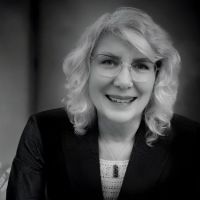
A dark period in history, the Holocaust claimed the lives of approximately six million Jews, and millions more from various backgrounds. Among the survivors was Mark Schonwetter, a man whose spirit refused to be broken. Arriving in the United States in the early 1960s, he began his American dream sweeping floors in a jewelry factory, later establishing his own successful company.
Mark’s daughter, Ann Arnold, deeply connected to this history, took a journey to Poland in 2009. Inspired by her father’s resilience, she began documenting his story, culminating in the powerful memoir, “Together: A Journey for Survival,” published in 2016
Together with her sister, Ann founded The Mark Schonwetter Holocaust Education Foundation in 2016. Their mission: to share their father’s story, and support Holocaust education nationwide. To date, the foundation has awarded over 430 grants, reaching over 114,000 students in 31 states.
Recognized for her tireless advocacy and commitment to tolerance, Ann was honored with the Simon Wiesenthal Center’s Heroes for Tolerance Award, a testament to her unwavering dedication to promoting peace and understanding. Beyond her work in Holocaust education, Ann is also a trailblazer in the corporate world, serving as the CFO of H. Arnold Wood Turning, Inc. and the Chief Strategy Officer of BIG (Buyers Intelligence Group). With a wealth of experience spanning diverse industries, she brings a unique perspective to her role as a board member of Day’s Jewelers and Treasurer of the Triple Negative Breast Cancer Foundation.
Through her multifaceted endeavors, Ann Arnold embodies the spirit of resilience, compassion, and advocacy. Her story is a reminder of the power of love, empathy, and understanding in building a more peaceful and harmonious world.
Here’s what she has to say.
TWB: Your professional journey spans diverse industries and roles, reflecting a rich blend of experiences. How has your background shaped your perspective on diversity and inclusion in both the corporate world and advocacy efforts?
AA: I was brought up in a household where I was told that anything is possible. It may sound funny, but our father never raised us as his daughters; he raised us as his children. I make this distinction because it never occurred to me that being a woman should or could hinder me in any way. My father is a Holocaust survivor. He survived with his mother and younger sister; his father was brutally murdered by the Nazis and left in a mass grave with hundreds of other Jewish souls. As a result, my father’s major influence in his life was his mother. To this day, he speaks of her with awe and admiration. She was a strong, smart, and independent woman who, through her intuition and resilience, survived the unimaginable with two small children. I believe it is because of this strong female influence in my father’s life that he raised my sister and me with those same characteristics. We always knew we could do whatever we wanted as long as we worked hard and never gave up.
When I entered the corporate world, I took these lessons with me. I remember entering one of my first board meetings, being the only female in the room, and being coached prior to that first meeting to “stay quiet and just listen.” I think that advice lasted about 5 minutes before I started asking questions and contributing. I have always been an advocate for making sure that the right people are around the table, regardless of their gender, race, or religion. That should not matter, as my father always taught us, we are all human beings and we are all the same.
TWB: As the Founder of The Mark Schonwetter Holocaust Education Foundation and CFO of H. Arnold Wood Turning, you embody resilience in the face of challenges. How do you draw upon your resilience to navigate obstacles and drive positive change?
AA: I have faced challenges throughout my career. Whether it is owning my own company, selling my family business, or starting our foundation, there are and have been obstacles along the way.
However, I always remember the lessons I have been taught by my father and grandmother. First, always stay calm; panicking will not give you any answers. If something does not go your way, pivot; there is always another path or a way to mitigate the potential risks. You just have to keep your head on your shoulders and drive forward no matter what. Second, always pay attention to those around you; don’t just forge forward, listen, learn, and really hear what people are saying. This helps you get a better understanding of what is happening around you. Truly hearing those around you and understanding the challenges you are facing allow you to chart a path forward. Strategy is all about paying attention to your surroundings.
I remember being a very young child and visiting my grandmother. We were playing cards, and she was teaching us how to play Rummy 500. During the play, I made the mistake of putting a 3 out just after someone else had put a 3 out. I will never forget how my grandmother chastised me for not paying attention, that I had to look three steps ahead and think about each move I made. At the time, I thought she was taking playing cards a little too seriously; however, as I grew up, I realized she was teaching me life lessons and strategies that I would use later in life. I realized that she survived the Holocaust by always being alert, always paying attention, and always remembering that you just had to put one foot in front of the other to get through the day.

TWB: Your advocacy work emphasizes the importance of Holocaust education in promoting respect and kindness. How do you envision education contributing to a more inclusive society, especially in embracing diverse perspectives and histories?
AA: We have seen firsthand the effect Mark has had on students that he spoke to and realized the tremendous impact Holocaust Education can and does have on students and how it results in students being more empathetic, kind, and respectful.
Using history as a benchmark, to not only make sure that they know the facts about what happened and how it happened, allows us to teach students that they have the power to make sure that something like this will never happen again. It is now up to us to make sure that our children are properly educated in the facts. They need to understand that we are more alike than we are different. I always tell students that we all have a voice and a choice. We can choose to be lured into the hate speech and violence that we see everywhere, or we can choose to be kind and respectful. My hope is that the voices of goodness become loud enough to drown out the voices of hatred.
TWB: Your book, “Together: A Journey for Survival,” shares a deeply personal story of resilience and triumph. How does this narrative reflect broader themes of resilience and solidarity in the face of adversity?
AA: I hope that the takeaway that readers have once they read the book is that not only did this family go through something so horrific and tragic, but they survived and went on to live productive and full lives. The only reason my family survived was because of some kind and good Polish people that risked their own lives to save others. That is a debt that can never be repaid, so the only thing we can do is try to pay that forward. I hope that most people today will never have to make the decisions these families had to make. I hope that the decisions we must make today do not have such dire consequences such as death. For any of us to stand up and do what is right means that some may have to go out of their comfort zone. They may have to speak up when they see injustices done; they need to be good people and treat each other with respect and kindness.
And for those that do go through adversity, you must keep hope alive. My grandmother lived in the forest, in attics, in pigsties, and under floorboards for 3 years! Yet she kept hope alive by always knowing that tomorrow would be a new day that will bring new opportunities. She always said to look forward and not dwell on the past. We can do nothing to change it; all we can do is learn from it and move forward.
TWB: In your role as a board member and financial expert, how do you advocate for diversity and inclusion in corporate governance, particularly in family-owned businesses and small companies?
AA: Diversity and inclusion in any business is multi-faceted and needs to be embraced by all levels of the corporation. From the board to executive managers to HR, each department and stakeholder needs to be committed to having the best people on board regardless of their gender, race, and religion. Making sure you have a diverse set of experiences, viewpoints, and contributors all leads to making any organization even more successful. From a corporate governance perspective, we have to make sure that not only are our policies embracing this philosophy, but also the management and owners. When you are dealing with family-owned businesses and small companies, so many times it is the founders that also have a seat around the table. The board provides the oversight and opportunities for strategic conversations. Encouraging the board to have diverse people around the table allows for meaningful and productive discussions.
I have personally been one of the first if not the only female in the board room in many situations. When a new board seat opens, I am always looking to my network to refer qualified candidates that will help create more diverse and inclusive atmospheres.
TWB: Your involvement in organizations like the Triple Negative Breast Cancer Foundation highlights your commitment to supporting diverse communities. How do you ensure inclusivity in the causes you champion, and what strategies do you employ to amplify underrepresented voices?
AA: Supporting diverse communities within the organizations that I am involved with has many different aspects. From the perspective of the communities we serve, we not only create diverse programs, but also partner with synergistic organizations within different communities to get our message out and reach those affected. This is clearly evident within our work at the Triple Negative Breast Cancer (TNBC) Foundation. For instance, we work closely with TOUCH, BBCA, an organization dedicated to eradicating Black Breast Cancer. TNBC disproportionately affects young black women and has a very poor prognosis. By working together, we are able to provide resources for the black community and increase our reach to those affected by this horrible disease.
I also use this approach in my own foundation. We reach out and work closely with many different organizations and representatives so that teachers can know of the opportunities and resources available to them both on a national and local level. If there is a cost, we then provide them with a means to be able to cover those costs by applying and using our grant money. Additionally, we provide grants to all schools, including Title 1 schools, charter schools, public schools and private schools. We have also developed relationships with state departments of education, Holocaust Museums and Centers, and organizations that serve this community so that we can expand our reach to students all over the country. Online, we partner with a variety of different influencers to try to reach a multitude of audiences. From Claudia Oshry to Rach Moon, to Aliza Licht, we find that working closely with these online influencers exposes us to new and diverse communities and constituents. And we love to see when our grant recipients get so excited about getting one of our grants, like Mrs. Richie from LA!
TWB: Diversity and inclusion are essential components of a thriving society. How do you believe initiatives like Holocaust education can foster greater understanding and empathy across diverse cultures and backgrounds?
AA: Whenever Mark Schonwetter speaks, he ends his talk with the following statement:
“It makes no difference if you are a Jew, Christian, Muslim, Hindu, or whatever religion you believe in. It makes no difference if you are white, black, brown, we are all human beings. Why can’t we all live together in peace and harmony? Why do we have to fight against each other? We should live with love not hatred, because hatred will only lead to more hatred, and with peace and love you can accomplish so much more in life.”
If a man that experienced the worst that humanity can do to one another can live with this perspective on life, then we should all take note of this message. Holocaust Education is essential. Education is the single most important weapon we have to combat anti-Semitism, racism, bigotry, and all hate. We cannot be afraid of the past; we need to embrace teaching our students about what has happened in history as a way of educating them about what happens when hate goes unchecked. We must show them the consequences and results of this and how horrible atrocities can happen when we turn a blind eye to hatred. It is only then that we can expect them to become upstanders who will recognize evil and hatred and want to do something about it.
TWB: Your accolades, including the Heroes for Tolerance Award, recognize your dedication to promoting tolerance and understanding. How do these honors inspire you to continue your advocacy for inclusivity and social justice?
AA: Receiving the Heroes for Tolerance award from the Simon Wiesenthal Center was such a great honor. What truly motivates me, however, is the feedback we get from the teachers and students we reach. We provided a grant to a teacher in Yancey County NC. This was an email we received regarding the grant we awarded:
“Thanks to the Mark Schonwetter Holocaust Education Foundation…books were sent to Yancey County North Carolina. Yancey County, NC, is quite poor and rural. The 88 Club, a notorious Nazi Youth group, actively recruits members from Yancey County. Two classes in the middle school can simultaneously read the book! Your foundation is pushing back against pro-Nazi youth groups and is reaching into Yancey County, NC!!!!”
– Michael Abramson, North Carolina Council on the Holocaust
When we got this message, it was a mic drop moment for us, this is why we are doing what we are doing. We know that the key is to educate our youth to understand history so that they can make a brighter tomorrow.
TWB: Through your speaking engagements at schools, you share stories of resilience and hope with students of diverse backgrounds. Can you share a memorable moment that exemplifies the transformative power of education in fostering empathy and acceptance?
AA: Very early on, the book had just been published, we were speaking at a school in Newark NJ. Most of the children were black and Latino. We knew the students had read the book and we were coming in to speak to them. The teacher spoke to us prior to the assembly and asked us “Do you know what their kids’ biggest takeaway was from the book?” When we asked her what it was she said “They had no idea that there was violence against white people. They just assumed that if you were white you had it made. They could not get over the fact that Mark was a white man.” This shocked me and really opened my own eyes to the perceptions people have. I had no idea about this. And then watching how the students embraced my dad when he walked into the auditorium was astounding. It was as if Beyonce had walked in; they were cheering for him and all they wanted to do was just hug him.
TWB: Looking forward, what are your aspirations for promoting diversity, inclusion, and resilience in both your professional endeavors and advocacy work?
AA: I believe that the future is bright, and I have faith in our younger generation, I have faith in people. I believe that if people know and truly understand the truth goodness can prevail. But the only way to get to this point is by starting at a young age. Once someone is near adulthood it is very hard to change what they believe in since birth. But if we can get to them at a young age, they will have the tools in their arsenal to combat hate. ⭐
“Education is the single most important weapon we have to combat anti-Semitism, racism, bigotry, and all hate.”
– Ann Arnold
Useful Links
Catch Ann Arnold and her advocacy through the following links:
Share Your Insights
Join us in honoring the legacy of resilience and advocating for positive change by engaging with Ann Arnold’s inspiring story. We invite you to share your thoughts by commenting below. Here are three questions to guide your reflections:
- What aspect of Ann Arnold’s story resonated with you the most, and why?
- How do you believe education can be a powerful tool in promoting empathy, understanding, and tolerance in society?
- In what ways can individuals contribute to promoting diversity, inclusion, and resilience in their own communities?
We look forward to hearing your insights and perspectives!
July 2024 marked a special milestone at The World’s Best Magazine as we proudly declare it as our Diversity, Resilience, and Inclusion Month. Throughout the month – and moving forward – we officially dedicate a special series of posts in our platform to celebrating the richness of diversity, the strength of resilience, and the power of inclusion.
Join us as we spotlight stories that showcase the myriad facets of diversity, from cultural heritage to individual identities. Through our features, we aim to amplify voices that demonstrate resilience in the face of adversity, inspiring others to persevere and thrive.
Moreover, we pledge to champion inclusion in all aspects of our work, ensuring that every story, perspective, and experience is welcomed and valued. By embracing diversity, resilience, and inclusion, we strive to foster a more equitable and compassionate world.
Let’s come together to honor the beauty of our differences, celebrate the triumphs of the human spirit, and reaffirm our commitment to building a society where everyone is seen, heard, and valued.
Related Posts


Something went wrong. Please refresh the page and/or try again.
Other Highlights

Looking for something?
Type in your keyword(s) below and click the “Search” button.
Helpful Shortcuts
More Stories







Print and Digital Magazine

Don’t just read about greatness. Own it!

About Us
The World’s Best Magazine is a print and online publication that highlights the extraordinary. It is your passport to a universe where brilliance knows no bounds. Celebrating outstanding achievements in various fields and industries, we curate and showcase the exceptional, groundbreaking, and culturally significant. Our premier laurels, The World’s Best Awards, commend excellence through a unique process involving subject matter experts and a worldwide audience vote. Explore with us the pinnacle of human achievement and its intersection with diversity, innovation, creativity, and sustainability.
We recognise and honour the Traditional Owners of the land upon which our main office is situated. We extend our deepest respects to Elders past, present, and emerging. We celebrate the stories, culture, and traditions of Aboriginal and Torres Strait Islander Elders from all communities who also reside and work on this land.
Disclaimer: The World’s Best does not provide any form of professional advice. All views and opinions expressed in each post are the contributor’s own. Whereas we implement editorial policies and aim for content accuracy, the details shared on our platforms are intended for informational purposes only. We recommend evaluating each third-party link or site independently, as we cannot be held responsible for any results from their use. In all cases and with no exceptions, you are expected to conduct your own research and seek professional assistance as necessary prior to making any financial, medical, personal, business, or life-changing decisions arising from any content published on this site. All brands and trademarks mentioned belong to their respective owners. Your continued use of our site means you agree with all of these and our other site policies, terms, and conditions. For more details, please refer to the links below.
About | Advertise | Awards | Blogs | Contact | Disclaimer | Submissions | Subscribe | Privacy | Publications | Terms | Winners
The World’s Best: A Magazine That’s All About What’s Great | theworldsbestmagazine.com | Copyright ⓒ 2022-2026
Let’s connect
Discover more from The World's Best
Subscribe to get the latest posts sent to your email.

 The World's Best
I’ve read a lot about the holocaust but, generally speaking, there’s not a lot of education about the holocaust in my country. I get it because, thankfully, we are not a belligerent country. But it’s a downside because we need to learn about one of humanity’s greatest mistakes to avoid repeating it. Even the most peaceful of countries is only one crazy politician and some bad decisions away from another tragedy.
LikeLike