
“The night before the operation, Gina handed me a ziplock bag filled with 75-year-old letters from her Uncle Bud. She made me promise that, no matter what happened to her, I would tell his story. And so, I did.”
– Ann Montgomery
Anne Butler Montgomery’s career spans broadcasting, writing, and education. Among the first female television sportscasters, she worked for WRBL-TV, WROC-TV, KTSP-TV, and ESPN, and officiated multiple sports across six states. A Miami University graduate with studies in Luxembourg, Montgomery later became a journalism teacher at South Mountain High School in Phoenix. Her novels, including The Jerusalem Syndrome, The Scent of Rain, and Your Forgotten Sons, have received critical recognition. Beyond her professional life, she enjoys scuba diving, rock collecting, and music, and has served as a foster mother, reflecting her commitment to mentorship and lifelong storytelling.
TWB: You’ve had a remarkable career, transitioning from television sportscasting to writing novels and teaching journalism. Can you share with us the pivotal moments or influences that led you to explore these different domains?
AM: I have been on a rather unconventional journey. When I decided in high school that I wanted to be a sportscaster, it was the early 1970s, so the idea was, of course, absurd. Women just didn’t do that kind of thing. Still, despite being constantly told “no”, I stuck with it. When no one would even give me an interview, I realized I didn’t know enough about the five main team spectator sports to be a competent sportscaster, so I became a certified official in amateur sports where I called football, baseball, ice hockey, soccer, and basketball games to varying degrees over five years. I believed some forward-thinking news director might give me a shot, and that’s exactly what happened. I would eventually work for five TV stations both locally and nationally, including ESPN where I anchored SportsCenter. What I didn’t expect was that I would fall in love with officiating, an avocation I would continue for 40 years. However, the biggest change for me came when my television career ended. I did a great deal of feeling sorry for myself before I finally decided to go back to college to become a teacher. I would spend 20 years in the classroom, a vocation that changed me in many ways. During that time, I began to write novels, which seemed a logical progression from the writing I did as a reporter.
TWB: Your tenure at ESPN, anchoring SportsCenter and winning Emmy and ACE awards, must have been exhilarating. Could you tell us about some of the most memorable experiences or highlights from your time there?
AM: As for the Emmy and Ace awards, they were group honors for all of us who worked on SportsCenter at the time.
In regard to memorable experiences from my time at ESPN, I have to point out that when I worked there in the early 1990s, women were not treated very kindly. There were only a few of us on-air and in the newsroom, and the feeling was the network only tolerated us because hiring laws said they had to. My experience was that many of the “boys” never believed any of us knew enough about sports to be there. Which could be frustrating.
For example, one evening when I was live on the SportsCenter desk, a production assistant slipped me a set of highlights just as the red camera light went on. The first line said, “A fan at Wrigley Field was hit by a foul tip.” I read it as written but knew it was incorrect. Still, the next highlight appeared so quickly, I didn’t have time to fix it.
After the show, there was always what was called a post-mortem meeting where we discussed what went well, what went poorly, and how we might do better in the future. I raised my hand and explained that it was impossible for a fan to be hit with a foul tip as by definition a foul tip must go from the bat to the catcher’s glove and be legally caught. The result is a strike on the batter, but the ball remains in play, so runners may advance at their own peril. I found it interesting that no one seemed to understand. So I added that the fan in question had been hit by a foul ball, which is a dead ball, meaning any advancing runners must return to the base they occupied at the time of the pitch.
There was silence. Then the production assistant said, “You’re nothing but a picky bitch!”
“No,” I said. “I am an umpire, and a mistake like that is embarrassing for me.”
The next day my boss called me in and ordered me to apologize to the young man because I’d hurt his feelings. Sadly, these types of incidents were fairly common, so when listing my five jobs in TV, perhaps it’s easy to see why ESPN was my least favorite. Here’s hoping things have improved.
TWB: As a journalist, you’ve covered a wide range of topics, from sports to features, movie reviews, and even archaeological pieces. How do you approach storytelling about these diverse subjects, and do you have a favorite genre to write about?
AM: Storytelling is storytelling, no matter the subject matter. I approach all stories the same way. Research the topic. Interview professionals who can speak about it. I also talk to laymen who might be directly involved with the topic. So the topic itself changes nothing.
What writers need most is to be curious about the story they’re investigating, which I’ll admit isn’t always easy. One day, I found myself writing an article on dairy farming. Then I was sent to a potato chip factory to see how they’re made. Not horribly thrilling. But I find being around the people you interview helps when the topic is not especially interesting, since they are generally excited to be involved in a story.
In regard to genre, my books are all over the place. I’ve written historical fiction, young adult fiction, suspense-thriller, and women’s fiction, to date. Still, when my agent asked me to write a romance novel, I just couldn’t do it. I only write books about subjects I find interesting and don’t worry too much about which genre they fall into.
“Yes, I’m old school in regard to journalism, and some students didn’t like me for it. But my job was to tell them the truth, and I did.”
– Anne Montgomery
TWB: Teaching sports reporting at Arizona State University’s Walter Cronkite School of Journalism and Mass Communication must have been rewarding. What insights or advice do you impart to aspiring journalists, drawing from your own experiences in the field?
AM: The bulk of my career was spent teaching high school students journalism and communication skills. I also taught sports reporting briefly at ASU. I offered all students the same suggestions. Being curious is a gift. If you don’t have a deep-down desire to understand something in its entirety, perhaps journalism isn’t for you. Deadlines are just that. If I was one second late to the news desk, my seat would be empty when the red camera light went on and I’d be out of a job. You are on your own in regard to completing your assignments. There are rarely, if ever, excuses for not getting the job done in a timely matter. Mistakes are to be avoided at all costs, and they are always your fault. A reporter often juggles multiple stories simultaneously, hence stress is part of the package, so learn to live with it. And, finally, unless you’re writing an editorial or are being paid to be a TV commentator, no one cares about your opinion, so keep it to yourself, provide opportunities for those on both sides of a story to express themselves, and allow audience members to reach their conclusions.
Yes, I’m old school in regard to journalism, and some students didn’t like me for it. But my job was to tell them the truth, and I did.
TWB: Your novels, including “The Castle” and “A Light in the Desert,” tackle complex themes and narratives. Can you share a bit about the inspiration behind some of your books and how your background in journalism influences your approach to fiction writing?
AM: My entire world revolved around sports until one day I wasn’t considered pretty enough to be in front of a camera anymore. Even today women on TV often have a shelf life and mine had expired. I wallowed in self-pity for a few years, until finally I decided to go back to college to be a teacher. I ended up in a Title I school where the vast majority of my students lived in poverty, their daily lives consumed by the ills that designation signifies: substance abuse, gangs, homelessness, teen pregnancy, hunger, neglect, sexual violence, physical and psychological abuse. Having grown up in a middle-class suburb, I never understood how spoiled I was. After two decades of facing those kids every day, perhaps it’s understandable that some of my books deal with domestic violence, homelessness, PTSD, sexual predation, and children in religious cults.
My background as a reporter heavily influences my writing style. Journalists are not generally very flowery. It’s funny that people sometimes say I write like a man, but that’s just the reporter in me. We tend to get to the point quickly, utilizing as few words as possible and relatively short sentences. But our writing is descriptive because we want the reader to be on-site with us. While I’m no doubt biased, I think being a journalist is an excellent beginning for anyone who wants to be an author.
“My entire world revolved around sports until one day I wasn’t considered pretty enough to be in front of a camera anymore. Even today women on TV often have a shelf life and mine had expired. I wallowed in self-pity for a few years, until finally I decided to go back to college to be a teacher.”
– Anne Montgomery
TWB: Outside your professional endeavors, you’re also a foster parent to three sons and a daughter. How do you balance your career with your role as a caregiver, and how has fostering influenced your perspective on life and storytelling?
AM: Being a mom was something I never expected. In my 30s, I was told that I would probably never have children of my own. At the time, I was crushed, but there was little I could do about it. Almost 20 years later, everything changed. Because of the precarious lives many of my students led, I worried about them over summer break. So, despite being told it was a bad idea, I would always put my phone number on the board the last day of school and tell the kids that if they were ever in trouble with nowhere else to turn, they should call me and I’d help, if I could.
One summer, I heard from a 14-year-old boy. He said, “Ms. Montgomery, I’m hungry.”
I’m lucky there were no students in my room because after I hung up, I started cursing. When another teacher arrived to see what was wrong, I explained. She stared at me for a moment and said, “If it bothers you so much, call the foster care people and say he can come and live with you.”
I told her the idea was ridiculous, that I was 55, and knew nothing about being a mother. And yet, two weeks later, that small frightened boy arrived at my front door. I would attend foster mom school—yes, it’s a thing—to become certified by the state. Since that time, I’ve had two legal foster children, as well as two others with whom I’ve shared my home, all teens when they arrived and all who’d been my students. Was it easy? No. But today, my children are all in their 20s and out in the world. I’m very proud of all of them and am still sometimes amazed whenever they call me Mom. And now, I also have a 6-year-old grandson.
What have I learned? Expect those turns in the road, then strap in and hang on because you just might be grateful that life didn’t turn out the way you planned.
TWB: Rock collecting, scuba diving, theater, and playing guitar—your passions are quite diverse! How do these activities inspire or complement your creative process as a writer?
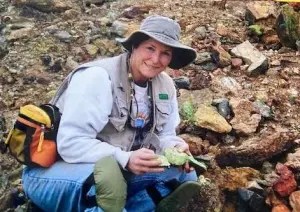
AM: I have always been fascinated by the natural world. I started rock collecting as a toddler. There are actually photographs of me in diapers putting rocks into cups. Today, I have over 400 specimens just in my living room, and my favorite thing to do is head out into the wilds of the Sonoran Desert here in Arizona to go prospecting. I am also happy in the mountains and forests and the sea. I began scuba diving about 19 years ago, and it’s difficult to explain the joy of being in that world where I get to come face-to-face with the creatures that live there. And because people always ask, yes, I swim with sharks. They are beautiful and exhilarating, and I still have all my fingers and toes.
Do my experiences in wild places color my writing? Absolutely! I feel that a book’s setting is another character, one to be explored and described as fully as any living individual in a story.
TWB: With decades of experience as an amateur sports official, calling games across various sports, you’ve undoubtedly witnessed the transformative power of sports. How has your involvement in officiating shaped your perspective on athletics and competition?
AM: Participation in sports is a life-altering experience, one that I highly recommend for young people. My students always seemed surprised that businesses like hiring those who participated in sports, even if they only sat on the bench. The reason? The skills one learns by playing on a team translate perfectly to the business world. Punctuality, leadership, adherence to rules, teamwork, following directions, and communication skills are all required in sports. And no one cares if your team ever won a championship. Just participating matters. Note here that other forms of extracurricular activities work in this regard, as well. Being in a play or an orchestra, or taking part in clubs like debate or student government, all prepare young people for the real world.
From my vantage point as an official of 40 years, all I can say is sports are changing so rapidly I have no idea where it’s all going. We have parents believing their child will be a pro athlete after the kid spends a few years in Little League. Eighth graders are being asked to commit to colleges. High school athletes are receiving name, image, likeness contracts. College players will soon receive paychecks courtesy of the NCAA. Gambling on both amateur and pro games has been legitimized. Violence is rising at the amateur level at such a rate that few people are stepping up to be officials, and of those that do, 70% quit within the first three years. Why? Fan behavior is atrocious and a bad call on a Friday night now appears all over the internet. Officials are being harassed, threatened, and assaulted at alarming rates. Don’t get me wrong, angry fans are part of the game. I’ve been screamed at more times than I can count, needed a police escort to my car on occasion, and had my tire knifed after a baseball game. But it’s all spiraled out of control. Maybe people will realize the mistake they’re making by blaming officials for everything when none show up. Then there will be no games. Without the ref, it’s only recess.
And now, I will step off my soapbox.
TWB: Congratulations on your new book, Your Forgotten Sons! Could you share with us a glimpse into the inspiration behind this novel and what readers can expect from its storyline?
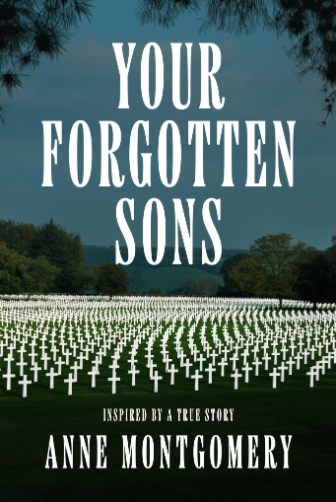
AM: My new novel, Your Forgotten Sons, is a work of historical fiction inspired by a true story. It’s about Sergeant Bud Richardville who was drafted into the U.S. Army in 1943 as the Allies prepared to enter World War II.
The book was pretty much a command performance. My best friend was undergoing a delicate, possibly life-altering surgery, and asked that I be her health-care power of attorney. The night before the operation, Gina handed me a ziplock bag filled with 75-year-old letters from her Uncle Bud. She made me promise that, no matter what happened to her, I would tell his story. And so, I did.
Sergeant Bud Richardville was, by all accounts, an easy-going, charming man when he was assigned to the Army’s Graves Registration Service. His job? Locate, identify, and bury the dead. Think about that. Bud and his men served during the invasion of Normandy, the incredible brutality of the Battle of the Bulge, and beyond, their jobs horrifying by definition. It’s interesting, I think, that the efforts of these soldiers who labored to literally piece fallen soldiers back together to discern who they’d been in life and then lay them to rest have been mostly ignored by history. It is my hope that Your Forgotten Sons will help to rectify that slight.
And there is another story in Your Forgotten Sons. Quiet family whispers said Bud may have been in love with a woman in Europe, an impossible situation since he was married and Catholic, a conflict that, along with the horrors of war, threatened to tear him apart.
Winning the elusive BREW Seal of Excellence for your work is certainly a remarkable achievement. What does this recognition signify to you?
It’s estimated that a little over two million books are published world-wide annually, and when you consider these new publications are added to the mountain of books already in existence, it’s clear why, for the vast majority of authors, recognition for their work is extremely rare. So, when a book is singled out, it is always a great honor. That said, when I learned that my historical fiction novel Your Forgotten Sons had won a BREW Seal of Excellence award, an honor dedicated to “talented content creators who have achieved extraordinary recognition for their exceptional works,” I could not have been more thrilled. My thanks to The Chrysalis BREW Project for recognizing Your Forgotten Sons.
TWB: Reflecting on your journey, which milestones, awards, or accomplishments stand out as especially meaningful to you?
AM: I am immensely proud that I did not give up on my dream of becoming a sportscaster, even though I was constantly told I would never succeed. Similarly, despite being a woman referee and umpire—also in a time when one almost never saw a woman in that capacity—I stuck with it and came to love my time on the field. Through officiating, I learned that the buck stopped with me. It was my job to learn the rules in their entirety and to enforce them with equanimity and fairness. I will be forever indebted to the few men who supported me whenever I donned those uniforms. And finally, there was that moment I became a mom, a completely unexpected event that has now turned into a lifetime commitment to my children.
TWB: Looking ahead, what projects or aspirations are you currently excited about, and what can we expect to see from Anne Butler Montgomery in the future?
AM: I have hit a pause, at the moment, regarding being an author. I have a finished novel that should be shopped around again, one that takes place in St. Croix in the U.S. Virgin Islands where I have a home. (Yes, I’m a spoiled girl. All I need to do is step onto my back porch to see a glorious view of the Caribbean leading into Christiansted Harbor.) I am casting about for inspiration for something new, another story to tell. I’m guessing I’ll know it when I see it, probably when I’m sipping sweet dark rum over ice while staring at the sea. ⭐
“I am casting about for inspiration for something new, another story to tell. I’m guessing I’ll know it when I see it, probably when I’m sipping sweet dark rum over ice while staring at the sea.”
– Ann Montgomery
To connect with or know more about Anne Montgomery, visit her website.
For the complete set of links to get a copy of the book, visit this link.
For more information about the BREW Book, Blog, and Poetry Awards, click here.
Join the conversation
- What aspect of Anne Montgomery’s journey resonated with you the most?
- How do you think her background in journalism influences her approach to fiction writing?
- Which of Anne’s diverse passions do you find most inspiring, and why?
Share your thoughts in the comments below and engage with fellow readers!
July 2024 marked a special milestone at The World’s Best Magazine as we proudly declare it as our Diversity, Resilience, and Inclusion Month. Throughout the month – and moving forward – we officially dedicate a special series of posts in our platform to celebrating the richness of diversity, the strength of resilience, and the power of inclusion.
Join us as we spotlight stories that showcase the myriad facets of diversity, from cultural heritage to individual identities. Through our features, we aim to amplify voices that demonstrate resilience in the face of adversity, inspiring others to persevere and thrive.
Moreover, we pledge to champion inclusion in all aspects of our work, ensuring that every story, perspective, and experience is welcomed and valued. By embracing diversity, resilience, and inclusion, we strive to foster a more equitable and compassionate world.
Let’s come together to honor the beauty of our differences, celebrate the triumphs of the human spirit, and reaffirm our commitment to building a society where everyone is seen, heard, and valued.
Related Posts



Something went wrong. Please refresh the page and/or try again.
Other Highlights

Looking for something?
Type in your keyword(s) below and click the “Search” button.
Helpful Shortcuts
More Stories













Print and Digital Magazine




Don’t just read about greatness. Own it!

About Us
The World’s Best Magazine is a print and online publication that highlights the extraordinary. It is your passport to a universe where brilliance knows no bounds. Celebrating outstanding achievements in various fields and industries, we curate and showcase the exceptional, groundbreaking, and culturally significant. Our premier laurels, The World’s Best Awards, commend excellence through a unique process involving subject matter experts and a worldwide audience vote. Explore with us the pinnacle of human achievement and its intersection with diversity, innovation, creativity, and sustainability.
We recognise and honour the Traditional Owners of the land upon which our main office is situated. We extend our deepest respects to Elders past, present, and emerging. We celebrate the stories, culture, and traditions of Aboriginal and Torres Strait Islander Elders from all communities who also reside and work on this land.
Disclaimer: The World’s Best does not provide any form of professional advice. All views and opinions expressed in each post are the contributor’s own. Whereas we implement editorial policies and aim for content accuracy, the details shared on our platforms are intended for informational purposes only. We recommend evaluating each third-party link or site independently, as we cannot be held responsible for any results from their use. In all cases and with no exceptions, you are expected to conduct your own research and seek professional assistance as necessary prior to making any financial, medical, personal, business, or life-changing decisions arising from any content published on this site. All brands and trademarks mentioned belong to their respective owners. Your continued use of our site means you agree with all of these and our other site policies, terms, and conditions. For more details, please refer to the links below.
About | Advertise | Awards | Blogs | Contact | Disclaimer | Submissions | Subscribe | Privacy | Publications | Terms | Winners
The World’s Best: A Magazine That’s All About What’s Great | theworldsbestmagazine.com | Copyright ⓒ 2022-2026
Let’s connect
Discover more from The World's Best
Subscribe to get the latest posts sent to your email.

 The World's Best
It’s harrowing and absolutely sexist that we need our news anchors to be “pretty.” But I really enjoyed the author’s no-nonsense advice, and a couple of her books are already on my TBR list.
LikeLiked by 4 people
You’re absolutely right; the emphasis on appearance over substance in news media is a concerning issue. However, I’m glad to hear that you found value in the author’s advice despite this. It’s empowering to focus on the wisdom and insights they offer, rather than superficial attributes. Happy reading!
LikeLiked by 3 people
Having to explain the foul tip rule, lol 😂😎
LikeLiked by 2 people
Great article and great video. I enjoyed reading and watching
LikeLiked by 2 people
Absolutely, emphasis should be on the substance that is being delivered.
LikeLiked by 2 people